$5.92K
1
1

1 market tracked

No data available
| Market | Platform | Price |
|---|---|---|
![]() | Poly | 14% |
Trader mode: Actionable analysis for identifying opportunities and edge
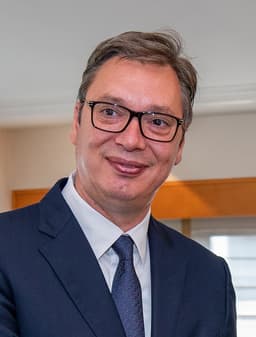
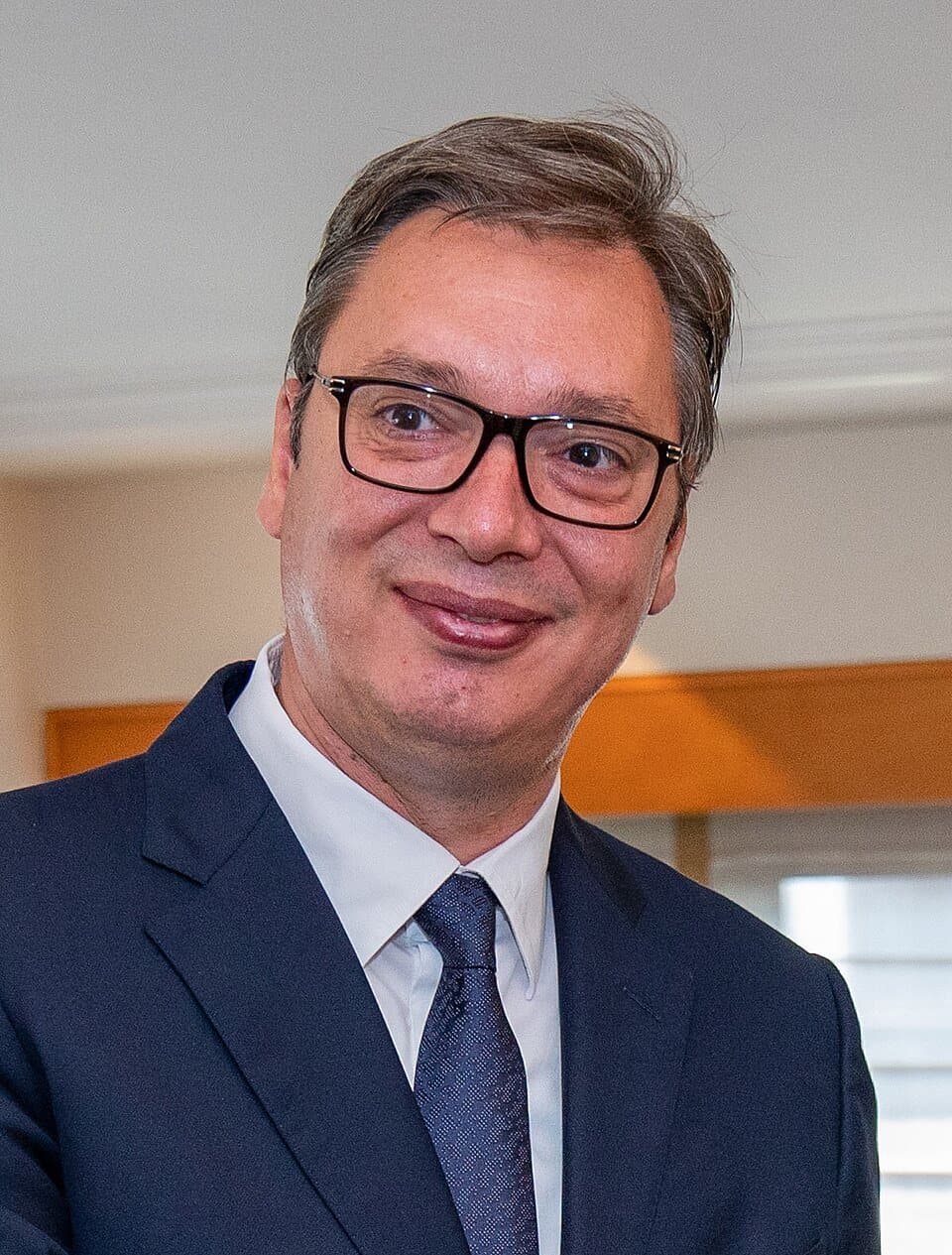
This market will resolve to “Yes” if Aleksandar Vučić ceases to be the President of Serbia for any period of time between November 13, 2025 and December 31, 2025, 11:59 PM ET. Otherwise, this market will resolve to “No”. An announcement of Aleksandar Vučić's resignation/removal before this market's end date will immediately resolve this market to "Yes", regardless of when the announced resignation/removal goes into effect. The resolution source for this market will be the government of Serbia,
Prediction markets currently assign a low probability to President Aleksandar Vučić leaving office before the end of 2025. On Polymarket, shares for "Yes" are trading at approximately 14¢, implying the market sees only a 14% chance of his removal or resignation during the specified period. This price indicates the consensus view is that Vučić remaining in power is the overwhelmingly likely scenario, with the "Yes" outcome considered a distant possibility.
The low probability is anchored by Vučić's firm political control. As the leader of the Serbian Progressive Party (SNS), he has consolidated power over more than a decade, with his party holding a dominant majority in parliament. The next regular presidential election is not scheduled until 2027, providing a stable near-term timeline. Furthermore, despite significant public protests in 2024 and 2025 related to controversial government initiatives, such as the "Belgrade Waterfront" project and amendments to the expropriation law, these movements have not yet translated into a viable, immediate constitutional pathway for his removal from office. The market is effectively pricing in the high institutional and political barriers to an unexpected presidential exit.
The primary catalyst for a dramatic shift in these odds would be an unforeseen political crisis or a major escalation of ongoing civil unrest. The protest movement, which has mobilized tens of thousands, represents a tangible risk factor if it evolves to directly challenge the presidency's stability or gains decisive support from key institutions. Another potential trigger could be a sudden, serious health issue for Vučić, though there is no public information suggesting this is imminent. International pressure, particularly from the EU regarding Serbia's stance on Kosovo or alignment with Russia, could also theoretically create untenable political pressure, but markets currently view such an outcome within the 2025 window as unlikely. Traders will closely monitor the sustainability and political demands of the protest movement for signs it is catalyzing a constitutional or party-led change.
AI-generated analysis based on market data. Not financial advice.
$5.92K
1
1
This prediction market topic concerns the potential departure of Aleksandar Vučić from the presidency of Serbia during a specific window in late 2025. The market will resolve to "Yes" if Vučić ceases to be president for any period between November 13, 2025 and December 31, 2025, 11:59 PM ET. An announcement of his resignation or removal before that date would also trigger a "Yes" resolution, regardless of when the action takes effect. The official government of Serbia will serve as the resolution source. Aleksandar Vučić, a dominant figure in Serbian politics for over a decade, has served as President since 2017 and was re-elected in 2022. His tenure has been marked by centralized power, allegations of democratic backsliding, and a foreign policy balancing act between the European Union and Russia. The specific timeframe of late 2025 is significant as it falls after the next regular parliamentary elections, which are constitutionally required by early 2025. This creates a potential inflection point where political pressures, electoral outcomes, or strategic calculations could converge, making his continued presidency uncertain. Interest in this topic stems from Vučić's pivotal role in shaping modern Serbia, ongoing domestic protests against his government, and the broader geopolitical implications of leadership change in the Balkans. Observers are monitoring whether constitutional term limits, political fatigue, or external pressures might lead to an unexpected transition.
Serbia's political landscape since the fall of Slobodan Milošević in 2000 has been characterized by democratic transition punctuated by periods of strongman politics. The Serbian Progressive Party (SNS), originally a breakaway from the far-right Serbian Radical Party, rebranded itself as a pro-European, centrist force under Vučić's leadership. Vučić first entered government as a minister in 2012, becoming Prime Minister in 2014 after the SNS's electoral victory. His premiership was marked by austerity measures, the launch of EU accession talks, and increasing consolidation of media and state institutions. In 2017, he leveraged his popularity to win the presidency, a role that is largely ceremonial under Serbia's parliamentary system but which Vučić has used to exert immense executive influence through his control of the ruling party. His re-election in the 2022 presidential vote, which international observers noted was marred by unfair conditions, solidified his dominance. Historically, Serbian presidents have served multiple terms, but transitions have often been triggered by electoral defeat or, in the case of Milošević, mass protest and international pressure. The precedent of Boris Tadić resigning in 2012 to run for a parliamentary seat also shows that the presidency is not always a terminal political post.
A potential departure of Aleksandar Vučić from the presidency would represent the most significant political shift in Serbia in over a decade. It would immediately trigger questions about the stability of the ruling coalition, the future direction of Serbia's fraught EU accession process, and its relationship with Russia, particularly regarding sanctions over the war in Ukraine. Domestically, it could lead to a power struggle within the dominant Serbian Progressive Party or create an opening for a revitalized opposition, potentially altering policies on corruption, media freedom, and the rule of law. The social impact is substantial, as Vučić's polarizing rule has deeply divided Serbian society. His exit could either calm prolonged political tensions or, if mishandled, lead to instability. Economically, investors monitor political continuity closely. A sudden change could create short-term uncertainty regarding fiscal policy, large infrastructure projects, and the business environment, which has been shaped by Vučić's administration. The broader regional stability of the Western Balkans, where Serbia is the largest state, is also at stake, with implications for Kosovo relations and regional integration initiatives.
As of late 2023 into 2024, Aleksandar Vučić remains firmly in power as President and leader of the ruling Serbian Progressive Party. However, his government faces sustained pressure from the "Serbia Against Violence" protest movement, which has organized large weekly demonstrations demanding the resignation of government ministers and changes to media licensing following incidents of violent rhetoric. The government responded by calling snap parliamentary elections for December 17, 2023, a move analysts saw as an attempt to reassert its mandate and dissipate protest energy. The SNS-led coalition won a reduced but still absolute majority. The political landscape is now focused on post-election government formation and the run-up to the next regular parliamentary elections, which must be held by early 2025. This electoral cycle is a key context for the 2025 timeframe of the prediction market.
He could resign voluntarily for personal or political reasons. He could be removed through impeachment, a complex parliamentary process requiring a high threshold of votes. His term could end prematurely if he is elected to another office, like a parliamentary seat, triggering a resignation. He could also be incapacitated or pass away.
According to the Serbian Constitution, if the president resigns, the Speaker of the National Assembly assumes the role as acting president. A new presidential election must then be called within 60 days. The acting president cannot dissolve the assembly or call a referendum.
Yes. The Constitution of Serbia limits the president to two five-year terms. Vučić was first elected in 2017 and re-elected in 2022. His current term is scheduled to end in 2027, after which he would be constitutionally barred from running for a third consecutive term.
It is a sustained protest movement that began in May 2023 after two mass shootings in Belgrade. Initially focused on gun control and condemning violent media rhetoric, its demands expanded to include the resignation of key government ministers and the revocation of licenses for pro-government TV networks accused of promoting violence.
Formally, Serbia has a parliamentary system where the prime minister and government hold most executive power. The president's role is largely ceremonial. However, as the unchallenged leader of the ruling party, Vučić exercises de facto executive control, setting policy and appointing loyalists, making the presidency a platform for immense political influence.
Educational content is AI-generated and sourced from Wikipedia. It should not be considered financial advice.
Share your predictions and analysis with other traders. Coming soon!

No related news found
Add this market to your website
<iframe src="https://predictpedia.com/embed/e7kmZI" width="400" height="160" frameborder="0" style="border-radius: 8px; max-width: 100%;" title="Aleksandar Vučić out as Serbian President by...?"></iframe>