$1.66M
2
6

$1.66M
2
6
Trader mode: Actionable analysis for identifying opportunities and edge
Before Jan 20, 2029 If the President of the United States has invoked the Insurrection Act to deploy the United States military and/or the federalized National Guard within the United States before X 1, Y then the market resolves to Yes. Early close condition: This market will close and expire early if the event occurs. This market will close and expire early if the event occurs.
Prediction markets currently estimate about a 60% chance that former President Donald Trump will invoke the Insurrection Act if he wins the 2024 election and serves a second term. This is roughly a 3 in 5 probability, meaning traders collectively see it as slightly more likely than not. The forecast reflects a significant level of concern, treating the event as a genuine possibility rather than a remote hypothetical. Across two major platforms, Kalshi and Polymarket, traders have bet over $1.7 million on this and related questions, showing high public interest. There is notable disagreement between platforms, with odds differing by about 17%, which suggests uncertainty about how to interpret Trump's past statements and future intentions.
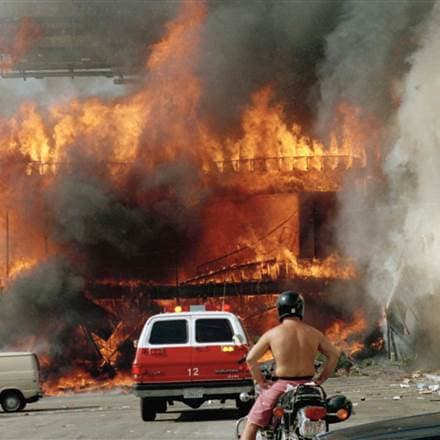
Two main factors are driving these odds. First, Trump's own rhetoric and past actions set a precedent. During his first term, he reportedly asked advisors about using the Insurrection Act during the 2020 racial justice protests. He has also publicly suggested he would use the military for domestic law enforcement, telling a news outlet in 2023 that he would deploy troops to the southern border and possibly to U.S. cities. Second, traders are weighing his campaign's focus on "law and order" and immigration. Some of his policy proposals, like large-scale deportations and securing the border, could create scenarios where a president might consider using military forces domestically if state officials resist or if civil unrest occurs. The Insurrection Act is the legal tool that allows a president to deploy the U.S. military or federalized National Guard inside the country, a power last used in 1992 during the Los Angeles riots.
The critical event is the presidential inauguration on January 20, 2025. If Trump is not sworn in, the question becomes moot. Assuming he takes office, the timeline for a potential invocation is open until the end of his term on January 20, 2029. Specific triggers to watch would be any major domestic crisis, such as widespread protests, a border security incident, or a clash between federal and state authorities. Official statements from Trump or his administration directly mentioning the Act or the domestic use of the military would also be strong signals. The market will close immediately if the event happens, so a sudden resolution is possible at any time during the term.
Prediction markets have a mixed but generally decent record on political outcomes, often outperforming polls for binary yes/no events. However, this specific question is unprecedented. There is no direct historical analogy for forecasting the use of a rare presidential power based on campaign rhetoric. The accuracy will depend heavily on whether Trump's statements are interpreted as concrete plans or political bluster. The 17% spread between platforms shows experts are still debating this. Markets are good at aggregating diverse opinions, but they can be swayed by news headlines and may overreact to dramatic statements. They reflect what informed people believe is likely, not what is legally or normatively certain.
Prediction markets currently price a 59% probability that Donald Trump will invoke the Insurrection Act before January 20, 2029. This slim majority suggests traders see the event as marginally more likely than not, but the market remains highly uncertain. The price has been volatile, fluctuating between 45% and 65% over recent months. A significant 17.1% pricing spread exists between platforms, with Kalshi consistently trading at a higher "Yes" probability than Polymarket. This indicates a notable divergence in trader sentiment or platform-specific risk assessments.
The primary driver is Trump's own rhetoric and policy agenda. He has publicly discussed using the military for domestic law enforcement, specifically to address immigration and civil unrest. His 2024 campaign platform includes plans for large-scale deportations, a logistical challenge where military deployment has been framed as a potential tool. Historical precedent also informs the price. The Insurrection Act was last invoked in 1992 during the Los Angeles riots. Its potential use for a sustained domestic policy objective, rather than a short-term crisis response, would be unprecedented in the modern era, creating a market that balances bold promises against institutional inertia.
The wide inter-platform spread is a second key factor. Kalshi's higher price may reflect a user base weighing political declarations more heavily. Polymarket's lower price could indicate a greater discount for legal and political barriers, including potential resistance from military leadership or court challenges. This spread shows the market has not reached consensus on how real-world constraints will affect campaign rhetoric.
The most immediate catalyst is the outcome of the 2024 presidential election. A Trump victory would likely cause the "Yes" probability to surge, possibly above 80%, as the primary precondition is met. A loss would collapse the market toward zero. Post-election, the odds will be sensitive to specific events. A major crisis, such as widespread civil disorder or a catastrophic terrorist attack on U.S. soil, could force a rapid re-pricing upward as pressure for a military response grows. Conversely, clear signals from senior Pentagon officials opposing domestic deployment, or a Trump administration walking back related rhetoric, would push probabilities down.
The persistent 17.1% gap between Kalshi (~68% Yes) and Polymarket (~51% Yes) is unusually large for a high-volume event. This creates a theoretical arbitrage opportunity, but it persists due to platform differences. Kalshi is U.S.-regulated and accessible only to U.S. residents, potentially concentrating traders who assign higher weight to U.S. political narratives. Polymarket's global user base might apply a greater skepticism discount. The spread also reflects different risk models regarding market resolution; traders may doubt each platform will interpret a complex event identically. This divergence is a market signal itself, highlighting deep uncertainty about how campaign threats translate to executive action.
AI-generated analysis based on market data. Not financial advice.
This prediction market topic concerns whether Donald Trump, if elected President of the United States in the 2024 election, would invoke the Insurrection Act before January 20, 2029. The Insurrection Act of 1807 is a federal law that allows the President to deploy the U.S. military or federalized National Guard troops within the United States to suppress civil disorder, insurrection, or rebellion. The market resolves to 'Yes' if such an invocation occurs during that timeframe, with an early close if the event happens. The question is speculative, based on Trump's potential return to office and his past rhetoric and actions regarding domestic unrest. Interest in this topic stems from Trump's unprecedented use of federal force during the 2020 racial justice protests, his repeated claims of a 'stolen' 2020 election, and his campaign statements about 'rooting out' political opponents. Analysts and legal scholars debate the circumstances under which a future President Trump might consider using this authority, which bypasses the traditional constraints of the Posse Comitatus Act. The topic intersects with concerns about democratic norms, civil-military relations, and responses to potential civil unrest surrounding future elections or political controversies.
The Insurrection Act has its roots in the Calling Forth Act of 1792, but the modern statute was codified in 1807. Its use has been rare and typically in response to state requests or major civil rights crises. President Dwight D. Eisenhower invoked it in 1957 to enforce desegregation in Little Rock, Arkansas, at the state governor's request. President George H.W. Bush used it in 1992 during the Los Angeles riots after a request from California Governor Pete Wilson. The last use was in 1992. The law allows the president to deploy troops without a state request under specific conditions, such as when unlawful obstructions or rebellion make it impracticable to enforce federal law through regular proceedings. The Posse Comitatus Act of 1878 generally prohibits using the military for domestic law enforcement, but the Insurrection Act is a primary exception. The historical precedent shows use for racial integration and riot control, but never to intervene in a disputed presidential election or overtly political dispute. The events of January 6, 2021, created a new context, as Trump supporters stormed the Capitol to disrupt the electoral vote count. Trump did not invoke the Act that day, though he reportedly expressed frustration that the military was not more involved in supporting his efforts to remain in power.
The potential invocation of the Insurrection Act by a future President Trump raises profound questions about American democracy and civil-military relations. Deploying active-duty military for domestic law enforcement, particularly for a politically contested purpose, could severely damage public trust in the armed forces as a non-partisan institution. It risks escalating local protests into national confrontations and could lead to violent clashes between U.S. troops and civilians. Legally, it tests the boundaries of presidential power and could trigger immediate court challenges on constitutional grounds, potentially leading to a constitutional crisis if the president defies judicial orders. Economically, significant domestic deployment would divert military resources, incur substantial costs, and could trigger market volatility due to perceptions of instability. Socially, it would deepen political polarization, likely provoking mass protests and counter-protests. The act's use could also set a new precedent for future presidents, normalizing military intervention in domestic affairs in ways that have been avoided for over three decades.
As of late 2024, Donald Trump is the Republican nominee for the November presidential election. He has not been elected, so the question remains hypothetical. His campaign and allies, including Stephen Miller, have openly discussed plans for a more aggressive and politically weaponized use of executive power in a potential second term, specifically mentioning the Insurrection Act. Legal scholars and watchdog groups have published analyses warning of the dangers of invoking the Act for political purposes. The Department of Defense has reportedly conducted internal reviews concerning the legal protocols for such an invocation. No specific event has triggered a current consideration of the Act, but the political climate remains highly charged ahead of the election.
The Insurrection Act is a federal law that allows the President of the United States to deploy the U.S. military or federalize state National Guard units within the country to suppress insurrection, domestic violence, or conspiracy that hinders the execution of state or federal law. It is a major exception to the Posse Comitatus Act, which restricts military involvement in civilian law enforcement.
Yes. While often used at a state's request, the Act allows the president to act unilaterally in specific situations. These include when unlawful obstructions, combinations, or assemblies make it impracticable to enforce federal law through regular judicial proceedings, or during a rebellion against the U.S. government.
No, President Trump did not invoke the Insurrection Act on January 6, 2021. The District of Columbia National Guard was deployed that day under separate authority. The deployment was authorized by the Secretary of the Army and the Secretary of Defense, not through the formal mechanisms of the Insurrection Act.
During the racial justice protests in June 2020, President Trump stated he would invoke the Insurrection Act if governors did not deploy the National Guard to 'dominate the streets.' He said, 'If a city or state refuses to take the actions necessary to defend the life and property of their residents, then I will deploy the United States military and quickly solve the problem for them.'
There is no direct legislative veto. Congress could potentially pass a law to repeal or amend the Act, or use its power of the purse to deny funding for a deployment. The judiciary could rule a specific invocation unconstitutional or an abuse of power. Internally, the Secretary of Defense could refuse to execute the order, potentially leading to their dismissal.
Educational content is AI-generated and sourced from Wikipedia. It should not be considered financial advice.
5 markets tracked

No data available
| Market | Polymarket | Kalshi | Diff |
|---|---|---|---|
![]() | 28% | 28% | 1% |
Different
Similar

Before Jan 20, 2029 If the President of the United States has invoked the Insurrection Act to deploy the United States military and/or the federalized National Guard within the United States before X 1, Y then the market resolves to Yes. Early close condition: This market will close and expire early if the event occurs. This market will close and expire early if the event occurs.

This market will resolve to "Yes" if Donald Trump officially invokes the Insurrection Act of 1807 by the listed date, 11:59 PM ET. Otherwise, it will resolve to "No". For the purposes of this market, "invoke" means that the President formally announces the use of the Insurrection Act as legal authority for deploying active-duty U.S. military forces or federalizing the National Guard in response to civil disorder, insurrection, or rebellion. The resolution source will be a consensus of credible


This market will resolve to "Yes" if Donald Trump officially invokes the Insurrection Act of 1807 by December 31, 2026, 11:59 PM ET. Otherwise, it will resolve to "No". For the purposes of this market, "invoke" means that the President formally announces the use of the Insurrection Act as legal aut

If the President of the United States has invoked the Insurrection Act to deploy the United States military and/or the federalized National Guard within the United States before Jan 1, 2027, then the market resolves to Yes. Early close condition: This market will close and expire early if the event


No related news found
Polymarket
$864.17K
Kalshi
$793.99K
Add this market to your website
<iframe src="https://predictpedia.com/embed/ejorI5" width="400" height="160" frameborder="0" style="border-radius: 8px; max-width: 100%;" title="Will Trump invoke the Insurrection Act?"></iframe>