$44.86K
1
5

$44.86K
1
5
Trader mode: Actionable analysis for identifying opportunities and edge
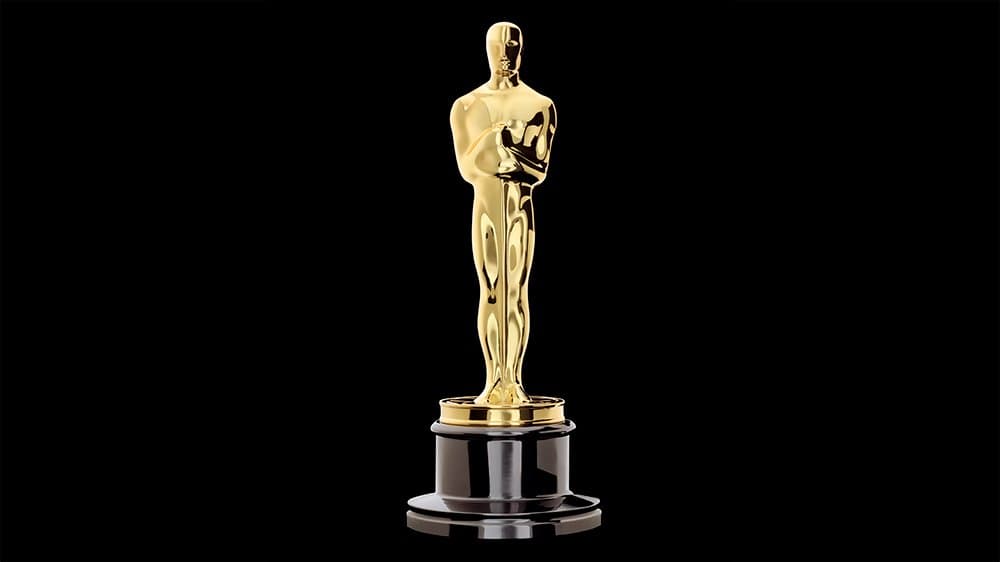
The Academy Awards are presented annually by the Academy of Motion Picture Arts and Sciences (AMPAS) to honor outstanding artistic and technical achievements in film. For the 98th Academy Awards in 2026, nominations are scheduled to be announced on January 22, followed by the ceremony on March 15, 2026. This market will resolve according to the listed movie that wins the 98th Academy Award for Best Animated Short Film. If a film is not officially nominated for the Academy Award for Best Anima
Prediction markets currently give the short film Butterfly about a 51% chance to win the 2026 Oscar for Best Animated Short. This is essentially a coin flip. Traders collectively see it as the slight favorite in a field where no other single film has broken away from the pack. The market suggests the race is very open, with Butterfly holding a narrow edge.
Two main factors are likely shaping these odds. First, the film has generated significant festival buzz. Winning major awards at qualifying festivals like Annecy or the Ottawa International Animation Festival is often a strong predictor of Oscar attention, and Butterfly appears to be on that track.
Second, the subject matter may align with the Academy's tastes. The Best Animated Short category often rewards films with emotional depth, artistic innovation, or poignant themes. If Butterfly’s story resonates on those levels, it would fit a historical pattern. However, the 51% probability shows traders are not convinced. The field for this award is famously unpredictable, often featuring surprise nominees and winners from major studios like Disney or Pixar alongside independent artists.
The most important date is January 22, 2026, when the official Oscar nominations are announced. Butterfly must secure a nomination to have any chance. If it is omitted, this market will resolve to "No." The ceremony itself on March 15, 2026 is the final resolution. Between nomination day and the ceremony, watch for wins at guild awards like the Annie Awards, which can signal industry support and shift the odds.
Prediction markets in entertainment awards have a mixed record. For high-profile categories like Best Picture, they are often accurate. For niche categories like Best Animated Short, they can be less reliable due to lower trading volume and more opaque voter preferences. The modest $45,000 wagered here indicates a smaller, possibly more speculative market. While the collective intelligence of traders is a useful signal, the near 50/50 odds for Butterfly honestly reflect how difficult this specific award is to forecast.

Prediction markets currently assign a 51% probability to the short film Butterfly winning the 2026 Oscar for Best Animated Short Film. This price, trading on Polymarket, indicates the market views the outcome as essentially a coin flip. With only $45,000 in total volume spread across five candidate films, liquidity is thin. This low volume means prices can be volatile and may not fully reflect informed consensus, instead capturing early speculation.
The 51% price for Butterfly likely stems from its status as the only film with significant public buzz ahead of the nomination announcement on January 22. Trade press from outlets like Variety has highlighted its festival run and technical ambition. Historically, the Best Animated Short category often rewards a frontrunner that gains momentum in the weeks between nomination and the ceremony. The current pricing suggests traders are betting this early visibility will translate into votes from the Academy's Short Films and Feature Animation branch. However, the category is notoriously unpredictable, often featuring obscure films that surge after nominations are revealed.
The nomination announcement on January 22 will be the major catalyst. If Butterfly fails to secure a nomination, its contract will immediately settle to "No." More importantly, the post-nomination phase will see new markets for officially nominated films. The current market structure, with bets on individual films rather than a slate of official nominees, is provisional. Once the five nominees are known, trading will refocus on that field. A win by a dark horse or a film with a powerful distributor like Disney or Pixar could upend the current favorite. The thin liquidity also means a relatively small amount of new capital could shift the odds dramatically in either direction.
AI-generated analysis based on market data. Not financial advice.
The Academy Award for Best Animated Short Film is a competitive category at the Oscars, recognizing excellence in animated films with a maximum runtime of 40 minutes. For the 98th Academy Awards in 2026, the winner will be announced during the ceremony on March 15, 2026. The category has existed since 1932, when the 5th Academy Awards honored 'Flowers and Trees' by Walt Disney Productions. It consistently features a diverse range of artistic styles, storytelling techniques, and international productions, often serving as a launchpad for new talent and studios. The nomination process involves a complex system of voting by members of the Short Films and Feature Animation Branch of the Academy of Motion Picture Arts and Sciences (AMPAS), with eligibility rules requiring a theatrical release in Los Angeles County for at least seven consecutive days during the preceding calendar year. Interest in the category extends beyond industry professionals to animation enthusiasts and awards prognosticators, who analyze film festival performance and precursor awards to predict nominees and winners. The 2026 race will begin to take shape throughout 2025 as eligible shorts complete their qualifying runs and are screened for Academy members. Recent winners have included both major studio productions and independent films, reflecting the category's broad scope. The 2025 winner, 'War Is Over! Inspired by the Music of John & Yoko,' was a hybrid 2D/3D production from a major studio, while the 2024 winner, 'The Boy, the Mole, the Fox and the Horse,' was a hand-drawn adaptation of a bestselling book. This variability makes the category particularly unpredictable and engaging for followers of the awards season.
The Academy Award for Best Animated Short Film was introduced at the 5th Academy Awards in 1932, honoring films released in 1931-1932. The first winner was Walt Disney's 'Flowers and Trees,' which was also the first commercially released film in full-color three-strip Technicolor. For its first decades, the category was dominated by American studio productions, particularly from Disney and Warner Bros. Cartoons. The category was not awarded consistently in the early years; it was skipped entirely for the 1934 and 1935 ceremonies. A significant shift occurred in the 1960s and 1970s with the rise of international competitors, especially from the National Film Board of Canada and Eastern European studios. The NFB won its first award in 1978 with 'Special Delivery.' Another major evolution came in 2000 when the category became a permanent annual award after being occasionally presented as a Special Achievement Award in the 1990s. The rules for eligibility have changed several times, most notably in 2012 when the Academy clarified that only films with a maximum runtime of 40 minutes could qualify. Historically, the category has served as a testing ground for new animation techniques, from the multiplane camera demonstrated in Disney's 'The Old Mill' (1937 winner) to early computer animation in 'Luxo Jr.' (1986 nominee). The 21st century has seen greater diversity in winners, with victories for stop-motion ('Peter & the Wolf,' 2008), 2D hand-drawn ('The Lost Thing,' 2011), and 3D CGI ('Feast,' 2015).
Winning an Oscar for Best Animated Short Film can dramatically alter the career trajectory of the filmmakers involved. It provides global recognition, increases the commercial value of the film for subsequent distribution on streaming platforms and home video, and often leads to funding opportunities for future projects. For studios, especially smaller independent ones, an Oscar win validates artistic choices and can be leveraged for marketing and talent recruitment. The category also matters as a bellwether for artistic trends in animation. Winning films often explore themes and techniques that later appear in feature-length animation. The international nature of the submissions and winners reflects the globalized state of the animation industry, where talent and funding cross borders regularly. For the broader film industry, the category preserves and promotes the art of short-form storytelling, which faces commercial challenges in a marketplace dominated by features and series. The attention generated by the Oscar race helps ensure theatrical exhibition opportunities for short films, which might otherwise struggle to find audiences beyond film festivals.
As of late 2024, the competition for the 2026 Oscar is in its earliest phase. Films eligible for the 98th Academy Awards must be released in qualifying theaters during the 2025 calendar year. Many potential contenders are still in production or early festival circulation. The major animation studios typically announce their short film slates in early 2025. Film festivals throughout 2025, particularly Annecy International Animated Film Festival in June and the Ottawa International Animation Festival in September, will serve as important showcases for Oscar hopefuls. The official submission deadline to the Academy is typically in early November 2025, with nomination voting occurring in December 2025 and January 2026. No specific frontrunner has emerged yet, as the field will be defined by releases over the coming year.
To be eligible, a film must be animated, have a maximum runtime of 40 minutes, and complete a commercial theatrical run in Los Angeles County for at least seven consecutive days with at least three screenings per day. It must be publicly exhibited for paid admission and meet all other standard Academy eligibility requirements. The qualifying run must occur within the calendar year preceding the awards ceremony.
Members of the AMPAS Short Films and Feature Animation Branch vote to determine the nominees using a preferential voting system. All active Academy members are then eligible to vote for the winner from the nominated films. Voters must attest they have seen all nominated shorts in a theatrical setting or via the Academy's secure online screening platform.
The Annecy International Animated Film Festival in France and the Ottawa International Animation Festival in Canada are considered major showcases. Qualifying festivals in the United States include the New York International Children's Film Festival and the LA Shorts International Film Festival. Winning top prizes at these festivals often correlates with Oscar attention.
Educational content is AI-generated and sourced from Wikipedia. It should not be considered financial advice.
5 markets tracked

No data available
| Market | Platform | Price |
|---|---|---|
![]() | Poly | 51% |
![]() | Poly | 26% |
![]() | Poly | 14% |
![]() | Poly | 9% |
![]() | Poly | 2% |


No related news found
Add this market to your website
<iframe src="https://predictpedia.com/embed/evZL8y" width="400" height="160" frameborder="0" style="border-radius: 8px; max-width: 100%;" title="Oscars 2026: Best Animated Short Film Winner"></iframe>