$50.11K
1
1

1 market tracked

No data available
| Market | Platform | Price |
|---|---|---|
![]() | Poly | 7% |
$50.11K
1
1
Trader mode: Actionable analysis for identifying opportunities and edge
This market will resolve to “Yes” if Jang Dong-hyeok ceases to be the Leader of the People Power Party (PPP) for any period of time between December 1, 2025, and March 31, 2026, 11:59 PM ET. Otherwise, this market will resolve to “No”. An announcement of Jang Dong-hyeok’s resignation/removal before this market's end date will immediately resolve this market to "Yes", regardless of when the announced resignation/removal goes into effect. The resolution source for this market will be the People
Prediction markets currently give a 7% chance that Jang Dong-hyeok will stop being the leader of South Korea's People Power Party (PPP) by March 31, 2026. In simpler terms, traders see this as very unlikely, with roughly a 1 in 14 chance it happens. The market expresses strong confidence that Jang will remain in his position through this period.
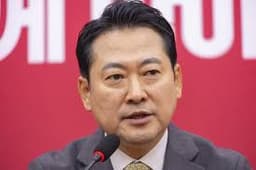
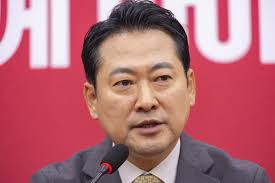
Jang Dong-hyeok, also known as Jang Je-won, is a senior PPP lawmaker and a close ally of President Yoon Suk Yeol. His appointment as party leader in December 2025 was part of a major reshuffle intended to stabilize the ruling party ahead of the April 2026 general election. Markets assign low odds to his removal for two main reasons.
First, removing a newly appointed leader so close to a critical national election would signal deep party crisis and instability, which the PPP likely wants to avoid. Second, his fate is tightly linked to President Yoon's standing. A forced exit for Jang would probably only happen if Yoon's approval ratings collapsed or if the party suffered a major internal revolt, neither of which traders see as likely in the short term.
The main event that will decide this question is South Korea's April 2026 parliamentary election. If the PPP performs very poorly, pressure for leadership change could mount immediately, potentially before the March 31 deadline. Before that, watch for public opinion polls on President Yoon and the PPP's approval ratings through January and February 2026. Any significant drop could increase speculation about Jang's position. Also, listen for reports of public disagreements or factional conflict within the PPP, which could be an early sign of trouble for the leadership.
Prediction markets have a mixed but generally decent record on political leadership questions in stable democracies. They often effectively aggregate insider knowledge and public sentiment. However, this is a niche market with a relatively small amount of money wagered, which can sometimes make prices more volatile or less informed. The biggest limitation is that political fortunes can change quickly due to unforeseen scandals or events, which markets may not fully price in until they happen.
Prediction markets assign a low probability to Jang Dong-hyeok's removal as PPP leader. On Polymarket, the "Yes" share trades at 7 cents, implying just a 7% chance he will leave his post between December 1, 2025, and March 31, 2026. This price indicates the market views his departure as very unlikely within this specific 4-month window. With only $50,000 in total volume, liquidity is thin, meaning this consensus is not backed by heavy betting and could be more volatile to new information.
The low probability reflects Jang's relatively stable position following the PPP's performance in the 2024 general election. While the party failed to secure a majority, it avoided a catastrophic defeat, which has tempered immediate internal calls for a leadership change. Jang's faction retains significant control over the party apparatus, making a swift ouster difficult. The timeline is also a factor. The market resolves at the end of March 2026, well before the next major national election cycle, which reduces the immediate political pressure for a leadership shakeup. Markets are pricing in a period of consolidation rather than upheaval.
The primary catalyst for a dramatic shift in odds would be a significant political scandal directly implicating Jang or a major, unexpected electoral setback for the PPP in a local by-election. Internal party rebellion is a constant risk in South Korean politics. If a rival faction were to publicly demand Jang's resignation, the "Yes" probability would spike. The market's design also introduces sensitivity. Any official announcement of a future resignation within the contract period would trigger an immediate "Yes" resolution, so even strategic news about a planned post-March 2026 departure could create volatility if misinterpreted.
The limited $50,000 volume requires caution. A few large bets can move the 7% price significantly, making it a less reliable indicator of true consensus than a heavily traded market. This thin liquidity often reflects a lack of clear upcoming catalysts, aligning with the view of a stable near-term period. Traders here are likely speculating on black-swan events rather than forecasting a predictable political process. For someone researching this topic, the market currently signals strong institutional confidence in Jang's position through Q1 2026, but that signal comes with a high uncertainty premium due to the low trading activity.
AI-generated analysis based on market data. Not financial advice.
This prediction market addresses whether Jang Dong-hyeok, the current leader of South Korea's People Power Party (PPP), will leave his position between December 1, 2025, and March 31, 2026. The market resolves to 'Yes' if he ceases to be PPP leader for any period during that timeframe, including if an announcement of his resignation or removal is made before March 31, 2026. The outcome will be determined based on official statements from the People Power Party. Jang Dong-hyeok, also known as Jang Dong-hyuk, was elected as the PPP's emergency leadership committee chairman in August 2024, following the party's defeat in the April 2024 general election. His leadership is considered provisional, tasked with rebuilding the party ahead of the next presidential election in 2027. Political observers are interested in this question because the stability of his leadership is a proxy for the internal cohesion of South Korea's main conservative party. The specified period from December 2025 to March 2026 is significant as it follows local elections and precedes the official start of the presidential nomination cycle. Jang's tenure has been marked by efforts to reform the party and distance it from the influence of former President Yoon Suk Yeol, but internal factional disputes persist. His ability to maintain control is constantly tested by rival factions and his relationship with the presidential office.
Leadership volatility is not uncommon in the People Power Party. The party has changed leaders multiple times following electoral setbacks. After the 2020 general election loss, then-leader Hwang Kyo-ahn resigned. His successor, Kim Chong-in, served as emergency committee head for about a year. Following the 2022 presidential victory, the party saw a turbulent period under Lee Jun-seok, who was suspended and then expelled from the party in 2022 amid internal disputes. Lee's removal led to another emergency leadership committee under Chung Jin-suk. The party's defeat in the April 2024 general election, where it won only 108 seats against the opposition's 175 in the 300-seat National Assembly, triggered the latest leadership crisis. This direct precedent is why Jang Dong-hyeok was installed in August 2024 on a temporary, reform-oriented mandate. The pattern suggests that PPP leaders are held directly accountable for election results. The period from late 2025 to early 2026 is historically a time for party reassessment in South Korea, following local elections and before the machinery for the next presidential race begins in earnest. Past emergency leaders have often struggled to transition to permanent leadership, especially when facing unresolved factional strife.
The stability of the PPP leadership directly impacts South Korea's political landscape. A change in party leader could signal a significant shift in policy direction, particularly regarding economic reforms, North Korea strategy, and relations with the United States and Japan. It would also influence the political trajectory of President Yoon Suk Yeol, who faces a lame-duck period. For financial markets and businesses, prolonged political instability within the ruling party can create policy uncertainty, affecting investment decisions and economic planning. A leadership change could alter the legislative dynamics in the National Assembly, where the PPP is the minority, potentially affecting the passage of key bills. For the South Korean public, the outcome is a barometer of whether the conservative bloc can present a unified, reformed alternative to the Democratic Party ahead of the 2027 presidential election. A 'Yes' outcome in this market would likely trigger immediate speculation about potential successors and their political leanings, reshaping the early field for the next presidential race.
As of late 2024, Jang Dong-hyeok remains the PPP's emergency committee chairman. He has initiated internal reform committees and public listening sessions. However, factional disputes, particularly regarding the party's relationship with President Yoon, continue to surface in media reports. The party is preparing for by-elections and the next cycle of local elections. No formal challenge to Jang's leadership has been mounted, but political commentators frequently debate his long-term viability, especially given the party's need to improve its public standing ahead of the 2027 presidential election.
Jang Dong-hyeok is a South Korean politician and former prosecutor. He is a four-term member of the National Assembly and was elected as the emergency leadership committee chairman of the People Power Party in August 2024 following the party's defeat in the general election.
The People Power Party is the main conservative political party in South Korea. It is the party of current President Yoon Suk Yeol. It was formed from a merger of previous conservative parties and holds the second-largest number of seats in the National Assembly as of 2024.
Potential reasons include pressure from poor election results in upcoming by-elections, failure to unite internal party factions, a loss of confidence from party members, or strategic reshuffling ahead of the 2027 presidential election. Resignation or a vote of no confidence are the most likely mechanisms.
A new leader would be selected through a party convention or another emergency committee appointment. This could shift the party's policy direction and its public strategy for the next presidential election. It would also change the dynamics between the party and President Yoon Suk Yeol.
Under normal circumstances, the party leader is elected through a national party convention where delegates and sometimes party members vote. During emergency situations, like after an electoral defeat, an emergency leadership committee chairman can be appointed by the party's council.
Educational content is AI-generated and sourced from Wikipedia. It should not be considered financial advice.

No related news found
Add this market to your website
<iframe src="https://predictpedia.com/embed/fV4GEz" width="400" height="160" frameborder="0" style="border-radius: 8px; max-width: 100%;" title="Jang Dong-hyeok out as PPP Leader by March 31, 2026?"></iframe>