$92.08K
2
9

$92.08K
2
9
Trader mode: Actionable analysis for identifying opportunities and edge
The Marseille mayoral election is scheduled to take place in France on March 15, 2026, with a potential runoff on March 22, 2026. This market will resolve according to the candidate who wins the 2026 Marseille mayoral election to become the next elected Mayor of Marseille. Temporary, interim, or placeholder mayors appointed before the election will not be considered. This market includes any potential second round. If the result of this election isn't known by December 31, 2026, 11:59 PM ET,
Prediction markets currently give Benoît Payan a very high chance of winning the 2026 Marseille mayoral election. The combined data from major platforms suggests traders believe there is roughly an 85% probability he will be elected. In simpler terms, market participants see this as a very likely outcome, estimating Payan has about a 5 in 6 chance of victory. This represents a strong consensus among those betting on the event.
Several factors explain the high confidence in Payan’s candidacy. First, he is the incumbent, having served as mayor since 2020 following a resignation. Incumbents in French municipal politics often have a significant advantage in name recognition and established political networks. Second, Marseille’s political landscape has historically favored the left in recent decades, and Payan represents the Socialist Party, which maintains a strong local base. Third, there appears to be no single, unified challenger from the right or center that currently polls as a clear threat. The market is essentially pricing in the difficulty of unseating a sitting mayor from the city’s dominant political faction.
The main event is the election itself on March 15, 2026. If no candidate secures over 50% of the vote, a runoff between the top two contenders will be held on March 22, 2026. The most important developments to watch will be the official filing of candidates and the publication of the first credible opinion polls, likely in late 2025 or early 2026. A strong, consolidated challenge from the political right or a major scandal involving the current administration could shift these predictions. The market will be most sensitive to polling data released in the months directly before the vote.
Prediction markets have a mixed but generally decent record on localized political races like this one. They often effectively aggregate insider knowledge and polling signals. However, an election over 21 months away is a very long timeframe in politics. These current odds reflect the stable political conditions of today. Their reliability will increase as the election nears and more concrete information, like candidate lists and polls, becomes available. The main limitation is that unexpected events or a dramatic shift in the national political mood could quickly change the race. For now, the market is betting on continuity.
Prediction markets assign an 85% probability that incumbent mayor Benoît Payan will win re-election in Marseille on March 15. This price, translating to an implied 85 cents per share, signals extreme confidence in the outcome. A probability this high suggests the market views a Payan victory as the overwhelming favorite, with only a 15% chance of an upset. The thin $92,000 total volume across platforms, however, indicates this is a niche political market without heavy institutional betting.
Payan’s dominant pricing reflects his consolidated position. As the sitting mayor from the Socialist Party, he controls the municipal machinery and has high name recognition. The French left in Marseille has historically unified behind a single candidate in the first round, a consolidation that appears to be holding. Fragmentation among center and right-wing parties, which split their vote across multiple candidates, creates a clear path for Payan to advance to and win any runoff. Recent polling, though sparse, consistently shows him leading initial vote intention.
The primary risk is a last-minute consolidation of the opposition. If center-right candidates like Martine Vassal or a surprise independent withdraw and endorse a single challenger, the second-round dynamics could shift dramatically. A major scandal or a significant voter mobilization misstep by Payan’s campaign in the final three weeks could also tighten the race. The 15% probability essentially prices in these low-probability, high-impact scenarios. The runoff on March 22 is the definitive catalyst; a surprise first-round finish below 50% for Payan would trigger major price volatility.
A 3.9% price spread exists between Kalshi and Polymarket, with Kalshi pricing Payan’s chances slightly higher. This differential is notable but not easily arbitraged due to the market’s low liquidity and the friction of moving funds between platforms. The spread likely exists because Polymarket’s global user base may be slightly more skeptical of French political incumbency advantages, while Kalshi’s U.S.-focused traders might be reading the consolidation of the left as a more decisive factor.
AI-generated analysis based on market data. Not financial advice.
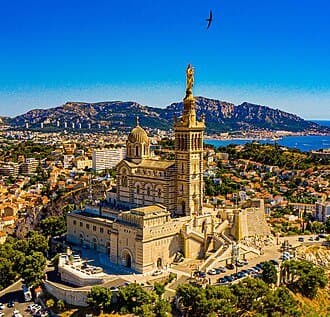
The 2026 Marseille mayoral election will determine who leads France's second-largest city and one of its most important Mediterranean ports for a six-year term. Municipal elections in France are held every six years, with the next scheduled for March 2026. The mayor of Marseille presides over a metropolitan area of over 1.6 million people and manages a municipal budget exceeding 2.5 billion euros. This election is particularly significant as it follows the 2020 election that saw a major political shift, ending a quarter-century of center-right governance. The election will test the durability of that shift and the political realignment in a city with complex social and economic challenges. Interest in the prediction market stems from Marseille's status as a bellwether for urban politics in southern France and its history of volatile political changes. The outcome will influence national political calculations ahead of the 2027 French presidential election, as parties assess their strength in major urban centers. Observers are watching to see if the current governing coalition can maintain its hold or if opposition parties can mount an effective challenge in a city known for its distinct political culture.
Marseille's political history has been dominated by the center-right for most of the post-war period. From 1953 to 1995, the city was led by Gaston Defferre of the Socialist Party, an unusually long tenure for a French mayor. After Defferre's death, Jean-Claude Gaudin of the center-right Union for French Democracy (later The Republicans) won the 1995 election and governed for 25 years. Gaudin's lengthy administration faced criticism over urban decay and corruption allegations, creating conditions for political change. The 2020 election marked a historic break from this pattern. A coalition of left-wing parties, ecologists, and communists called Printemps Marseillais won the election, making Michèle Rubirola the first green mayor of a major French city. Her resignation due to health reasons seven months later brought Benoît Payan to power, but the coalition maintained its council majority. This shift reflected growing voter concern about environmental issues and dissatisfaction with the previous administration's handling of urban development and social inequality. The 2026 election will reveal whether 2020 represented a lasting realignment or a temporary protest vote against Gaudin's long tenure.
The Marseille mayor controls substantial resources, including a 2.5 billion euro annual budget and oversight of France's largest commercial port. The election winner will shape development projects like the Euroméditerranée urban renewal zone, which aims to create 50,000 jobs. These decisions affect not only Marseille's 860,000 residents but also the broader regional economy of southern France. Political control of Marseille influences national power dynamics. As France's second city, Marseille often serves as a testing ground for policies and political strategies. A victory for the left in 2026 would strengthen progressive parties ahead of the 2027 presidential election, while a center-right comeback would signal resilience of traditional parties in urban areas. The election also has social implications for a city struggling with inequality. Marseille has some of France's highest poverty rates alongside wealthy neighborhoods, and different administrations pursue contrasting approaches to housing, policing, and social services. The mayor's policies directly affect daily life in neighborhoods with vastly different economic conditions.
As of late 2024, Mayor Benoît Payan leads a coalition government that faces ongoing challenges including housing affordability, public transportation reliability, and crime reduction. The opposition is fragmented, with center-right figures like Martine Vassal and Renaud Muselier positioning themselves for potential candidacies but not yet formally declaring. Political observers note that national political trends, particularly President Emmanuel Macron's declining popularity and the rise of the far-right National Rally, could influence local alliances and voter behavior in Marseille. The Printemps Marseillais coalition has maintained its council majority but faces internal debates about policy direction and candidate selection for 2026. Preliminary polling suggests a competitive race, though most voters remain undecided this far from the election.
French municipal elections are scheduled for March 2026, though exact dates will be set by the government in late 2025. The election typically occurs over two rounds on consecutive Sundays in March.
Voters elect municipal councilors through a two-round proportional system with a majority bonus. The council then elects the mayor from among its members. Lists must receive at least 10% of votes to advance to the second round.
The Printemps Marseillais coalition won the 2020 election. Michèle Rubirola initially became mayor but resigned in December 2020, after which Benoît Payan was elected mayor by the municipal council.
Key issues include housing affordability, public transportation, crime and security, economic development, environmental policy, and management of the port. Marseille's high poverty rate and urban inequality make social policy particularly salient.
As France's second-largest city and main Mediterranean port, Marseille is politically significant. Its elections often indicate broader trends in urban politics, particularly in southern France, and influence national party strategies.
A list can win an absolute majority of votes in the first round, which would give it half the council seats plus one, virtually guaranteeing the election of its mayoral candidate. This has not happened in recent Marseille elections.
Educational content is AI-generated and sourced from Wikipedia. It should not be considered financial advice.
5 markets tracked

No data available
| Market | Polymarket | Kalshi | Diff |
|---|---|---|---|
![]() | 85% | 85% | 1% |
![]() | 13% | 12% | 2% |
![]() | 1% | 1% | 0% |
![]() | 1% | 1% | 0% |
Different
Similar

in 2026 If X wins the 2026 Marseille mayoral election, then the market resolves to Yes. For parliamentary elections, the party or coalition with the most seats wins. If two parties tie in seats: the one entering government will resolve to Yes and all others to No. If both or neither enter government, the one with the higher share of the vote will resolve to Yes and all others to No. For coalitions/alliances, only those formally registered with electoral authorities before the nomination deadlin

The Marseille mayoral election is scheduled to take place in France on March 15, 2026, with a potential runoff on March 22, 2026. This market will resolve according to the candidate who wins the 2026 Marseille mayoral election to become the next elected Mayor of Marseille. Temporary, interim, or placeholder mayors appointed before the election will not be considered. This market includes any potential second round. If the result of this election isn't known by December 31, 2026, 11:59 PM ET,


The Marseille mayoral election is scheduled to take place in France on March 15, 2026, with a potential runoff on March 22, 2026. This market will resolve according to the candidate who wins the 2026 Marseille mayoral election to become the next elected Mayor of Marseille. Temporary, interim, or p

If Benoît Payan wins the 2026 Marseille mayoral election, then the market resolves to Yes. Secondary rules: For parliamentary elections, the party or coalition with the most seats wins. If two parties tie in seats: the one entering government will resolve to Yes and all others to No. If both or neit


The Marseille mayoral election is scheduled to take place in France on March 15, 2026, with a potential runoff on March 22, 2026. This market will resolve according to the candidate who wins the 2026 Marseille mayoral election to become the next elected Mayor of Marseille. Temporary, interim, or p

If Franck Allisio wins the 2026 Marseille mayoral election, then the market resolves to Yes. Secondary rules: For parliamentary elections, the party or coalition with the most seats wins. If two parties tie in seats: the one entering government will resolve to Yes and all others to No. If both or ne


The Marseille mayoral election is scheduled to take place in France on March 15, 2026, with a potential runoff on March 22, 2026. This market will resolve according to the candidate who wins the 2026 Marseille mayoral election to become the next elected Mayor of Marseille. Temporary, interim, or p

If Martine Vassal wins the 2026 Marseille mayoral election, then the market resolves to Yes. Secondary rules: For parliamentary elections, the party or coalition with the most seats wins. If two parties tie in seats: the one entering government will resolve to Yes and all others to No. If both or ne


The Marseille mayoral election is scheduled to take place in France on March 15, 2026, with a potential runoff on March 22, 2026. This market will resolve according to the candidate who wins the 2026 Marseille mayoral election to become the next elected Mayor of Marseille. Temporary, interim, or p

If Sébastien Delogu wins the 2026 Marseille mayoral election, then the market resolves to Yes. Secondary rules: For parliamentary elections, the party or coalition with the most seats wins. If two parties tie in seats: the one entering government will resolve to Yes and all others to No. If both or

No related news found
Polymarket
$80.85K
Kalshi
$11.23K
Add this market to your website
<iframe src="https://predictpedia.com/embed/fxBBHA" width="400" height="160" frameborder="0" style="border-radius: 8px; max-width: 100%;" title="Marseille Mayoral Election Winner"></iframe>