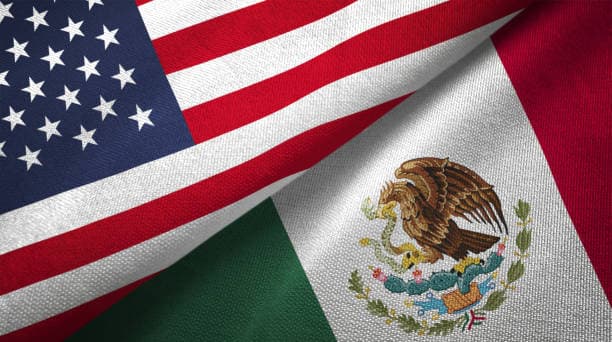
Will the U.S. invade Mexico in 2026?
$255.95K
1
1
Will the U.S. invade Mexico in 2026?
$255.95K
1
1
AI Analysis
Trader mode: Actionable analysis for identifying opportunities and edge
About This Event
This market will resolve to "Yes" if the United States commences a military offensive intended to establish control over any portion of Mexican land territory by December 31, 2026, 11:59 PM ET. Otherwise, this market will resolve to "No". For the purposes of this market, land de facto controlled by Mexico or the United States, as of market creation, will be considered the sovereign territory of that country. The resolution source for this market will be a consensus of credible reporting.
This saved analysis is awaiting a background update. Its prices and claims may be outdated; compare them with the dated market data above.
Current Market Outlook
Polymarket traders give a U.S. invasion of Mexico in 2026 an 8% chance. That is not zero, but it is close. The market says this scenario is unlikely enough that you would need to believe in a truly radical break from U.S. foreign policy to bet on yes. With $105,000 in volume, the market has attracted real money from people who see something worth hedging against.
An 8% probability means the market sees this as a tail risk. It is the kind of bet that pays off only if something goes catastrophically wrong in U.S.-Mexico relations. The market does not expect that to happen, but it is not ruling it out entirely either.
Key Factors Driving the Odds
The low probability reflects basic geopolitical reality. The United States and Mexico share a 1,954-mile border and $800 billion in annual trade. A military invasion would destroy the USMCA trade agreement, trigger a humanitarian crisis, and face near-universal international condemnation. No serious U.S. policymaker has proposed anything close to this.
The 8% figure likely comes from two sources. First, the market was created during a period of heightened anti-immigrant rhetoric in the 2024 U.S. election cycle. Some traders may have priced in a small chance that a future administration takes extreme action. Second, the market explicitly excludes covert operations or limited strikes. It requires "establishing control over any portion of Mexican land territory." That is a high bar.
What Could Change These Odds
The biggest catalyst would be a major escalation in cartel violence that spills into the United States. If a cartel attack kills dozens of Americans on U.S. soil, political pressure for a military response could spike. But even then, a full invasion is unlikely. The U.S. has conducted limited operations against cartels in the past without claiming territory.
The December 2026 resolution date also matters. The 2026 FIFA World Cup will be co-hosted by the United States, Mexico, and Canada in June and July. An invasion during that period is nearly impossible to imagine. The market would need to see a dramatic shift before the World Cup or a complete breakdown of bilateral relations after it. Neither looks likely right now.
AI-generated analysis based on market data. Not financial advice.
Saved Jul 30, 2026 UTCThis saved content is awaiting a background update. It may contain outdated claims; use the dated market data and provider rules for the latest available information.
Overview
The prediction market question 'Will the U.S. invade Mexico in 2026?' asks whether the United States will launch a military offensive to establish control over any part of Mexican territory by the end of that year. This is a highly speculative scenario rooted in geopolitical tensions, historical precedents, and recent policy debates. The question does not specify a reason for such an invasion, but it implies a dramatic escalation in U.S.-Mexico relations, potentially triggered by cartel violence, border security failures, or a major national security crisis. The market's resolution criteria require a consensus of credible reporting, meaning that a formal declaration of war or a large-scale military incursion would be necessary for a 'Yes' outcome. As of now, no mainstream U.S. political leader or military official has publicly advocated for such an action, and the idea remains firmly in the realm of fringe speculation. However, the topic has gained traction in online forums and among alternative media commentators who point to past U.S. interventions in Latin America and the growing militarization of the border. The U.S. and Mexico share a 1,954-mile border and are deeply integrated economically through the USMCA trade agreement, making a full-scale invasion logistically and economically disruptive. The question also reflects broader anxieties about U.S. foreign policy under different administrations, with some observers noting that the 2024 U.S. presidential election could bring a leader more willing to use military force abroad. Despite the low probability of this event, the market serves as a barometer for extreme geopolitical risk and public perception of U.S.-Mexico relations.
Historical Context
The United States has a long history of military intervention in Mexico, dating back to the Mexican-American War (1846-1848), which resulted in the U.S. annexation of California, Texas, and other territories. In 1914, U.S. forces occupied the port of Veracruz during the Mexican Revolution. In 1916, General John J. Pershing led a punitive expedition into Mexico to capture Pancho Villa, a mission that lasted 11 months and failed to achieve its objective. These interventions generated lasting resentment in Mexico and reinforced a strong tradition of anti-interventionism in Mexican foreign policy. More recently, the U.S. has used military force in Latin America, including the 1989 invasion of Panama to oust Manuel Noriega, and covert operations in Nicaragua and Guatemala during the Cold War. However, no U.S. administration has invaded a neighboring country since the 19th century, and Mexico is a much larger and more capable nation than those targets. The U.S. and Mexico are also bound by the 1947 Rio Treaty, a mutual defense pact that would make an invasion a violation of international law. In 2023, a small number of U.S. lawmakers, including Senator Lindsey Graham, proposed authorizing military force against cartels, but these proposals did not advance. The historical record shows that while U.S.-Mexico relations have been fraught with tension, a full-scale invasion remains an extreme outlier.
Why It Matters
A U.S. invasion of Mexico would be one of the most consequential military actions in modern history, with immediate and severe economic consequences. The two countries trade over $800 billion annually, and the U.S.-Mexico border is the busiest land border in the world. An invasion would disrupt supply chains, particularly in automobiles, electronics, and agriculture, potentially triggering a recession in both countries. It would also likely cause a humanitarian crisis, with millions of refugees fleeing the conflict zone. Politically, an invasion would strain U.S. relations with all of Latin America, undermine the USMCA trade agreement, and prompt international condemnation. Domestically, it would polarize U.S. politics, with critics accusing the administration of imperialism and supporters citing national security. The broader significance lies in what it reveals about the potential for the U.S. to abandon diplomatic and legal norms in favor of unilateral military action. For Mexico, an invasion would be a national trauma, potentially destabilizing the government and empowering cartels. The question also matters for global geopolitics, as it would signal a return to 19th-century interventionism and could embolden other nations to pursue aggressive territorial claims.
Frequently Asked Questions
Could the U.S. actually invade Mexico?
Legally and logistically, yes, the U.S. has the military capability to invade Mexico, but it would be a massive operation with severe consequences. Politically, it is highly unlikely given the lack of public support, the economic integration between the two countries, and international law constraints.
Why would the U.S. want to invade Mexico?
The most commonly cited hypothetical reason is to combat drug cartels and fentanyl trafficking. Some U.S. politicians argue that the Mexican government is unable or unwilling to control cartels, justifying unilateral U.S. action. However, this remains a fringe view.
Has the U.S. invaded Mexico before?
Yes, the U.S. invaded Mexico during the Mexican-American War (1846-1848) and launched smaller incursions in 1914 (Veracruz) and 1916 (Pancho Villa Expedition). These events are a source of historical tension.
What would happen if the U.S. invaded Mexico?
An invasion would likely trigger a military conflict, economic collapse, a refugee crisis, and international condemnation. It would also destabilize the U.S. economy due to disrupted trade and supply chains.
Is there any support in the U.S. Congress for invading Mexico?
A small number of Republican lawmakers, such as Senator Lindsey Graham, have proposed authorizing military force against cartels, but these proposals have not gained significant traction. No mainstream bill for an invasion has been introduced.
How does the USMCA trade deal affect the likelihood of invasion?
The USMCA binds the U.S., Mexico, and Canada into a free trade agreement with dispute resolution mechanisms. An invasion would violate the treaty and likely lead to its collapse, causing major economic harm to all parties.
AI-written background. References identify the evidence used; Wikipedia links under Learn More are additional reading. Prices and provider rules are dated snapshots. This is not financial advice.
Market Insights
Price gaps of 2 pp+
0
Saved price pairs
0
No exact saved pairs with both binary Yes prices are available.
Price differences do not establish arbitrage. Check each pair's review, current order prices, fees and settlement rules.