$29.35K
1
1

1 market tracked

No data available
| Market | Platform | Price |
|---|---|---|
![]() | Poly | 8% |
Trader mode: Actionable analysis for identifying opportunities and edge
On January 24, President Trump announced that the United States would apply a 100% tariff to all imports from Canada if a trade deal with China goes through. (see: https://www.reuters.com/world/china/trump-threatens-canada-with-100-tariff-over-possible-deal-with-china-2026-01-24/). This market will resolve to “Yes” if a general 100% tariff rate or higher on imports into the United States from Canada goes into effect for any amount of time by June 30, 2026, 11:59 PM ET. Otherwise, this market wi
AI-generated analysis based on market data. Not financial advice.
$29.35K
1
1
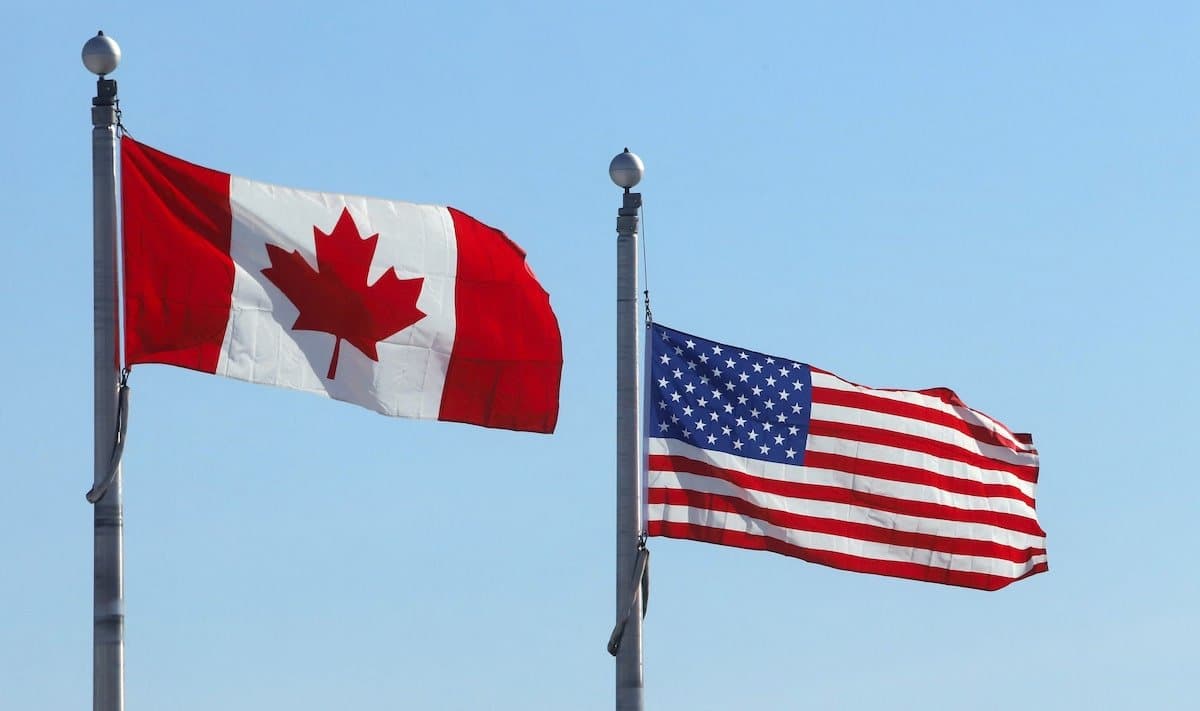
This prediction market concerns the possibility of the United States imposing a 100% tariff on all imports from Canada by June 30, 2026. The threat originates from a statement made by former President Donald Trump on January 24, 2026. He announced that such a tariff would be applied if Canada finalizes a trade deal with China. The market resolves to 'Yes' if this specific tariff rate or higher is implemented on Canadian imports for any duration before the deadline. The statement has introduced significant uncertainty into North American trade relations and financial markets. The threat is notable for its severity. A 100% tariff would effectively double the cost of Canadian goods entering the U.S., a drastic measure compared to typical trade disputes. The conditionality of the threat, linking U.S.-Canada trade policy to Canada's independent negotiations with China, represents an unusual geopolitical linkage. Interest in this market stems from its potential to disrupt one of the world's largest bilateral trading relationships. Traders are assessing the political will behind the threat, the likelihood of Canada proceeding with a China deal, and the economic fallout that would follow such a dramatic policy shift. The outcome has direct implications for companies, supply chains, and consumers in both nations.
U.S.-Canada trade relations have been governed by free trade agreements since 1989, first with the Canada-U.S. Free Trade Agreement and then the North American Free Trade Agreement (NAFTA) in 1994. This history makes the threat of a 100% tariff particularly stark. The relationship faced its most significant recent stress test during the Trump administration's first term. In 2018, the U.S. imposed tariffs of 25% on steel and 10% on aluminum from Canada, citing national security concerns under Section 232 of the Trade Expansion Act of 1962. Canada retaliated with tariffs on $16.6 billion worth of U.S. goods, targeting politically sensitive products like bourbon and agricultural goods. This tit-for-tat conflict lasted nearly a year before being lifted as part of the negotiations for the United States-Mexico-Canada Agreement (USMCA), which replaced NAFTA and took effect in July 2020. The USMCA included updated rules on digital trade, automotive manufacturing, and labor standards, but did not eliminate the potential for future unilateral tariffs. The current threat is unprecedented in its proposed scope, targeting all imports rather than specific sectors, and in its conditional trigger based on a third country (China).
The implementation of a 100% tariff would cause immediate and severe economic dislocation. For the United States, it would raise costs for consumers and manufacturers who rely on Canadian raw materials, energy, and finished goods, potentially fueling inflation. Key integrated supply chains, especially in automotive and aerospace, would face catastrophic disruption, leading to production halts and job losses on both sides of the border. For Canada, which sends about 75% of its exports to the U.S., such a tariff would trigger a deep recession, devaluation of the Canadian dollar, and severe pressure on provincial and federal budgets. Politically, it would represent the most serious rupture in U.S.-Canada relations in modern history, damaging diplomatic cooperation on continental defense, Arctic security, and other shared priorities. The threat alone could chill business investment and force companies to reconsider long-term North American operational plans, regardless of the final outcome.
As of early 2026, the 100% tariff is a threat, not an implemented policy. The condition for its implementation, a finalized Canada-China trade deal, has not been met. Public reporting indicates Canada and China are engaged in trade discussions, but no agreement has been signed. The U.S. Trade Representative's office has not initiated any formal legal process, such as a Section 301 investigation, that would typically precede such broad tariffs. The U.S. presidential election in November 2026 will occur before the June 30 deadline, adding a layer of political uncertainty. Market participants are monitoring official statements from Ottawa and Washington, the pace of Canada-China negotiations, and any legislative or regulatory moves that could signal preparation for tariff implementation.
U.S. consumers would face immediate price increases on a wide range of goods. Everyday items like maple syrup, seafood, lumber, and paper products would see significant cost jumps. More substantially, prices for cars, due to integrated supply chains, and home heating fuel, due to imports of Canadian natural gas and electricity, would rise sharply.
No. The U.S. has not imposed a blanket 100% tariff on all imports from a major economic partner in the modern trade era. Historical high tariffs, like the Smoot-Hawley Tariff Act of 1930, averaged about 20%. Recent sectoral tariffs on China under Section 301 reached 25%, but never 100% on all goods from a single country.
The president has several legal authorities that could be cited. The most likely is Section 301 of the Trade Act of 1974, which allows the president to respond to foreign practices that burden U.S. commerce. The International Emergency Economic Powers Act (IEEPA) could also be used if an emergency were declared, though this would be legally contentious for a trade action against an ally.
Canada would almost certainly impose retaliatory tariffs on U.S. exports. Given the disproportionate scale, Canada would likely target politically sensitive U.S. products to maximize political pressure. Historical targets have included agricultural goods from swing states, manufactured products from key congressional districts, and possibly restrictions on energy exports or transit.
As of early 2026, Canada and China are engaged in exploratory trade talks. No comprehensive deal has been finalized or signed. Previous negotiations have focused on areas like agriculture, clean technology, and dispute resolution, but have been complicated by diplomatic tensions over issues like human rights and the detention of Canadian citizens.
Educational content is AI-generated and sourced from Wikipedia. It should not be considered financial advice.
No related news found
Add this market to your website
<iframe src="https://predictpedia.com/embed/i-QyCW" width="400" height="160" frameborder="0" style="border-radius: 8px; max-width: 100%;" title="100% tariff on Canada in effect by June 30?"></iframe>