$87.08K
1
5

$87.08K
1
5
Trader mode: Actionable analysis for identifying opportunities and edge
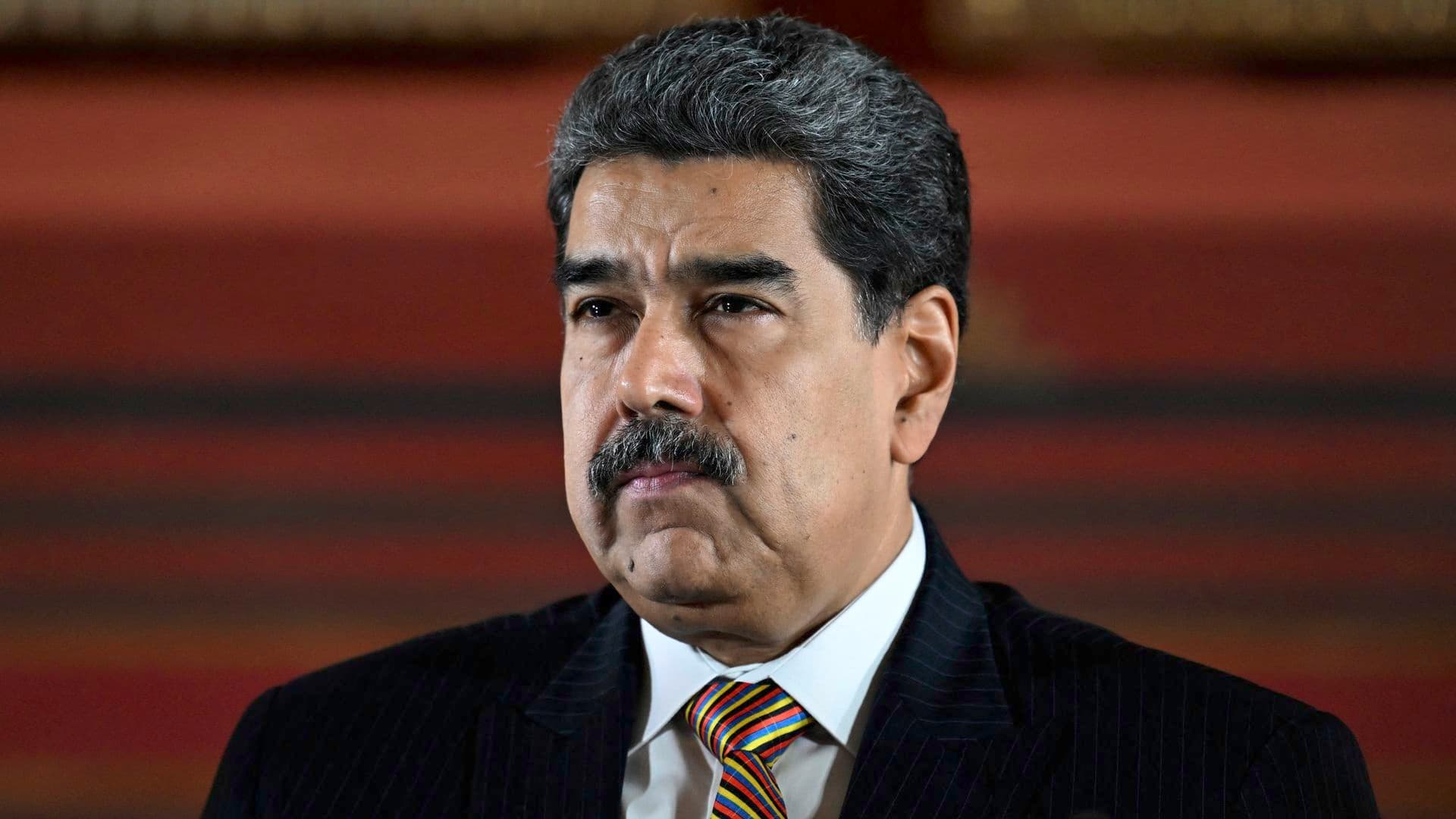
Venezuelan President Nicolas Maduro was indicted in the Southern District of New York on January 3, 2026 on charges including Narco-Terrorism Conspiracy and Cocaine Importation Conspiracy. Maduro was indicted alongside alleged co-conspirators in an indictment titled "United States of America V. Nicolás Maduro Moros, Diosdado Cabello Rondón, Ramón Rodríguez Chacín, Cilia Adela Flores de Maduro, Nicolás Ernesto Maduro Guerra". This market will resolve according to the prison sentence, if any, imp
Prediction markets currently assign a 47% probability that Venezuelan President Nicolás Maduro will be sentenced to at least 60 years in prison. This price, trading at 47¢ on a $1.00 contract, indicates the market views a lengthy sentence as essentially a coin flip. The thin liquidity, with only $87,000 in total volume, suggests this remains a speculative, high-conviction market rather than one with deep institutional consensus. The extended resolution date of December 31, 2027, reflects the understanding that any potential trial and sentencing would be a protracted legal and geopolitical process.
Two primary factors are anchoring the odds near the midpoint. First is the unprecedented nature of the charges. The 2026 indictment from the Southern District of New York on narco-terrorism and cocaine importation conspiracy charges is extraordinarily severe, carrying mandatory minimum sentences that could justify a 60-year outcome if a conviction is secured. This legal severity provides a concrete basis for the "Yes" position.
Second, and counterbalancing the first, is the monumental practical and political barrier to enforcement. Maduro remains the sitting head of state of Venezuela, a country with which the U.S. has no extradition treaty. The market is effectively pricing in the significant likelihood that he never appears in a U.S. courtroom to face sentencing, making the legal charges a largely geopolitical tool unless a radical change of government in Venezuela occurs.
The odds will be highly sensitive to political developments within Venezuela. A decisive opposition victory in a future election, or a military coup that ousts Maduro and leads to a cooperative government, could cause the probability of a lengthy sentence to surge, as a path to extradition or trial opens. Conversely, any formal diplomatic negotiations between the U.S. and the Maduro government that involve dropping these charges as a bargaining chip would cause the "Yes" probability to collapse. Key dates to watch are any scheduled Venezuelan elections or major U.S. policy announcements regarding Venezuela, as these are the most probable catalysts for a major price shift. The thin liquidity means any credible news could trigger sharp price movements.
AI-generated analysis based on market data. Not financial advice.
This prediction market addresses whether Venezuelan President Nicolás Maduro will face prison time following his indictment by the United States Department of Justice. On January 3, 2026, a federal grand jury in the Southern District of New York unsealed an indictment charging Maduro and several alleged co-conspirators with serious crimes, including Narco-Terrorism Conspiracy and Cocaine Importation Conspiracy. The charges allege that Maduro, as the leader of the 'Cartel of the Suns,' conspired to flood the United States with cocaine, using drug trafficking as a state policy to undermine the U.S. and enrich himself and his regime. The indictment represents one of the most direct legal challenges to a sitting head of state by the U.S. government, raising profound questions about sovereignty, international law, and the potential for extradition and prosecution. People are interested in this topic because it sits at the intersection of geopolitics, international justice, and the decades-long war on drugs, with implications for U.S.-Latin America relations, the stability of Venezuela, and the precedent for holding foreign leaders accountable. The market specifically resolves based on the length of any prison sentence Maduro ultimately receives, making it a concrete measure of the legal and political outcome of this unprecedented case.
The U.S. indictment of President Maduro is the culmination of a long-standing accusation that high-level Venezuelan officials are involved in drug trafficking. This narrative gained significant traction in the 2000s with the emergence of the 'Cartel of the Suns' label, referring to corrupt Venezuelan National Guard officers who used their power to traffic drugs. U.S. authorities have targeted Venezuelan officials for decades, with major cases including the 2005 indictment and eventual conviction of General Ramón Guillén Davila for smuggling cocaine on Venezuelan Air Force planes. The relationship deteriorated further under President Hugo Chávez and his successor, Maduro. In March 2020, the U.S. Department of Justice unsealed a separate indictment against Maduro and more than a dozen other officials on narcoterrorism charges, offering a $15 million reward for information leading to his capture. The 2026 indictment builds directly on these prior allegations but represents a formal escalation by presenting a new, detailed set of charges from a grand jury. Historically, the U.S. has had mixed success in extraditing and prosecuting high-profile foreign officials, making this case a potential landmark in international criminal law.
The potential imprisonment of Nicolás Maduro matters profoundly for Venezuela, the region, and international justice. For Venezuela, it represents a possible endpoint for the political crisis that has driven mass migration and economic collapse. A successful prosecution could dismantle the current power structure, but it also risks further destabilizing a country already on the brink, potentially triggering a violent power struggle or foreign intervention. Regionally, it tests the limits of hemispheric relations. While some Latin American governments oppose the U.S. exercising jurisdiction over a sitting president, others may see it as a necessary step toward accountability. The case also has significant implications for the global war on drugs and the principle of sovereign immunity. If successful, it could establish a precedent for using U.S. courts to prosecute foreign leaders accused of transnational crimes, altering the landscape of international relations and justice. The outcome will directly affect millions of Venezuelans whose future is tied to the nation's governance, as well as U.S. foreign policy in Latin America for years to come.
As of early 2026, the indictment is active, but Nicolás Maduro remains in Venezuela as its sitting president, protected by the Venezuelan military and security services. The U.S. government continues to seek his extradition, but Venezuela has no extradition treaty with the U.S. and has dismissed the charges as a politically motivated fabrication. The practical path to bringing Maduro to trial in New York remains unclear, likely requiring his departure from Venezuela and capture in a third country willing to extradite him, or a dramatic political change within Venezuela itself. Diplomatic efforts to resolve Venezuela's political crisis continue independently, but the indictment adds a major complicating factor to any negotiations.
Yes, U.S. courts have held that they have jurisdiction to indict foreign officials for crimes that impact the United States, regardless of diplomatic immunity. However, enforcing that indictment by arresting a sitting head of state is an extremely complex political and legal challenge, as they are generally protected by sovereign immunity while in office.
It is the name given by U.S. and other authorities to a network of allegedly corrupt high-ranking Venezuelan officials, particularly in the military and government, who use their positions to facilitate international drug trafficking. The name derives from the sun insignia worn by generals in the Venezuelan Armed Forces.
Yes, but rarely. The most famous case is Manuel Noriega of Panama, who was captured by U.S. forces during the 1989 invasion and tried and convicted in Miami. His case, however, involved a direct military intervention, not a standard extradition from a friendly third country.
The 2026 indictment charges Maduro with four counts: Narco-Terrorism Conspiracy, Cocaine Importation Conspiracy, Possession of Machine Guns and Destructive Devices in Furtherance of the Narco-Terrorism Conspiracy, and Conspiracy to Possess Machine Guns and Destructive Devices. The charges carry potential sentences of 10 years to life imprisonment.
If Maduro remains in power in Venezuela indefinitely, the U.S. indictment would effectively be unenforceable unless the Venezuelan government itself changes and agrees to hand him over, or he is captured abroad. The indictment would remain outstanding, potentially restricting his travel and serving as a permanent legal claim against him.
Educational content is AI-generated and sourced from Wikipedia. It should not be considered financial advice.
Share your predictions and analysis with other traders. Coming soon!
5 markets tracked

No data available
| Market | Platform | Price |
|---|---|---|
![]() | Poly | 47% |
![]() | Poly | 22% |
![]() | Poly | 16% |
![]() | Poly | 10% |
![]() | Poly | 5% |


No related news found
Add this market to your website
<iframe src="https://predictpedia.com/embed/i0xQeS" width="400" height="160" frameborder="0" style="border-radius: 8px; max-width: 100%;" title="Maduro Prison Time?"></iframe>