$88.63K
1
1

1 market tracked

No data available
| Market | Platform | Price |
|---|---|---|
![]() | Poly | 2% |
Trader mode: Actionable analysis for identifying opportunities and edge
This market will resolve to "Yes" if a natural meteoroid (bolide) explodes in Earth's atmosphere with a total impact energy greater than or equal to 1 megaton (1000 kilotons) of TNT equivalent between January 1 and December 31, 2026, 11:59 PM ET. Otherwise, this market will resolve to “No”. The object must be classified as a natural meteoroid; events involving artificial objects or reentry vehicles do not qualify. The primary resolution source will be the NASA JPL Fireball and Bolide Data repo
AI-generated analysis based on market data. Not financial advice.
$88.63K
1
1
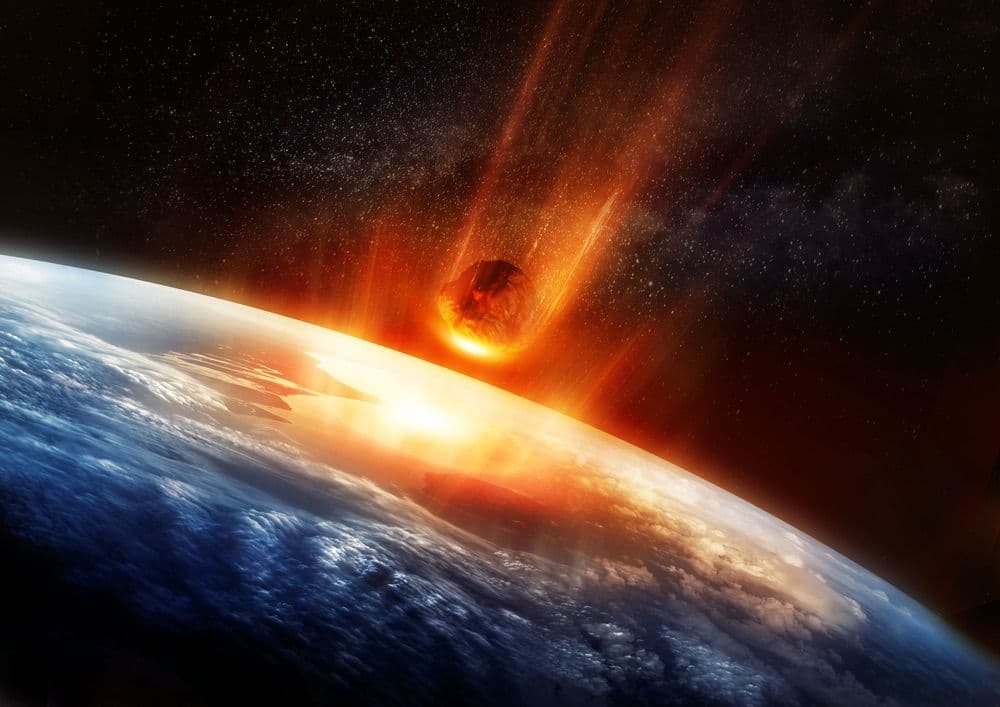
This prediction market addresses whether Earth will experience a meteoroid airburst with energy equivalent to 1 megaton of TNT or greater during the 2026 calendar year. An airburst, or bolide event, occurs when a meteoroid explodes in the atmosphere before reaching the ground. The energy threshold of 1 megaton is significant, representing the explosive force of approximately 66 times the atomic bomb dropped on Hiroshima. The market specifically excludes artificial objects like space debris or reentering satellites, focusing solely on natural extraterrestrial bodies. Resolution will be determined primarily by data from NASA's Jet Propulsion Laboratory (JPL) Fireball and Bolide Reports, which uses U.S. government sensor data to detect and characterize such events globally. Interest in this market stems from both scientific curiosity about the frequency of large near-Earth object (NEO) interactions and public awareness of planetary defense. While a 1-megaton event would not cause a global catastrophe, it could generate significant local damage if it occurred over a populated area. The year 2026 has no specific astronomical predictions for such an event, making this a pure probabilistic assessment based on historical rates. The topic connects to broader discussions about asteroid impact risk and the capabilities of global monitoring networks.
The modern understanding of meteoroid airbursts was fundamentally shaped by the 1908 Tunguska event in Siberia. On June 30, 1908, a meteoroid estimated at 50-60 meters in diameter exploded with an energy of 3-5 megatons, flattening over 2,000 square kilometers of forest. This event demonstrated that large airbursts could cause substantial regional damage without forming a crater. For decades, it was considered a rare, century-scale event. This perception changed dramatically on February 15, 2013, when a much smaller (~20 meter) asteroid exploded over Chelyabinsk, Russia. The Chelyabinsk meteor released energy estimated at 400-500 kilotons of TNT, injuring over 1,500 people primarily from broken glass. It was the largest recorded airburst since Tunguska and was captured extensively on dashboard and security cameras. Crucially, it was not detected in advance by any space agency, highlighting a blind spot in global monitoring for smaller objects. These two events bookend the energy scale relevant to this prediction market: Chelyabinsk was 0.4-0.5 megatons, while the market threshold is 1 megaton. Tunguska was 3-5 megatons. Historical data from U.S. government sensors, made public by NASA since the 1990s, shows that 1-megaton events are infrequent but not unprecedented in recent history.
A confirmed 1-megaton event in 2026 would have immediate scientific and political ramifications. Scientifically, it would provide a rare data point for calibrating impact frequency models. It could trigger a reassessment of the estimated population of mid-sized near-Earth objects, which are large enough to cause regional damage but small enough to evade current telescopic surveys until they are very close. Politically, such an event would likely accelerate funding and international cooperation for planetary defense programs. It would test the response protocols of the International Asteroid Warning Network and could influence public perception of space-based threats. Economically, even an airburst over an ocean or unpopulated area could affect aviation, satellite operations, and insurance markets concerned about low-probability, high-consequence events. For the global public, a visible daytime fireball of that magnitude would be a stark reminder of Earth's place in a dynamic solar system. It would demonstrate the ongoing need for investment in detection infrastructure, such as the NEO Surveyor space telescope planned for launch later this decade.
As of late 2024, there are no specific forecasts or known objects predicted to cause a 1-megaton airburst in 2026. Monitoring continues via ground-based telescopes like the Catalina Sky Survey and Pan-STARRS, alongside space-based assets. The planned NEO Surveyor infrared space telescope, designed to discover potentially hazardous asteroids, is in development but not scheduled for launch until 2028. The primary data stream for resolving this market, the NASA JPL Fireball Reports, is updated regularly with events typically posted within days of detection by U.S. government sensors. The most recent significant public event was a ~50 kiloton burst over the Atlantic Ocean in 2023, well below the market threshold.
An asteroid is a rocky object in space larger than 1 meter. A meteoroid is a smaller particle, from dust to 1 meter in size. When a meteoroid enters Earth's atmosphere and vaporizes, creating a streak of light, it is called a meteor. A very bright meteor is a fireball or bolide.
NASA uses data from classified U.S. Department of Defense satellites designed to detect infrared signatures of missile launches. These sensors detect the intense heat of a meteoroid entry. The energy is calculated from the total radiated light, which correlates to the kinetic energy released.
Yes, potentially. The damage radius depends on the burst altitude. A 1-megaton airburst at 20 km altitude could generate a shockwave capable of breaking windows and causing minor structural damage over an area tens of kilometers across, similar to but larger than the Chelyabinsk event.
Oceans cover about 71% of Earth's surface. Statistically, most random impact events will occur over water. Furthermore, daytime events over land can be missed if clouds obscure the flash from satellites, while sensors detect them reliably over open ocean.
The last publicly confirmed event near this threshold was on December 18, 2018, over the Bering Sea. NASA's JPL estimated its energy at 173 kilotons, but subsequent analysis by other scientists using different data suggested it may have been closer to 1 megaton.
Educational content is AI-generated and sourced from Wikipedia. It should not be considered financial advice.

No related news found
Add this market to your website
<iframe src="https://predictpedia.com/embed/i3Ef2B" width="400" height="160" frameborder="0" style="border-radius: 8px; max-width: 100%;" title="1 megaton meteor strike in 2026?"></iframe>