$9.03K
1
1

1 market tracked

No data available
| Market | Platform | Price |
|---|---|---|
![]() | Poly | 6% |
Trader mode: Actionable analysis for identifying opportunities and edge
This market will resolve to "Yes" if there is a military engagement between the military forces of Greece and Turkey by June 30, 2026, 11:59 PM ET. Otherwise, this market will resolve to "No". A "military engagement" is defined as any incident involving the use of force such as missile strikes, artillery fire, exchange of gunfire, or other forms of direct military engagement between Greek and Turkish military forces. Non-violent actions, such as warning shots or missile launches that land in te
Prediction markets are currently assigning a low probability to the risk of a Greece-Turkey military engagement by June 30, 2026. On Polymarket, the "Yes" share trades at approximately 5 cents, implying just a 5% chance. This pricing suggests traders view a direct, violent clash between the two NATO allies as a low-likelihood tail risk for the given timeframe, not a central expectation.
Two primary factors are suppressing the odds. First, despite a long history of bilateral tensions over Aegean Sea sovereignty, airspace violations, and the Cyprus dispute, direct military engagements have been avoided for decades. The established pattern is one of controlled escalation and de-escalation, with both sides understanding the catastrophic consequences of conflict. Second, NATO's institutional framework acts as a powerful deterrent. A military clash would create an unprecedented crisis within the alliance, a risk both capitals and their international partners actively work to mitigate through diplomatic channels.
The odds could rise significantly from their current low base due to an unforeseen crisis or miscalculation. The most immediate catalyst would be a major hydrocarbon discovery in contested waters, leading to unilateral drilling or naval standoffs that spiral out of control. A severe domestic political crisis in either country could also increase the risk, as leaders might be tempted to use nationalist rhetoric and military posturing for domestic gain, potentially leading to accidents. Monitoring diplomatic communications following routine airspace violations or joint military exercises will be key. The market's low liquidity means any major geopolitical development could cause sharp price volatility.
AI-generated analysis based on market data. Not financial advice.
$9.03K
1
1
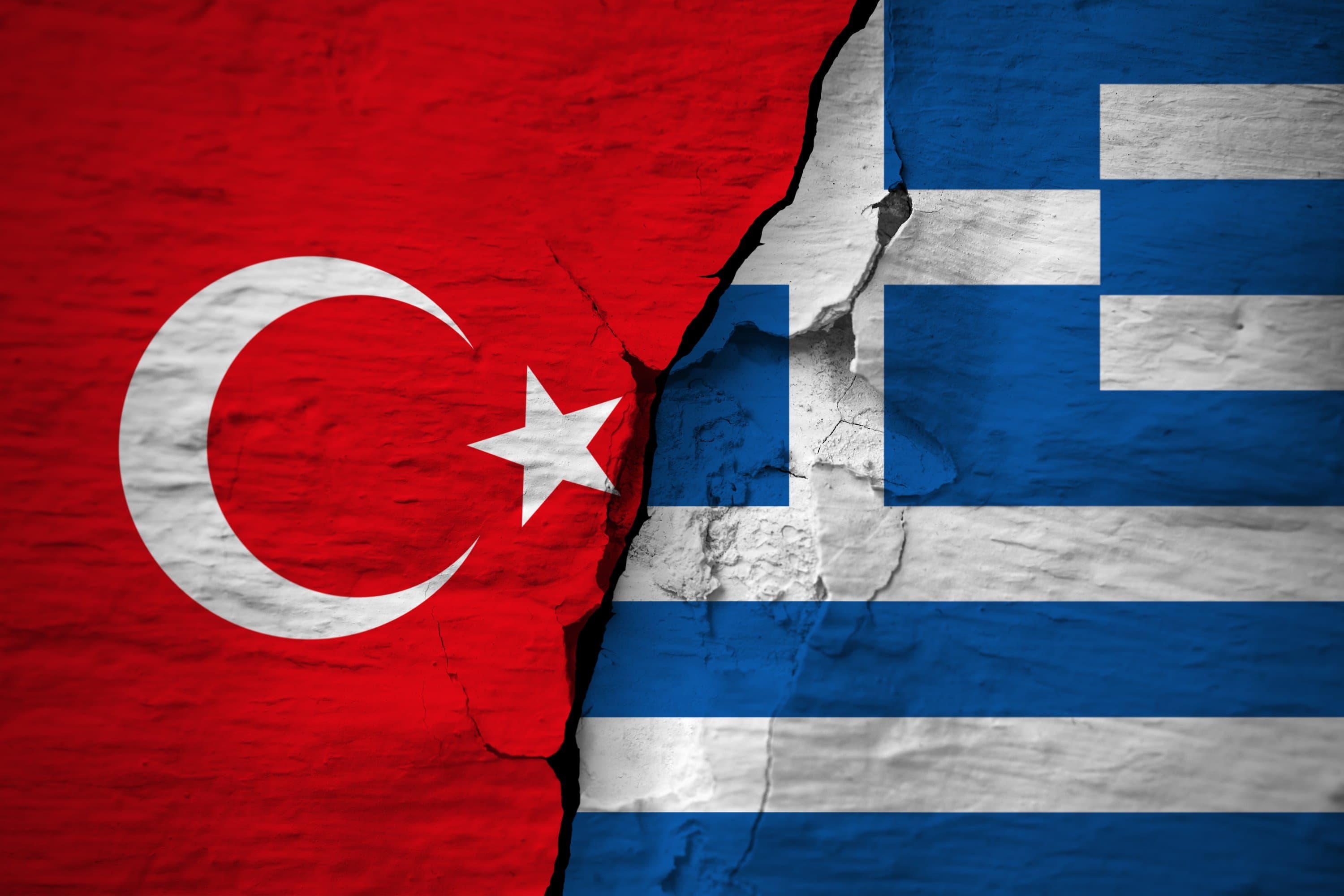
This prediction market addresses the possibility of direct military conflict between Greece and Turkey, two NATO allies with a long history of territorial disputes, by June 30, 2026. The market resolves to 'Yes' if there is any incident involving the use of force, such as missile strikes, artillery fire, or an exchange of gunfire, between their respective military forces. This topic sits at the intersection of longstanding Aegean Sea sovereignty disputes, recent escalations in rhetoric and military posturing, and the broader geopolitical tensions in the Eastern Mediterranean. Interest stems from the potential for a localized incident to spiral into a broader crisis, testing NATO's cohesion and threatening regional energy exploration and shipping lanes. Recent years have seen repeated close encounters between Greek and Turkish fighter jets and naval vessels, alongside inflammatory political statements, raising the perceived risk of an accidental or intentional clash. Analysts monitor several flashpoints, including airspace violations over the Aegean, competing maritime claims, and the status of Greek islands near the Turkish coast.
The modern Greco-Turkish rivalry has roots in the dissolution of the Ottoman Empire and the subsequent population exchanges following the 1919-1922 Greco-Turkish War. A pivotal moment was the 1974 Turkish invasion of Cyprus, which led to the island's division and permanently soured relations. Since then, disputes have primarily centered on the Aegean Sea, involving competing claims over territorial waters, national airspace, and the continental shelf. The Imia/Kardak crisis of 1996 brought the two nations to the brink of war over a pair of uninhabited islets, requiring U.S. mediation to avert conflict. In 2020, tensions spiked again when Turkey dispatched the seismic survey vessel Oruç Reis, escorted by warships, into waters Greece claims as its continental shelf, leading to a major naval standoff. This historical pattern shows cycles of escalation and de-escalation, where nationalistic rhetoric and military posturing around disputed rocks, islets, and maritime zones repeatedly create high-risk environments. Past incidents have often been triggered by symbolic actions, such as planting a flag or a civilian landing on disputed territory, which then prompt military mobilization.
A military engagement between Greece and Turkey would have profound consequences far beyond a bilateral clash. As NATO allies, such a conflict would represent the first war between member states in the alliance's history, severely testing its foundational principle of collective defense and potentially paralyzing its decision-making structures. Economically, the Eastern Mediterranean is a crucial corridor for global energy shipments and a region with significant offshore natural gas prospects. Conflict would disrupt shipping lanes, threaten exploration projects, and create volatility in energy markets. Politically, it could destabilize the entire region, drawing in other actors. The EU would face immense pressure to support Greece, potentially leading to severe sanctions against Turkey and a collapse of the EU-Turkey migration deal, which has been critical to managing refugee flows into Europe. Domestically, nationalist sentiments in both countries would surge, making diplomatic resolution even more difficult and potentially empowering hardline factions in their respective governments.
As of late 2024, tensions remain elevated but managed. A period of cautious diplomacy began in late 2023, leading to resumed high-level talks and an agreement to maintain communication channels. However, underlying grievances are unresolved. Turkey continues to question the militarization of Greek islands in the eastern Aegean, which it claims violates treaties. Greece maintains its right to defend its territory. Military activity, including air patrols and naval exercises, continues at a high tempo in the region. The situation is characterized as a 'fragile detente', where a single unexpected incident or a provocative political statement could rapidly reignite a crisis. International actors, primarily the United States and NATO, continue to actively encourage restraint and dialogue.
The core disputes involve the delimitation of territorial waters and airspace in the Aegean Sea, rights to the continental shelf for resource exploration, the militarization status of Greek islands near the Turkish coast, and the long-standing division of Cyprus. These issues are interconnected and rooted in differing interpretations of international law.
Yes, the nations have fought several wars throughout history. The most recent direct conflict was the Greco-Turkish War from 1919 to 1922. While they have not engaged in full-scale war since then, they have had multiple severe crises, such as in 1974 over Cyprus and 1996 over the Imia islets, that brought them to the brink of military conflict.
The 'Blue Homeland' (Mavi Vatan) is a Turkish nationalist maritime doctrine that asserts expansive sovereign rights for Turkey in the Black Sea, Aegean Sea, and Eastern Mediterranean. It directly conflicts with Greek claims and is a key driver behind Turkey's assertive naval and energy exploration policies in disputed areas.
NATO operates on consensus, making intra-alliance disputes particularly challenging. The Secretary General typically acts as a mediator, facilitating military de-confliction talks to prevent accidental clashes. NATO avoids taking sides on the underlying sovereignty disputes, focusing instead on crisis management and maintaining technical military communication lines.
The discovery of potential natural gas reserves in the Eastern Mediterranean has significantly raised the stakes. Both countries seek to exploit these resources, but their overlapping maritime claims create conflict. Turkey's dispatch of survey ships to disputed zones, such as the Oruç Reis in 2020, has been a major trigger for naval standoffs.
Educational content is AI-generated and sourced from Wikipedia. It should not be considered financial advice.
Share your predictions and analysis with other traders. Coming soon!

No related news found
Add this market to your website
<iframe src="https://predictpedia.com/embed/i4qKct" width="400" height="160" frameborder="0" style="border-radius: 8px; max-width: 100%;" title="Greece x Turkey military engagement by June 30?"></iframe>