$932.11K
1
1
1 market tracked

No data available
| Market | Platform | Price |
|---|---|---|
![]() | Poly | 3% |

$932.11K
1
1
Trader mode: Actionable analysis for identifying opportunities and edge
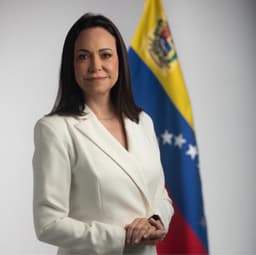
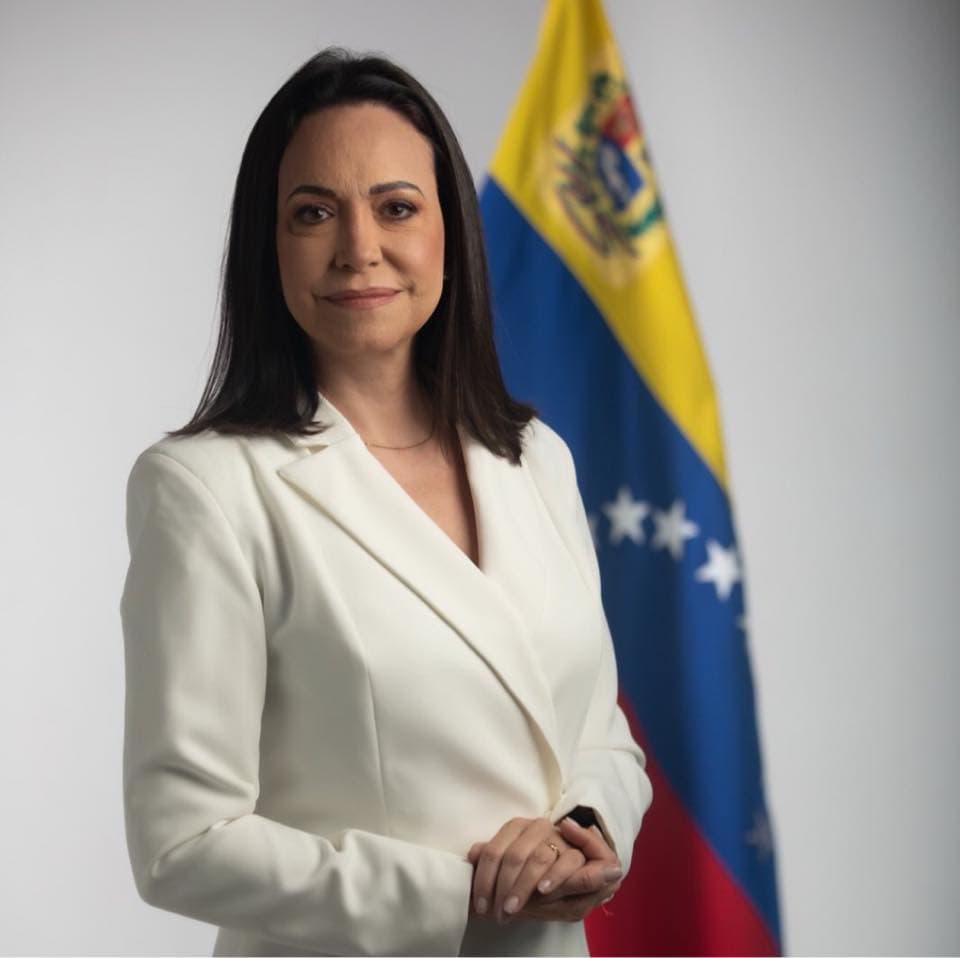
This market will resolve to "Yes" if the Trump administration announces that the United States officially recognizes Maria Corina Machado as the leader of Venezuela by January 31, 2026, 11:59 PM ET. Otherwise, this market will resolve to "No". Roles that could qualify for leader of Venezuela status include, but are not limited to, "head of state," "president," or other similar roles that give her primary executive authority in the territory of Venezuela. A qualifying US statement must be direc
Prediction markets currently assign a very low probability to the United States recognizing María Corina Machado as Venezuela's leader by the January 31, 2026 deadline. With shares trading at just 3¢ on Polymarket, this implies a mere 3% chance. This pricing indicates the market views such a dramatic diplomatic shift as highly improbable within the next two weeks. The substantial volume of over $930,000 confirms serious trader engagement with this geopolitical question, despite the overwhelming consensus on a "No" outcome.
The primary factor suppressing the odds is the entrenched status of Nicolás Maduro's government. Despite U.S. support for Machado as the legitimate winner of the 2024 opposition primary, Maduro maintains firm control over state institutions, the military, and territory. The Biden administration's current policy focuses on a negotiated electoral roadmap through the Barbados Agreement framework, not on unilateral recognition of a parallel government. Furthermore, Machado remains formally banned from holding public office by Venezuela's ruling party-aligned courts, a significant legal and practical barrier to U.S. recognition as "leader."
A second critical factor is the calendar. With only 16 days until resolution, there is no visible diplomatic process or imminent crisis that would compel the U.S. to abandon its existing strategy for a sudden, unilateral declaration. Such a move would represent a severe escalation, likely collapsing ongoing negotiations and forcing a regional diplomatic rupture, costs the current administration appears unwilling to bear.
The odds could experience volatility from a major, unforeseen political rupture in Venezuela, such as the sudden collapse of the Maduro regime or his incapacitation. A catastrophic breakdown of the Barbados Agreement talks, coupled with a severe new crackdown on the opposition, could pressure the U.S. to consider more radical options. However, these are tail-risk scenarios. The most likely path for odds to increase would be a clear, public shift in rhetoric from key U.S. officials or congressional leaders explicitly advocating for Machado's recognition as interim president, but no such signals are currently evident. The market will remain highly sensitive to any official statements from the White House or State Department before the deadline.
AI-generated analysis based on market data. Not financial advice.
This prediction market topic concerns whether the United States government will officially recognize Venezuelan opposition figure Maria Corina Machado as the legitimate leader of Venezuela by January 31, 2026. Such recognition would represent a significant escalation in U.S. policy toward the regime of Nicolás Maduro, potentially altering diplomatic relations, sanctions enforcement, and the handling of Venezuelan state assets abroad. The question arises amid a prolonged political crisis in Venezuela, where Maduro's 2018 re-election was widely condemned as illegitimate by the U.S., the European Union, and many Latin American nations, leading them to instead recognize Juan Guaidó as interim president from 2019 to 2022. Following the collapse of the Guaidó-led interim government, the U.S. and its allies have sought a unified opposition candidate, with Machado emerging as a frontrunner after winning a 2023 opposition primary by a landslide, despite being barred by Maduro's government from holding public office. The market's resolution depends on a formal announcement from the Trump administration, which would signal a return to a more confrontational U.S. stance, contrasting with the Biden administration's earlier engagement that led to a temporary sanctions relief deal in 2023. Observers are interested because U.S. recognition carries practical consequences, including potential control over frozen Venezuelan assets and influence over international financial institutions, making it a high-stakes geopolitical maneuver.
The current crisis has its roots in the death of Hugo Chávez in 2013 and the controversial election of his successor, Nicolás Maduro. Maduro's first term was marked by economic collapse and widespread protests. The political standoff intensified after the May 2018 presidential election, which was boycotted by the main opposition parties and denounced by organizations like the Organization of American States (OAS) for lacking minimum democratic guarantees. On January 23, 2019, Juan Guaidó, as head of the opposition-controlled National Assembly, declared himself interim president under articles 233 and 333 of the Venezuelan constitution, arguing Maduro's presidency was illegitimate. The United States, under President Trump, recognized Guaidó that same day, followed by over 50 other nations. This created a unique situation of dual claims to the presidency, with Maduro controlling the territory and Guaidó recognized abroad. The U.S. imposed severe sanctions on Venezuela's state oil company PDVSA in January 2019, freezing assets and blocking transactions. The Guaidó-led interim government's authority waned over time, especially after failed attempts to mobilize military defections. By late 2022, the opposition voted to dissolve the interim government, and the U.S. shifted policy under President Biden, granting a sanctions relief license in October 2023 in exchange for electoral commitments from Maduro, a license that was not renewed in April 2024 after Maduro barred Machado from running.
U.S. recognition of Maria Corina Machado as Venezuela's leader would have profound geopolitical and economic consequences. It would likely trigger a severe escalation of sanctions, potentially targeting Venezuela's remaining oil exports and financial dealings with third countries like India and China. This could further destabilize global energy markets, as Venezuela holds the world's largest proven oil reserves. Domestically, such recognition could fracture the Venezuelan opposition, which has united behind a single candidate for the 2024 election, and might provoke a harsh crackdown by the Maduro regime on Machado's supporters. For the Venezuelan people, it could mean a prolongation of the humanitarian crisis, as tightened sanctions would restrict government revenue needed for imports of food and medicine, while offering no immediate mechanism for a transfer of power. Regionally, it would strain relations between the U.S. and Latin American governments that favor dialogue over confrontation, such as Brazil and Colombia, and could be used by rivals like Russia to bolster anti-American sentiment. The move would also set a significant precedent for U.S. intervention in recognizing opposition figures in other contested political environments.
As of late 2024, the Venezuelan opposition, united under the Unitary Platform, is participating in the presidential election scheduled for late 2024 with candidate Edmundo González Urrutia, following the upheld disqualification of primary winner Maria Corina Machado. The U.S., under the Biden administration, did not renew a key sanctions relief license in April 2024, reimposing restrictions on Venezuela's oil and gas sector after the Maduro government failed to fully implement the Barbados Agreement. The Trump administration, inaugurated in January 2025, has signaled a review of Venezuela policy but has not made a formal declaration regarding recognition. Machado remains politically active, campaigning for González and maintaining her status as the opposition's symbolic leader. The Maduro government continues to control all state institutions and has indicated it will proceed with the election under its own terms.
It means the U.S. government formally acknowledges that individual as the legitimate head of state of their country, despite them not physically controlling the government. This grants them diplomatic status, can transfer control of frozen state assets, and directs U.S. agencies to engage with them instead of the de facto regime. It is a powerful political tool short of military intervention.
Venezuela's pro-Maduro Supreme Tribunal of Justice disqualified Machado in 2015, alleging administrative irregularities during her time as a legislator. The Comptroller General's Office upheld a 15-year disqualification in 2023, accusing her of supporting international sanctions and corruption. These actions are widely viewed by foreign governments and human rights groups as politically motivated to remove a popular rival.
Educational content is AI-generated and sourced from Wikipedia. It should not be considered financial advice.
Share your predictions and analysis with other traders. Coming soon!

No related news found
Add this market to your website
<iframe src="https://predictpedia.com/embed/iNcwG4" width="400" height="160" frameborder="0" style="border-radius: 8px; max-width: 100%;" title="U.S. recognizes Machado as leader of Venezuela by January 31?"></iframe>