$78.93K
1
2

$78.93K
1
2
Trader mode: Actionable analysis for identifying opportunities and edge
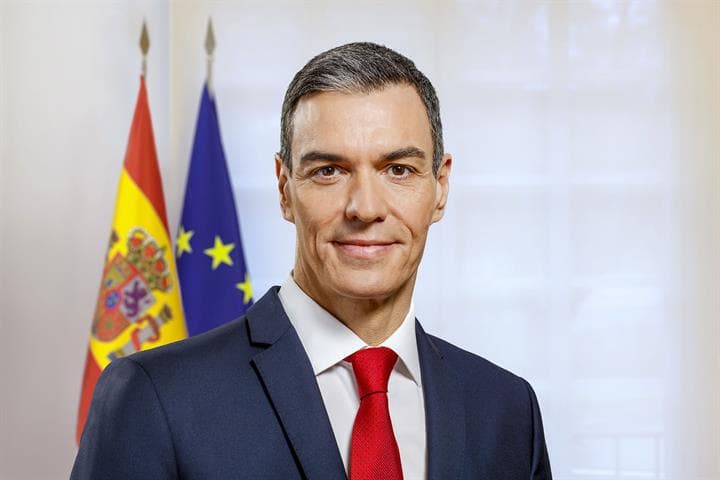
This market will resolve to "Yes" if Spain's Prime Minister, Pedro Sánchez, is removed from power for any length of time between December 2, 2025 and the listed date, ET. Otherwise, this market will resolve to "No". Prime Minister Pedro Sánchez will be considered removed from power if he announces his resignation, is dismissed, detained, disqualified, or otherwise loses his position or is prevented from fulfilling his duties as Prime Minister of Spain within this market's timeframe. The primar
Traders on prediction markets currently see a stable Spanish government. They give roughly a 1 in 4 chance that Prime Minister Pedro Sánchez will leave office before the end of 2026. In simpler terms, the collective bet is about 73% confidence that he will remain in power through that date. This suggests a belief that his coalition will likely survive its full term.
Two main factors support this forecast of stability. First, Sánchez’s Socialist Party (PSOE) leads a minority coalition that has proven resilient. He secured another term in late 2023 by building a complex parliamentary alliance with regional parties, including Catalan separatists. This deal, while fragile, has so far held for key votes.
Second, the main opposition, the conservative People’s Party (PP), holds more seats but has struggled to form a viable alternative majority. The rise of the far-right Vox party complicates the PP's path to power without relying on a controversial partnership that could alienate moderate voters. As long as Sánchez’s coalition partners continue to support the budget and major legislation, the government can function.
The next national election is not due until 2027, so the immediate risk to Sánchez comes from within parliament. Watch for regional elections in places like Catalonia and the Basque Country, as strong results for pro-independence parties could strain the coalition agreements keeping Sánchez in power. The annual budget approval process, typically in the fall, is another regular stress test. If his government fails to pass a budget, it could trigger an early election and potentially end his tenure.
Prediction markets have a mixed record on political stability in parliamentary systems. They often correctly identify when a government is secure for the near term, as seen here. However, they can be slow to price in sudden political crises, like a surprise no-confidence vote or the collapse of a key alliance. The low trading volume on this specific question also means the price could be more sensitive to new information. For context, markets gave similarly low odds to early elections in Spain just months before they were called in 2023, suggesting they can underestimate sudden shifts.
Prediction markets assign a 27% probability that Pedro Sánchez will leave his position as Prime Minister of Spain before the end of 2026. This price, trading at 27¢ for a "Yes" outcome, indicates the market views his departure within this timeframe as unlikely but not impossible. With only $79,000 in total volume, this is a relatively thin market where large bets could move the price significantly.
The low probability primarily reflects Sánchez's strengthened political position following the 2023 general election. His Spanish Socialist Workers' Party (PSOE) formed a renewed coalition government with Sumar and secured critical support from regional parties like Junts per Catalunya. This deal, which included a controversial amnesty law for Catalan separatists, provided him a viable parliamentary majority. Markets are pricing in the stability of this arrangement, at least in the short term. Historical context also matters. Sánchez has repeatedly survived no-confidence votes and political crises, demonstrating a consistent ability to retain power against long odds.
The stability of Sánchez's coalition is the central risk. His government depends on the continued support of Junts and the Basque Nationalist Party (PNV). A breach with either group over policy implementation or the amnesty process could collapse his majority, potentially triggering a new election or a successful no-confidence motion. Another major catalyst would be a significant deterioration in Sánchez's public approval, which could pressure his coalition partners to withdraw support. The next national election is not due until 2027, but an early election called in 2026 would fall within this market's resolution window and would be a direct pathway to a "Yes" outcome if he loses.
AI-generated analysis based on market data. Not financial advice.
This prediction market addresses the political stability of Spain's current government by tracking whether Prime Minister Pedro Sánchez will be removed from office between December 2, 2025, and a specified future date. Sánchez, leader of the Spanish Socialist Workers' Party (PSOE), has governed since 2018, but his tenure has been marked by fragile parliamentary coalitions. The market resolves to 'Yes' if Sánchez resigns, is dismissed, detained, disqualified, or otherwise loses his position within the timeframe. This includes scenarios where he is prevented from fulfilling his duties. The question reflects ongoing political volatility in Spain, where minority governments often depend on complex agreements with regional and smaller parties to pass legislation and maintain confidence. Recent years have seen repeated elections and close parliamentary votes, making the prime minister's position subject to shifting political alliances. Interest in this market stems from Spain's role as the European Union's fourth-largest economy and the potential for a change in government to alter domestic and foreign policy. Sánchez's administration has pursued progressive reforms on social issues, labor laws, and climate policy, which could be reversed under a different government. Political observers monitor his government's stability due to its narrow majority and reliance on support from parties like Sumar and Catalan separatist groups. The prime minister's future is also tied to judicial investigations into his wife, Begoña Gómez, which he has framed as a political attack, and to the performance of his coalition in upcoming regional and European elections.
Spain has experienced significant political fragmentation since the 2008 financial crisis, which eroded support for traditional parties like the PSOE and PP. The rise of new parties, including the left-wing Podemos (now part of Sumar) and the centrist Ciudadanos, ended the two-party system that dominated Spanish politics for decades. Pedro Sánchez first became prime minister in June 2018 after a successful vote of no confidence against Mariano Rajoy of the PP, triggered by a corruption scandal. Sánchez then led a minority government that lasted until February 2019, when he called an early election after failing to pass a budget. The April 2019 election produced another fragmented parliament, leading to a repeat election in November 2019. Sánchez finally formed a coalition government with Podemos in January 2020, Spain's first coalition government since the 1930s. This government relied on support from regional parties to pass legislation, including the 2021 budget. The coalition faced another crisis in 2023 when Podemos and its allies merged into Sumar ahead of the July general election. The election resulted in a virtual tie between the PP and PSOE, with the PP winning the most seats but unable to form a government. Sánchez secured a new term in November 2023 by negotiating support from Sumar, Catalan separatist parties Junts and the Republican Left of Catalonia (ERC), and Basque parties. This investiture deal included a controversial amnesty law for Catalan independence activists, which has sparked massive protests and legal challenges, echoing the political turmoil of the 2017 independence referendum.
The stability of Spain's government directly affects its economic policy, including management of the EU's recovery funds, which Spain is a major beneficiary of. A change in leadership could alter the implementation of reforms tied to these funds, impacting investment and growth. Politically, Sánchez's removal could trigger a period of uncertainty, potentially leading to new elections and a shift toward conservative or right-wing policies on immigration, social issues, and relations with Catalonia. Socially, the government's progressive agenda on gender equality, LGBTQ+ rights, and housing reform could be stalled or reversed under a different administration. The outcome also has implications for the European Union, where Spain has been a vocal advocate for EU integration and green policies. A new government might realign Spain's position on issues like EU fiscal rules or support for Ukraine. Domestically, the political climate is highly polarized, and a change in government could either calm or exacerbate tensions, particularly regarding Catalan independence and judicial independence. The situation also tests the resilience of Spain's democratic institutions, as allegations of political interference in the judiciary and media have become central to the debate.
As of late 2024, Pedro Sánchez remains in office, having survived the political crisis triggered by the investigation into his wife in April 2024. The preliminary judicial investigation into Begoña Gómez continues, with no formal charges filed as of December 2024. The government is focused on implementing its legislative agenda, including the 2025 budget, which requires negotiation with its parliamentary allies. The controversial amnesty law for Catalan separatists was passed by parliament in May 2024 but faces legal challenges in the Constitutional Court. Sánchez's coalition with Sumar remains intact, though tensions occasionally surface over policy details. The opposition People's Party and Vox continue to criticize the government daily and have called for protests against the amnesty law. The next major electoral test will be the European Parliament elections in June 2024, which could influence the domestic political climate.
Sánchez could lose power through a successful vote of no confidence initiated by the opposition, a breakdown of his coalition with Sumar, or the withdrawal of support from Catalan separatist parties like Junts. His resignation for personal or political reasons, or a legal disqualification stemming from the investigation into his wife, are also potential scenarios.
Spain's government is a minority coalition between the Socialist Party (PSOE) and the left-wing platform Sumar. It does not hold a majority in the 350-seat Congress of Deputies, so it must negotiate support from other regional parties on a vote-by-vote basis, particularly with Catalan and Basque parties, to pass laws and survive confidence votes.
Educational content is AI-generated and sourced from Wikipedia. It should not be considered financial advice.
2 markets tracked

No data available
| Market | Platform | Price |
|---|---|---|
![]() | Poly | 27% |
![]() | Poly | 8% |


No related news found
Add this market to your website
<iframe src="https://predictpedia.com/embed/iYL0Pn" width="400" height="160" frameborder="0" style="border-radius: 8px; max-width: 100%;" title="Pedro Sánchez out as PM of Spain by...?"></iframe>