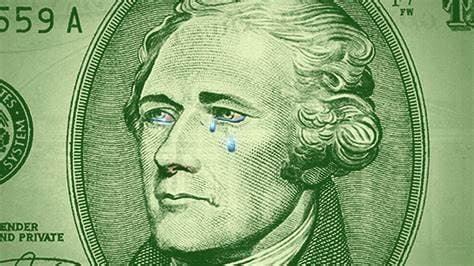
US defaults before 2027?
PM $19.9K · K 1.9K contracts
2
2
US defaults before 2027?
PM $19.9K · K 1.9K contracts
2
2
Current odds
Snapshot from
As of Oct 29, 2026, 12:00 AM UTC, Yes is priced at 1.5% on Polymarket, and the highest-priced outcome on Kalshi is Defaults at 1.3%.
Polymarket
- Yes1.5%
Kalshi
- Defaults1.3%
Yes prices. They are not order quotes; check each platform's rules, fees and live prices before trading.
AI Analysis
Trader mode: Market mechanics, assumptions and risks
PM $19.9K · K 1.9K contracts
Reported volume · provider units
2
Saved contracts
0
Same-question pairs
Source snapshot: Oct 29, 2026, 12:00 AM UTC
About This Event
In 2026 If the U.S. Department of the Treasury announces that the United States Federal Government failed to make a scheduled payment on a Treasury note, bond, or bill; or that one of the three major credit ratings agencies designate any United States debt in any form of default, before 2027, then the market resolves to Yes. Early close condition: If this event occurs, the market will close the following 10am ET. If this event occurs, the market will close the following 10am ET.
Snapshot observed 2026-10-28T12:00:06.236Z. This analysis describes that snapshot and is not a live news update.
What the contract measures
Both contracts ask whether the United States will default on its debt before 2027, but their wording differs. The Kalshi rule resolves Yes if the Treasury announces a missed scheduled payment on a Treasury note, bond, or bill, or if one of the three major credit ratings agencies designates any United States debt in any form of default, before 2027 [1]. The Polymarket rule resolves Yes if the federal government fails to make a scheduled payment on any Treasury note, bond, or bill between November 5, 2025, and December 31, 2026, 11:59 PM ET. It also resolves Yes if Standard & Poor's, Moody's, or Fitch publicly classifies U.S. sovereign debt as in default during that period [2]. The November 5, 2025 start date is a rule term, not an announced event.
Reading the snapshot
The provider observation time for both quotes is 2026-10-28T12:00:06.236Z. The source records were retrieved later, at 2026-10-28T18:22:38.995Z, so these figures describe that earlier observation and not live conditions. Kalshi shows Yes at 0.013 and No at 0.987 [1]. Polymarket shows Yes at 0.01 and No at 0.99 [2]. These are snapshot prices, not executable quotes or verified probabilities. The small difference between them does not by itself indicate an opportunity, because the rules and close times differ.
The listed close times also differ. Kalshi lists 2027-01-07T15:00:00.000Z [1], while Polymarket lists 2027-01-01T04:59:00.000Z [2]. The Kalshi excerpt says its end time was not supplied, so the market-level date is the only close time available for that contract.
Each event has one saved market, and the coverage records show no partial sample. The comparison therefore covers the only saved outcome pair for each provider. The evidence does not establish that these providers list every possible outcome.
What remains uncertain
The evidence does not explain why either price is where it is, and it does not show trading volume, liquidity, or the number of participants. Because the Kalshi rule turns on an announcement while the Polymarket rule turns on a missed payment or a rating agency classification, the two contracts may not resolve the same way in every scenario. The records also contain no later prices, so current pricing cannot be inferred from them.
References
- Kalshi: US defaults before 2027?. Provider data observed 2026-10-28T12:00:06.236Z.
- Polymarket: US defaults on debt by 2027?. Provider data observed 2026-10-28T12:00:06.236Z.
AI-generated analysis based on market data. Not financial advice.
Saved Oct 28, 2026 UTCOverview
This contract asks whether the United States will default on its debt before 2027. Two prediction markets list versions of the question. Kalshi's event, titled "US defaults before 2027?", resolves to Yes if the Department of the Treasury announces that the federal government failed to make a scheduled payment on a Treasury note, bond, or bill, or if one of the three major credit rating agencies designates any United States debt in default before 2027 [1]. Polymarket's event, titled "US defaults on debt by 2027?", uses a defined window running from November 5, 2025 to December 31, 2026 at 11:59 PM ET. It resolves to Yes if the federal government misses a scheduled payment on any Treasury note, bond, or bill in that window [2]. The two versions share the same core trigger, a missed scheduled Treasury payment, but they are not identical. Polymarket's wording names a specific start date and says the window is measured through the end of 2026 at 11:59 PM ET [2]. Kalshi's wording is framed around the calendar year 2026 and before 2027 [1]. Each platform's rules should be read in full before comparing them, because small differences in wording, timing, or the resolution source can change what counts. The market snapshot used here reflects prices observed at a specific time during the providers' active status. A price is a snapshot of the last recorded market level, not an executable quote, and it is not a verified probability that the event will happen. Trading volume also does not measure liquidity or the number of participants. Because the two platforms word their rules differently, a difference in their prices should not be treated as an arbitrage opportunity without a careful comparison of the contract terms.
Historical Context
The supplied background is limited. One available Wikipedia entry describes the 1998 Russian financial crisis, which began on 17 August 1998 and led the Russian government and Central Bank to devalue the ruble and default on the country's debt [4]. That event concerns Russia rather than the United States and does not establish any history of US Treasury default. The supplied sources do not provide a history of US debt payments or default events, so no broader historical comparison is made here.
Why It Matters
The contract measures whether a formal default on US government debt occurs during a defined period. Under Kalshi's rules, the trigger is either a Treasury announcement of a missed scheduled payment on a Treasury note, bond, or bill, or a credit rating agency designation of US debt as in default [1]. Polymarket's rules focus on a missed scheduled payment on any Treasury note, bond, or bill during its window, and also count a public default classification by Standard & Poor's, Moody's, or Fitch [2]. The distinction between a missed payment and a rating agency classification is central to how each contract would resolve. The listed contract end times and resolution dates are separate from the event itself. Polymarket's listed end time is 2027-01-01 04:59 UTC, which corresponds to 11:59 PM ET on December 31, 2026 [2]. A listed closing time does not mean that an event has occurred or that a resolution has been announced. As of the snapshot, the providers reported both markets as active, and no resolution outcome is established by the supplied evidence.
Snapshot context
The latest published provider snapshot for this topic was observed on 2026-10-28 at 12:00 UTC. It contains listings from Kalshi and Polymarket. Market descriptions and listed closing times define the contracts; they do not establish that the real-world outcome has occurred. This article does not include a separately verified news update. [1]
Frequently Asked Questions
What would make the Kalshi contract resolve to Yes?
The contract resolves to Yes if the Department of the Treasury announces that the federal government failed to make a scheduled payment on a Treasury note, bond, or bill, or if one of the three major credit rating agencies designates any US debt in any form of default, before 2027 [1].
What time window does the Polymarket contract cover?
Polymarket's contract covers the period between November 5, 2025, and December 31, 2026, 11:59 PM ET, and resolves to Yes only if a qualifying event occurs in that window [2].
Does a rating agency downgrade alone trigger a default resolution?
Neither platform's rules, as supplied, describe a downgrade alone as a default. Polymarket counts a public classification of US sovereign debt as being in default by Standard & Poor's, Moody's, or Fitch [2]. Kalshi counts a designation of US debt in default by one of the three major rating agencies [1]. The rules turn on a default designation, not on a general change in rating.
Does the price of a contract show the probability of default?
No. The supplied prices are snapshots from a specific observation time and are not executable quotes or verified probabilities [1][2]. They reflect the platform's recorded price at that moment, not a confirmed forecast.
AI-written background. References identify the evidence used; Wikipedia links under Learn More are additional reading. Prices and provider rules are dated snapshots. This is not financial advice.
Related prediction markets
Prices are catalog snapshots and may have changed. Check each market's rules and observation time.

US defaults before 2028?
K 2.5K contracts
Domino's US same store sales growth in Q1 2027
K 0.99 contracts
Walmart US comparable sales growth (ex-fuel) in Q3
K 5.0K contracts
Walmart US comparable sales growth (ex-fuel) in fiscal 2027
K 10.4K contractsDomino's total US stores in Q1 2027
K 3.5K contracts
US-Iran nuclear deal?
PM $20.52M · K 4.12M contractsUS-Iran Final Nuclear Deal by December 31, 2026?
Kalshi: Will the US agree to a new Iranian nuclear deal this year? (Before Jan 1, 2027)
Related contracts
US-Iran Final Nuclear Deal by November 30, 2026?
Kalshi: Will the US agree to a new Iranian nuclear deal this year? (Before Dec 1, 2026)
Related contracts
US-Iran Final Nuclear Deal by October 31, 2026?
Kalshi: Will the US agree to a new Iranian nuclear deal this year? (Before Nov 1, 2026)
Related contracts
Related or unreviewed contracts may settle differently. Their gap is not an equivalent-contract comparison.
Saved prices; check contract rules.
Market Insights
Price gaps of 2 pp+
0
Same-question pairs
0
No outcomes on this page have been reviewed as the same question on both platforms yet.
Price differences do not establish arbitrage. Check each pair's review, current order prices, fees and settlement rules.