$322.25K
1
9

$322.25K
1
9
Trader mode: Actionable analysis for identifying opportunities and edge
Elections for Nepal’s House of Representatives are scheduled for March 5, 2026. This market will resolve to the next individual who is officially sworn in as Prime Minister of Nepal following the next parliamentary election. To count for resolution, the individual must be formally sworn in. Any interim or caretaker Prime Minister will not count toward the resolution of this market. If no such Prime Minister is sworn in by December 31, 2026, 11:59 PM ET, this market will resolve to “Other”.
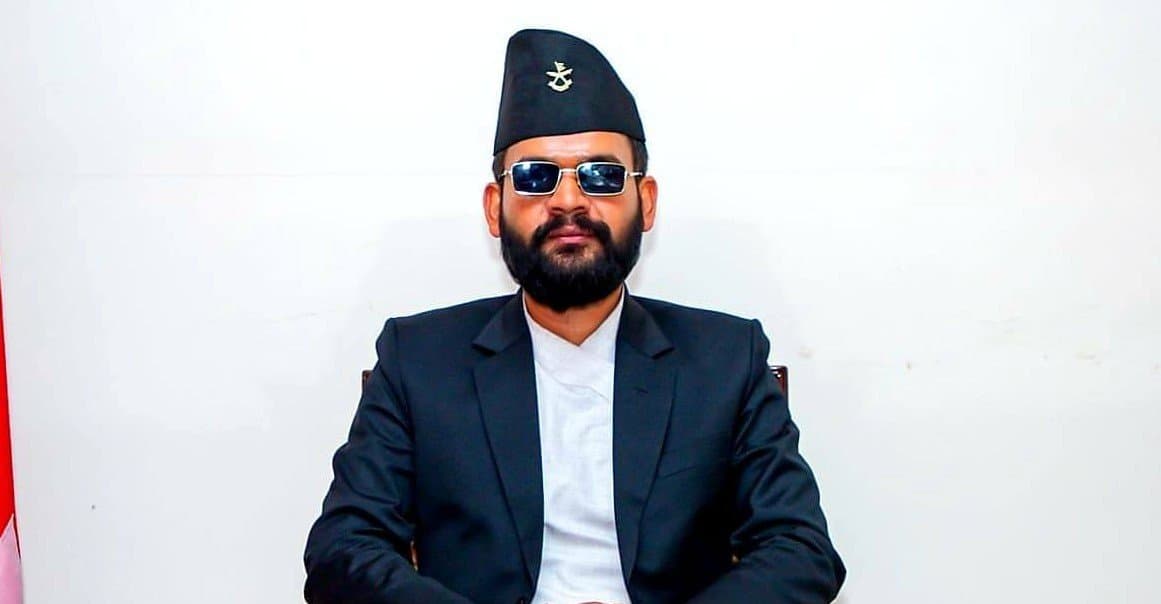
Traders on prediction markets currently see the race for Nepal's next prime minister as essentially a coin flip. The leading forecast gives Balendra "Balen" Shah a 54% chance, meaning the market thinks he is slightly more likely than not to be the next person formally sworn in after the 2026 election. This is not a confident prediction. It signals a highly uncertain political environment where no clear frontrunner has emerged more than a year and a half before the vote.
Two main factors explain these even odds. First, Balen Shah is a disruptive political force. He is the current mayor of Kathmandu, elected as an independent in 2022, and his rise represents a sharp break from Nepal's established party system. His popularity, particularly among younger voters, is based on a direct, problem-solving approach to local governance and anti-corruption rhetoric.
Second, the traditional political landscape is fragmented. Nepal has had ten different governments in the past sixteen years. Major coalitions led by the Nepali Congress and the CPN (Maoist Centre) have been unstable. The market is pricing in significant voter frustration with this status quo, creating an opening for an outsider like Shah. However, the immense challenge of translating local popularity into a nationwide parliamentary coalition keeps his odds from being higher.
The main event is the general election for the House of Representatives, scheduled for March 5, 2026. The weeks following the election will be critical, as the appointed prime minister must win a parliamentary vote and be formally sworn in. Before that, watch for two signals. The formation of pre-election alliances in late 2025 will show whether traditional parties are consolidating against outsiders. Also, the performance of Shah's nascent national political organization, if he formally launches one, in local by-elections will test whether his appeal extends beyond Kathmandu.
Prediction markets are generally useful for aggregating diverse political intelligence, but their accuracy this far from an event is limited. The high level of uncertainty priced in (a near 50/50 split) honestly reflects that reality. In volatile multi-party democracies, forecasts can shift rapidly with a single party defection or scandal. These markets are better at capturing the current mood than making a long-term prophecy. Treat this as a snapshot of informed sentiment, which sees a political outsider having a real, but far from certain, shot at the top job.
Prediction markets assign a 54% probability that Balendra "Balen" Shah becomes Nepal's next Prime Minister. This price indicates the market views his election as a slight favorite, but the outcome remains highly uncertain. The "Other" category trades at 28%, reflecting significant skepticism. With $317,000 in total volume, liquidity is sufficient for meaningful price discovery. The market resolves on March 5, 2026, the date of the scheduled parliamentary elections.
Balen Shah's current 54% price is driven by his unique political rise. He is the independent Mayor of Kathmandu, elected in 2022 on a technocratic, anti-establishment platform. His popularity, particularly among urban youth, stems from visible municipal improvements and direct public engagement. The market pricing suggests a belief that this local success can scale nationally, disrupting the traditional dominance of parties like the Nepali Congress and the CPN-UML. However, Nepal's parliamentary system requires forming a coalition government, which historically disadvantages independents. The 54% price balances his high personal popularity against the structural difficulty of securing a parliamentary majority without a formal party apparatus.
The largest near-term catalyst is the formation of pre-election alliances. If Balen Shah announces a formal coalition with a major party or establishes his own political party with a credible national structure, his odds would likely increase substantially. Conversely, if the established parties successfully coalesce against him or co-opt his reform message, his probability will fall. Key dates to watch are in late 2025, when party manifestos and alliances typically solidify. Another risk is the stability of the current government; any premature collapse leading to an early election before March 2026 would be a major volatility event, potentially resetting the political landscape.
As this market trades only on Polymarket, there is no arbitrage opportunity from cross-platform spreads. The 54% price for Balen Shah is the consolidated view of informed traders. The moderate liquidity means large bets can still move the price, so significant political news may cause sharper probability swings than in deeper markets. Traders should monitor Nepali political news directly, as Western media coverage of the election will be limited until much closer to the vote.
AI-generated analysis based on market data. Not financial advice.
This prediction market focuses on identifying who will become the next Prime Minister of Nepal following the parliamentary elections scheduled for March 5, 2026. The market will resolve to the individual formally sworn into the office after those elections, excluding any interim or caretaker appointments. If no new Prime Minister is sworn in by December 31, 2026, the market resolves to 'Other'. The question is significant because Nepal's political system has been characterized by instability, with frequent changes in government and shifting coalitions. The 2026 elections will be a major test for the country's federal democratic republic, established after the 2015 constitution, and will determine the direction of its domestic and foreign policy. Interest in this market stems from Nepal's strategic position between India and China, its ongoing economic challenges, and the complex dynamics between its major political parties, which often form fragile alliances to secure a parliamentary majority. The outcome will influence Nepal's approach to infrastructure development, foreign investment, and regional diplomacy.
Nepal transitioned from a monarchy to a federal democratic republic following a decade-long Maoist insurgency and a 2006 peace agreement. The monarchy was formally abolished in 2008. The current constitution, promulgated in 2015, established a federal structure with seven provinces and a bicameral federal parliament. This parliament consists of the House of Representatives (275 members) and the National Assembly (59 members). The Prime Minister is elected by a majority of the House of Representatives. Since the adoption of the 2015 constitution, Nepal has experienced considerable political instability. No single party has won an outright majority in parliamentary elections. The 2017 elections resulted in a left alliance between the CPN-UML and the CPN (Maoist Centre), which later merged to form the Nepal Communist Party (NCP). That government, led by KP Sharma Oli, dissolved the House of Representatives twice in 2020 and 2021, triggering constitutional crises and Supreme Court interventions. The court ultimately reinstated the House in 2021, leading to the collapse of the NCP and the formation of a coalition government under Sher Bahadur Deuba. This pattern of fragile coalitions and frequent no-confidence motions has defined the contemporary era.
The identity of the next Prime Minister will directly impact Nepal's economic trajectory and its handling of persistent challenges like high inflation, youth unemployment, and a reliance on remittances. The government's policy priorities will determine the pace of infrastructure projects, many of which are funded by foreign investment from China or India. This has significant geopolitical implications, as Nepal navigates its relationships with its two powerful neighbors. Domestically, the Prime Minister's ability to maintain a stable coalition affects governance and the implementation of federalism, which devolves power to provincial and local governments. Political instability at the federal level can hinder effective service delivery and development programs across the country. The outcome also matters for social cohesion, as political parties represent diverse ethnic, regional, and ideological interests. A government's approach to issues of social inclusion and representation can influence national unity.
As of late 2024, Nepal is governed by a coalition led by Prime Minister Pushpa Kamal Dahal of the CPN (Maoist Centre). This coalition includes the CPN-UML, the Rastriya Swatantra Party, and other smaller parties. The coalition has faced internal tensions, particularly regarding power-sharing agreements and cabinet positions. All major parties have begun preparations for the 2026 elections, with internal discussions on potential alliances and candidate selection underway. The electoral landscape is expected to be competitive, with newer parties like the Rastriya Swatantra Party aiming to disrupt the dominance of the traditional political forces.
The Prime Minister is elected by a majority vote of the 275-member House of Representatives, the lower house of the federal parliament. Members of Parliament (MPs) cast their votes, and a candidate must secure the support of more than half the present MPs. Typically, this requires forming a coalition of multiple political parties.
The three largest parties are the Nepali Congress (center-left), the Communist Party of Nepal (Unified Marxist–Leninist) (left), and the Communist Party of Nepal (Maoist Centre) (left). Other significant parties include the Rastriya Swatantra Party (centrist), the Rastriya Prajatantra Party (royalist/Hindu nationalist), and the Janata Samajbadi Party.
Nepal's proportional representation electoral system makes it difficult for any single party to win an outright majority in parliament. This system, designed to ensure inclusive representation, forces parties to negotiate post-election alliances to reach the 138-seat threshold needed to form a government, leading to fragile and often short-lived coalitions.
The President's role is largely ceremonial. After an election, the President invites the leader of the party or coalition that appears to command a majority in the House of Representatives to form a government. The President does not have discretionary power and acts on the advice of political leaders and the outcome of floor tests in parliament.
Yes. A Prime Minister can lose power through a vote of no-confidence in the House of Representatives. If the Prime Minister loses the support of the majority of MPs, they must resign. This has been a common occurrence, contributing to the frequent changes in government.
Educational content is AI-generated and sourced from Wikipedia. It should not be considered financial advice.
9 markets tracked

No data available
| Market | Platform | Price |
|---|---|---|
![]() | Poly | 52% |
![]() | Poly | 38% |
![]() | Poly | 5% |
![]() | Poly | 2% |
![]() | Poly | 1% |
![]() | Poly | 1% |
![]() | Poly | 1% |
![]() | Poly | 1% |
![]() | Poly | 0% |


No related news found
Add this market to your website
<iframe src="https://predictpedia.com/embed/j4ZPd-" width="400" height="160" frameborder="0" style="border-radius: 8px; max-width: 100%;" title="Next Prime Minister of Nepal"></iframe>