$949.47K
1
2

$949.47K
1
2
Trader mode: Actionable analysis for identifying opportunities and edge
This market will resolve to “Yes” if active US military personnel physically enter Venezuela at any point between market creation and the specified date, 11:59 PM ET. Military special operation forces will qualify; however, intelligence operatives will not count. US military personnel must physically enter the terrestrial territory of Venezuela to qualify. Entering Venezuela's maritime or aerial territory will not count. Military contractors, military advisors, or high-ranking US service mem
Prediction markets are currently assigning a low probability to the prospect of US military personnel physically entering Venezuela by January 31, 2026. With a "Yes" share trading at approximately 26% on Polymarket, the consensus indicates the event is viewed as unlikely, though not impossible. This price suggests about a 1 in 4 chance, reflecting significant skepticism about a direct US military incursion within the next 16 days. The market has attracted moderate liquidity, with nearly $950,000 in volume, signaling serious trader interest in this geopolitical risk.
The low probability is primarily anchored in the current US strategic posture and diplomatic landscape. The Biden administration has consistently favored sanctions and diplomatic pressure over military intervention to address the political and humanitarian crisis in Venezuela. Furthermore, any unilateral US military action on Venezuelan soil would constitute a major escalation, likely provoking severe regional backlash and complicating other foreign policy priorities. Historically, US military interventions in the Western Hemisphere since the Cold War have been rare and typically multilateral, a precedent the current odds reflect.
Secondly, the specific terms requiring physical entry by uniformed personnel, excluding intelligence operatives or contractors, set a high bar. Most ongoing US engagement is conducted through sanctions, support for regional partners, and diplomatic channels. The market effectively prices the low likelihood of a sudden, overt shift to a direct ground deployment within the resolution window.
A rapid shift in the security situation in Venezuela or the wider region could force a reassessment. A sudden, extreme escalation, such as a catastrophic state collapse threatening US citizens or assets, or a military confrontation between Venezuela and a neighboring US ally like Colombia, could increase the probability of intervention. The upcoming resolution date of January 31, 2026, is very near-term, so any catalyst would need to be immediate. Market odds could spike on breaking news of a major precipitating event, but the compressed timeline makes a fundamental change in US policy before the resolution date inherently unlikely.
AI-generated analysis based on market data. Not financial advice.
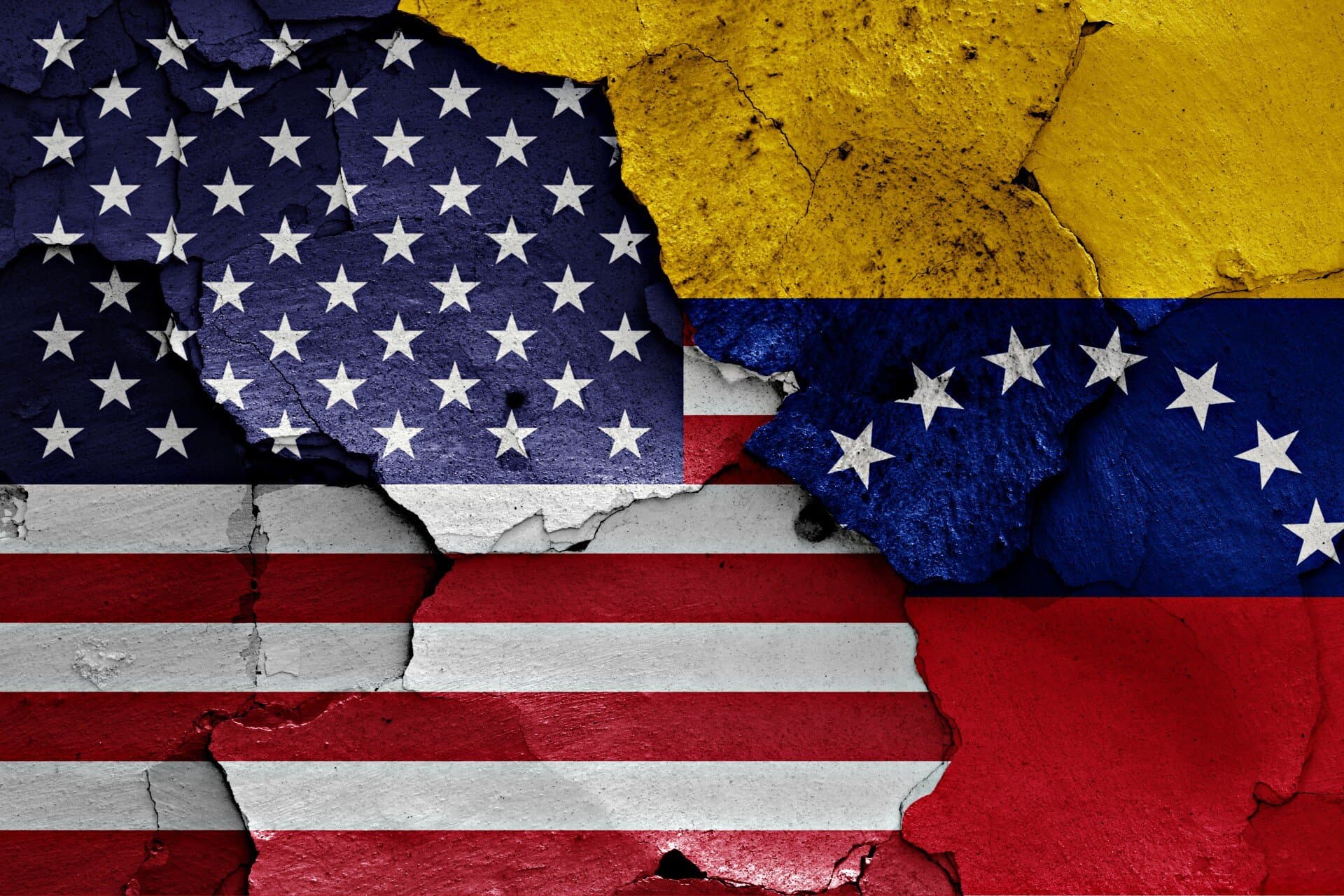
This prediction market topic concerns the possibility of active United States military personnel physically entering the terrestrial territory of Venezuela within a specified timeframe. The market resolves to 'Yes' if this occurs, with specific parameters excluding intelligence operatives, contractors, advisors, and entry into only maritime or aerial territory. The question arises within a complex geopolitical context of prolonged tensions between the US and the Venezuelan government of Nicolás Maduro. Recent years have seen escalating US sanctions, accusations of human rights abuses, drug trafficking, and anti-democratic actions against the Maduro administration, coupled with US recognition of opposition leader Juan Guaidó as interim president in 2019. Interest in this topic is driven by Venezuela's ongoing political and humanitarian crisis, its strategic importance as a major oil reserve holder, and its alliances with US adversaries like Russia, China, and Iran. Observers monitor for potential triggers for US military action, such as a dramatic escalation in internal conflict, threats to US personnel or assets, or a regional security crisis. The topic encapsulates a high-stakes scenario of direct foreign intervention in a sovereign state, with profound implications for international law, regional stability in Latin America, and US foreign policy.
US-Venezuela relations have been fraught for decades, but the modern crisis intensified after the death of populist leader Hugo Chávez in 2013 and the succession of Nicolás Maduro. The US imposed its first targeted sanctions on Venezuelan officials in 2015. In 2019, following Maduro's controversial re-election, the US, under President Donald Trump, recognized opposition leader Juan Guaidó as interim president, ratcheting up sanctions to an unprecedented level on Venezuela's vital oil sector. Trump administration officials, including National Security Advisor John Bolton and Secretary of State Mike Pompeo, repeatedly stated that 'all options are on the table,' explicitly including military action, to achieve a political transition. This rhetoric peaked around 2019 but did not result in deployment. Historically, the US has a long record of military interventions and covert operations in Latin America, including the 1989 invasion of Panama to oust Manuel Noriega and the 1961 Bay of Pigs invasion in Cuba. The 2002 coup attempt against Chávez, which the US was later revealed to have been aware of, further poisoned bilateral trust. These precedents inform current Venezuelan government rhetoric about US imperialism and shape international perceptions of US intentions.
The potential for US military forces entering Venezuela matters profoundly for regional and global stability. For Latin America, it would shatter long-held norms of non-intervention and sovereignty, potentially destabilizing neighboring countries like Colombia and Brazil, which already host millions of Venezuelan refugees. It could trigger a severe refugee crisis and destabilize cooperative regional bodies. Economically, Venezuela holds the world's largest proven oil reserves. Any conflict could disrupt global energy markets, spike oil prices, and impact the economies of oil-importing nations worldwide. Domestically in the US, such an action would be a major foreign policy commitment with significant financial cost and risk of American casualties, likely sparking intense political debate. Internationally, it would test alliances, potentially violate international law if not authorized by the UN Security Council, and risk escalation with Russia and China, both of which have vested economic and strategic interests in supporting the Maduro government. The humanitarian consequences within Venezuela, already suffering from severe shortages, could be catastrophic.
As of late 2023 and into 2024, the Biden administration has pursued a dual-track policy of maintaining core sanctions while engaging in diplomatic negotiations with the Maduro government. These talks, mediated in part by Qatar and Norway, led to a limited sanctions relief agreement in October 2023 in exchange for commitments toward a competitive presidential election in 2024. However, the Venezuelan Supreme Court, aligned with Maduro, upheld a ban on leading opposition candidate María Corina Machado in January 2024, casting doubt on the electoral process. The US responded by threatening to reinstate sanctions. There are no public indications of active planning for a US military incursion. The focus remains on diplomatic and economic pressure, though regional military exercises and continued US intelligence gathering on criminal and security threats emanating from Venezuela persist.
The United States has not conducted a large-scale military invasion or occupation of Venezuela in modern history. However, US military personnel have been present in various capacities, including as part of embassy security details, for joint training exercises with regional partners, and potentially in covert or advisory roles during periods of political tension, such as around the 2002 coup attempt.
Potential triggers could include a direct attack on US diplomatic personnel or assets, a catastrophic collapse of order threatening mass atrocities, a Venezuelan military attack on a neighboring US ally like Colombia, or evidence of the Venezuelan government transferring advanced weapons (e.g., from Russia) to groups deemed terrorist organizations by the US. Any action would likely require a significant, publicly justifiable casus belli.
The Monroe Doctrine, articulated in 1823, declared the Western Hemisphere off-limits to new European colonization. It has historically been used to justify US political and military intervention in Latin America. While modern US policy rarely cites it explicitly, the principle of resisting extra-hemispheric influence (like Russia's in Venezuela) remains a core strategic concern underlying US actions.
Under international law, sending troops into another sovereign state without its consent or a UN Security Council mandate is generally illegal. The US could potentially justify action under Article 51 of the UN Charter (self-defense), a regional treaty like the Inter-American Treaty of Reciprocal Assistance, or by invoking the Responsibility to Protect (R2P) doctrine in an extreme humanitarian crisis, though the latter is highly controversial and not universally accepted.
Educational content is AI-generated and sourced from Wikipedia. It should not be considered financial advice.
Share your predictions and analysis with other traders. Coming soon!
2 markets tracked

No data available
| Market | Platform | Price |
|---|---|---|
![]() | Poly | 26% |
![]() | Poly | 9% |


No related news found
Add this market to your website
<iframe src="https://predictpedia.com/embed/jtVTHX" width="400" height="160" frameborder="0" style="border-radius: 8px; max-width: 100%;" title="US forces in Venezuela again by...?"></iframe>