$597.43K
1
35

$597.43K
1
35
Trader mode: Actionable analysis for identifying opportunities and edge
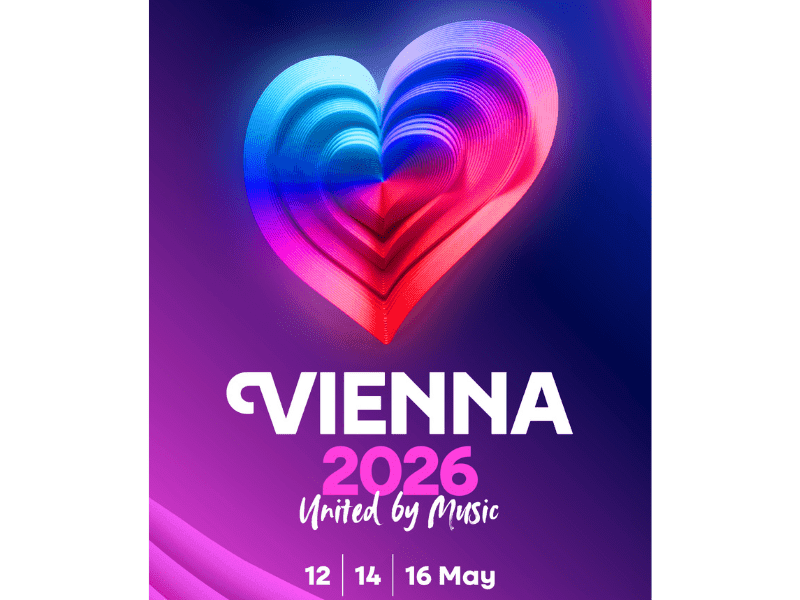
The Grand Final of the Eurovision Song Contest 2026 is scheduled for May 16, 2026. This market will resolve to the country that receives the highest number of points from the professional juries in the Grand Final of the Eurovision Song Contest 2026. All ties will be broken according to EBU's official Eurovision rules. If no winner is announced by July 31, 2026, 11:59 PM ET, this market will resolve to "No". The primary resolution source for this market will be official information from Euro
AI-generated analysis based on market data. Not financial advice.
This prediction market focuses on which country will win the professional jury vote at the Eurovision Song Contest 2026 Grand Final. The jury winner is determined by panels of music industry professionals from each participating country, who award points based on vocal capacity, stage performance, composition, and originality. This outcome is separate from the public televote, and the combined scores determine the overall contest winner. The 2026 contest will be the 71st edition of Eurovision, following the 2025 event in Switzerland. The jury system was reintroduced in 2009 to balance the influence of bloc voting and neighborly voting in the televote, creating a dual voting system that often produces different favorites. Interest in predicting the jury winner stems from its role as a key indicator of industry approval and its frequent divergence from public sentiment. Analysts track national broadcasters' historical voting patterns, the professional backgrounds of jury members, and musical trends favored by industry experts. The 2026 jury winner prediction involves assessing which country's entry best aligns with the technical criteria juries prioritize, such as vocal technique and songwriting quality, rather than pure popular appeal.
The professional jury system has a complex history within Eurovision. From 1956 to 1997, juries were the sole method of voting, often criticized for political voting blocs. Televoting was introduced in 1997 and became the primary system by 1998, leading to accusations of neighborly voting. In response to these concerns, the EBU reintroduced a 50/50 combined jury-televote system for the final in 2009. This reform aimed to balance popular appeal with professional assessment. The split has frequently produced different winners: the jury winner failed to win the overall contest in 2016 (Australia won the jury vote, Ukraine won overall), 2018 (Austria won the jury vote, Israel won overall), and 2023 (Sweden won the jury vote, Finland won the televote, Sweden won overall). The most dominant jury performer in recent history is Sweden, which has won the jury vote six times between 2011 and 2023. The rules for jury composition were tightened in 2022 following the 2021 jury voting scandal in Romania, where all five jurors awarded identical points, leading to their disqualification. Juries now face stricter diversity requirements regarding age, gender, and professional background.
The jury winner outcome carries significant weight within the music industry and for participating countries. A strong jury performance validates a song's artistic merit and production quality, which can boost the careers of the songwriters, producers, and performers involved. For national broadcasters, topping the jury vote is a marker of prestige, demonstrating their ability to produce a entry that resonates with industry professionals. This can influence future funding and internal decisions about selection processes. The divergence between jury and public votes often sparks debates about the contest's direction, questioning whether it should prioritize musical craftsmanship or popular entertainment. These discussions affect broadcasters' strategies, with some countries specifically tailoring entries to appeal to juries through strong vocal performances and conventional song structures. The financial implications are also real: countries that perform well with juries typically receive more exposure during the voting sequence, which can increase tourism interest and subsequent music sales.
The host city and country for Eurovision 2026 will be determined by the outcome of the 2025 contest in Switzerland. The official participant list and song submission deadline for 2026 will not be finalized until late 2025. National broadcasters are likely in early discussions about their selection methods, with some countries like Sweden and Italy already committed to their established national finals. The EBU has not announced any planned changes to the jury voting system for 2026, suggesting continuity with the 50/50 split and current jury rules established after the 2021 reforms. Speculation about potential 2026 entries is purely hypothetical at this stage, with no artists or songs confirmed.
Each participating country's national broadcaster selects five music industry professionals. The EBU requires they have a balanced composition in terms of age, gender, and profession, including singers, songwriters, producers, and music journalists. All jurors must be citizens of the country they represent.
Yes. The overall winner is determined by combining jury points and televote points. A country can win the televote by a large enough margin to overcome a deficit in the jury vote, as Ukraine did in 2016 and Israel did in 2018.
According to EBU rules, ties in the jury vote are broken by considering which country received points from more national juries. If still tied, the tie is broken by which country received more 12-point scores, then more 10-point scores, and so on.
No. Juries vote based on the second dress rehearsal, which occurs the night before the live final. The public televote occurs during the live broadcast, so the two groups are technically assessing slightly different performances.
Yes. In 2021, the Romanian jury's votes were disqualified after all five members awarded identical points, suggesting possible collusion. Their votes were replaced by an aggregate of other countries' jury scores. In 2022, six national juries were reviewed for irregular voting patterns.
Sweden has the strongest modern record, followed by Australia, Italy, and Bulgaria. These countries often submit entries with strong vocal performances, polished production, and conventional song structures that align with jury criteria.
Educational content is AI-generated and sourced from Wikipedia. It should not be considered financial advice.

35 markets tracked

No data available
| Market | Platform | Price |
|---|---|---|
![]() | Poly | 32% |
![]() | Poly | 28% |
![]() | Poly | 13% |
![]() | Poly | 9% |
![]() | Poly | 3% |
![]() | Poly | 2% |
![]() | Poly | 2% |
![]() | Poly | 1% |
![]() | Poly | 1% |
![]() | Poly | 1% |
![]() | Poly | 1% |
![]() | Poly | 1% |
![]() | Poly | 1% |
![]() | Poly | 1% |
![]() | Poly | 1% |
![]() | Poly | 1% |
![]() | Poly | 1% |
![]() | Poly | 1% |
![]() | Poly | 1% |
![]() | Poly | 1% |
![]() | Poly | 1% |
![]() | Poly | 1% |
![]() | Poly | 1% |
![]() | Poly | 0% |
![]() | Poly | 0% |
![]() | Poly | 0% |
![]() | Poly | 0% |
![]() | Poly | 0% |
![]() | Poly | 0% |
![]() | Poly | 0% |
![]() | Poly | 0% |
![]() | Poly | 0% |
![]() | Poly | 0% |
![]() | Poly | 0% |
![]() | Poly | 0% |


No related news found
Add this market to your website
<iframe src="https://predictpedia.com/embed/kCKeBm" width="400" height="160" frameborder="0" style="border-radius: 8px; max-width: 100%;" title="Eurovision 2026: Jury Winner"></iframe>