$50.74K
1
3

$50.74K
1
3
Trader mode: Actionable analysis for identifying opportunities and edge
This market will resolve to "Yes" if U.S. government personnel (military, DEA, CIA, or any other agency) directly participate on the ground in an anti-cartel operation or conduct a kinetic strike directed against a cartel on foreign soil by the specified date, 11:59 PM ET. Otherwise, this market will resolve to “No”. U.S. personnel must directly participate to qualify. U.S. personnel involved in intelligence, surveillance, logistical, support, or advisory roles will not count. Only direct U.S.
AI-generated analysis based on market data. Not financial advice.
This prediction market concerns whether United States government personnel will directly participate in ground operations or conduct kinetic strikes against drug cartels on foreign soil by a specified deadline. The market specifically requires direct physical involvement by U.S. military, Drug Enforcement Administration (DEA), Central Intelligence Agency (CIA), or other agency personnel in combat actions. Activities like intelligence gathering, surveillance, logistical support, or advisory roles do not qualify for a 'Yes' resolution. The question reflects ongoing policy debates about the appropriate level of U.S. involvement in combating transnational criminal organizations beyond American borders, particularly in Latin America. Recent years have seen increased political pressure for more aggressive action against cartels responsible for trafficking fentanyl and other synthetic opioids into the United States. Several legislative proposals and public statements from political figures have called for designating certain cartels as Foreign Terrorist Organizations or authorizing military force against them. The market's outcome depends on whether rhetoric translates into authorized, overt kinetic action by the specified date, making it a concrete measure of shifting U.S. counter-narcotics and national security policy.
The history of direct U.S. military action against drug cartels on foreign soil is limited, with most engagement occurring through law enforcement cooperation, intelligence sharing, and security assistance. A notable precedent is the 1989-1990 invasion of Panama, Operation Just Cause, which included the arrest of Manuel Noriega on drug trafficking charges. While this was a full-scale military invasion to change a government, it established a link between counter-narcotics and military intervention. In the post-9/11 era, the U.S. military has extensively targeted terrorist networks abroad with drone strikes and special operations, creating a model some politicians now wish to apply to cartels. The U.S. has also conducted limited, acknowledged kinetic strikes against drug targets, such as the 2012 operation in Honduras where DEA agents and Honduran police shot down a plane suspected of carrying drugs, resulting in four civilian deaths. This incident led to a reevaluation of rules for such operations. U.S. personnel, including military advisors, have been deployed to countries like Colombia for decades under programs like Plan Colombia, but their rules of engagement have traditionally prohibited direct combat, restricting them to training and advisory roles. The 2020 capture and U.S. prosecution of former Mexican Defense Secretary Salvador Cienfuegos, and his subsequent release under Mexican pressure, illustrated the diplomatic tensions inherent in cross-border anti-cartel actions.
A direct U.S. anti-cartel operation on foreign soil would represent a major shift in international law, drug policy, and U.S.-Latin American relations. It would challenge long-standing norms of national sovereignty and non-intervention, potentially setting a precedent for military action against non-state criminal actors globally. For Mexico and other nations, such an operation could be viewed as a violation of territorial integrity, damaging bilateral relations and cooperation on security, trade, and immigration. Domestically, a kinetic strike could influence U.S. politics, becoming a focal point in debates over executive war powers, immigration policy, and the opioid crisis. It could also impact drug markets and trafficking routes, though the long-term effect on drug availability in the U.S. is uncertain. Cartels might fragment or retaliate, potentially increasing violence in border regions or against U.S. interests. The families of victims of cartel violence and fentanyl overdoses could see such action as justified, while others would warn of unintended consequences and mission creep.
As of early 2024, no publicly acknowledged, direct U.S. ground operation or kinetic strike against a cartel on foreign soil has occurred. The Biden administration continues to emphasize partnership with Mexico, focusing on intelligence sharing and disrupting trafficking networks. In October 2023, the U.S. and Mexico announced a new framework for bilateral security cooperation. However, legislative pressure persists. In 2023, the House of Representatives passed the HALT Fentanyl Act, which includes provisions for tougher sanctions, and several bills proposing military force authorization have been introduced in the Senate. The Mexican government maintains its firm public opposition to any foreign military intervention.
The U.S. military has not conducted acknowledged combat operations against cartels on Mexican soil. U.S. personnel in Mexico are there in advisory, training, and intelligence-sharing roles under bilateral agreements. Any direct combat operation would be unprecedented in the modern era.
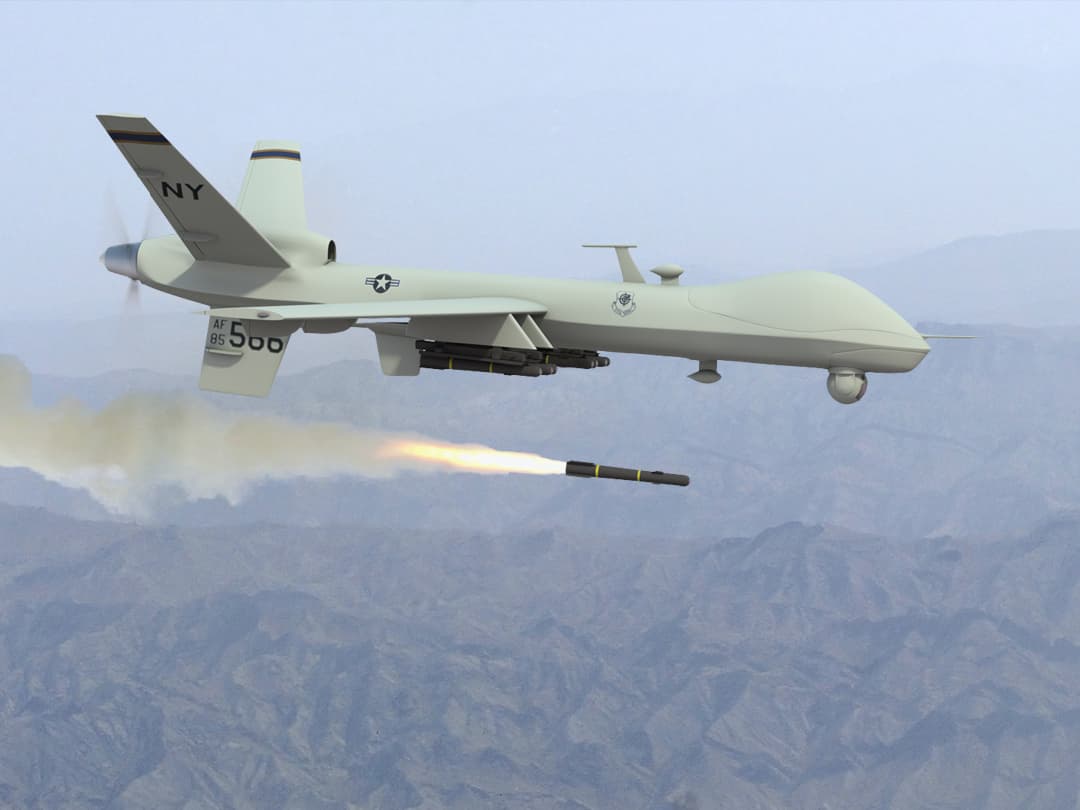
A kinetic strike refers to any attack that uses physical force, such as missiles, bombs, or direct gunfire. A drone strike is a type of kinetic strike conducted by an unmanned aerial vehicle. For this market, a drone strike directed against a cartel on foreign soil would qualify as a kinetic strike if U.S. personnel directly controlled the weapon system.
Only if the action is publicly acknowledged by the U.S. government as direct participation by U.S. personnel. Covert actions, by definition, are not publicly acknowledged. The market resolves based on publicly verifiable information, so a successful but unacknowledged covert operation would not trigger a 'Yes' resolution.
Only if U.S. personnel directly participate in the ground combat or kinetic strike itself. If U.S. agents are present only as advisors, observers, or in a support role for a foreign-led raid, it would not qualify. The U.S. role must be direct and kinetic.
The market specifies 'U.S. government personnel.' Contractors are not government personnel. An operation conducted solely by U.S. contractors, even if directed by the government, would not qualify for a 'Yes' resolution under these terms.
Educational content is AI-generated and sourced from Wikipedia. It should not be considered financial advice.
3 markets tracked

No data available
| Market | Platform | Price |
|---|---|---|
![]() | Poly | 56% |
![]() | Poly | 34% |
![]() | Poly | 4% |


No related news found
Add this market to your website
<iframe src="https://predictpedia.com/embed/kNRmDy" width="400" height="160" frameborder="0" style="border-radius: 8px; max-width: 100%;" title="U.S. anti-cartel operation outside of the U.S. by...? "></iframe>