$3.61K
1
1

1 market tracked

No data available
| Market | Platform | Price |
|---|---|---|
![]() | Poly | 26% |
Trader mode: Actionable analysis for identifying opportunities and edge
This market will resolve to "Yes" if the Trump Administration formally creates (e.g., by signing federal legislation or performing executive action) a tariff dividend/rebate by June 30, 2026, 11:59 PM ET. Otherwise, this market will resolve to "No". Any bill signed into law or executive action taken within this market's time frame will qualify, regardless of when the law or action goes into effect. A qualifying payment of any amount distributed to any segment of individual US taxpayers will qu
Prediction markets currently assign a low probability to former President Donald Trump creating a tariff dividend by the March 31, 2026 deadline. On Polymarket, the "Yes" share trades at approximately 10 cents, implying just a 10% chance of the event occurring. This price indicates the market views the proposal as highly speculative and unlikely to be enacted, though not impossible. With only about $71,000 in total market volume, liquidity is thin, suggesting this remains a niche political bet rather than a heavily traded consensus view.
The low probability is driven by political and procedural realities. First, the concept of a "tariff dividend" rebating import tax revenue directly to taxpayers is a novel policy idea without legislative precedent. While discussed in policy circles, it lacks detailed formulation or a clear congressional pathway. Second, the market timeframe requires action within the first 10 weeks of a potential Trump administration, an exceptionally short window for complex fiscal policy. Historical patterns show major new entitlement or rebate programs require extensive legislative maneuvering, making swift creation unlikely even with unified government control. Third, early administrative focus would likely prioritize other declared tariff and tax policy objectives over this specific, untested mechanism.
The primary catalyst for a dramatic odds shift would be Trump explicitly endorsing and detailing a tariff dividend plan before or immediately after taking office, coupled with Republican congressional leadership signaling urgent priority. The odds could see a gradual increase if draft legislation emerges in early 2026. Conversely, the "No" position would solidify if Congress becomes preoccupied with other fiscal battles, or if early executive actions focus on tariffs without mentioning a rebate mechanism. The market will be particularly sensitive to policy statements and draft bills in January and February 2026. The thin liquidity means any credible news could cause significant price volatility.
AI-generated analysis based on market data. Not financial advice.
$3.61K
1
1
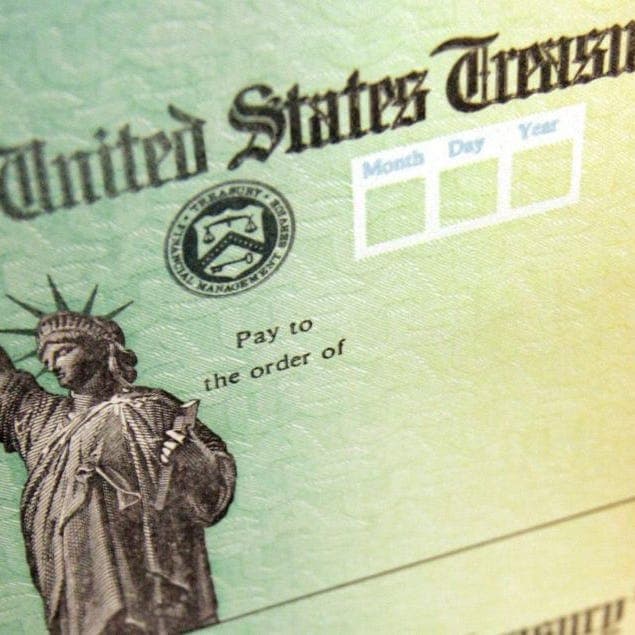
This prediction market topic concerns whether former President Donald Trump will create a 'tariff dividend' or rebate by March 31, 2026. A tariff dividend refers to a policy mechanism where revenue collected from import tariffs is directly distributed to individual U.S. taxpayers as a cash payment or tax rebate. The concept gained prominence during Trump's 2024 presidential campaign as a novel proposal to reframe tariff policy not just as a trade protection tool, but as a potential source of direct financial benefit for American citizens. The market resolves to 'Yes' if the Trump Administration formally creates such a program through federal legislation or executive action by the deadline, regardless of when the payments would actually be distributed. The proposal represents a significant evolution in how tariffs are politically framed, moving from industrial policy to potential individual economic benefit. Interest in this market stems from its intersection of trade policy, fiscal policy, and political strategy, with implications for both the U.S. economy and Trump's political legacy. Recent discussions have focused on how such a program might be structured, funded, and implemented, given constitutional questions about revenue allocation and existing budget constraints.
The concept of redistributing tariff revenue has historical precedents dating back to early American history. From 1789 to 1913, tariffs constituted the primary source of federal revenue, often accounting for 90% or more of government income. However, direct redistribution to citizens was rare, with revenue typically funding general government operations. The modern discussion gained traction during Trump's first administration (2017-2021), when his administration imposed tariffs on approximately $380 billion worth of Chinese goods, along with tariffs on steel, aluminum, washing machines, and solar panels. These tariffs generated significant revenue, with the Congressional Budget Office reporting $85 billion in tariff collections in fiscal year 2021 alone. During the 2024 presidential campaign, Trump began floating the idea of a 'tariff dividend' as a way to reframe what critics called 'tax increases on consumers' as potential direct benefits. This built upon his earlier political strategy of emphasizing how trade policies could benefit specific constituencies, but represented a new approach of making the connection between tariff collections and individual payments explicit. The proposal also echoes elements of Alaska's Permanent Fund Dividend, established in 1976, which distributes oil revenue to state residents, though on a federal scale with different revenue sources.
The creation of a tariff dividend would represent a fundamental shift in U.S. trade and fiscal policy, transforming tariffs from purely regulatory instruments into potential sources of direct citizen benefit. Economically, it could alter the political calculus around trade protectionism by creating visible beneficiaries beyond protected industries. If implemented, the program would directly affect millions of American taxpayers who would receive payments, potentially influencing consumer spending and economic growth patterns. Politically, success or failure of such a proposal could significantly impact the Trump administration's legislative agenda and public perception of its economic policies. The proposal raises important constitutional questions about the allocation of federal revenue and the executive's authority to create such programs without congressional approval. It also intersects with broader debates about income distribution, the role of trade in the economy, and how governments should handle windfall revenues from policy changes. Downstream consequences could include changes to international trade relationships, as trading partners might adjust their strategies in response to a system that makes tariffs more politically popular in the United States.
As of early 2025, the tariff dividend remains a campaign proposal that has not been formally introduced as legislation or implemented through executive action. The Trump administration has not released detailed policy specifications for how such a program would work, including eligibility criteria, payment amounts, or distribution mechanisms. Congressional Republicans have shown mixed reactions, with some expressing interest in the concept while others question its fiscal implications. The Treasury Department continues to collect tariff revenue under existing policies, with monthly collections averaging approximately $7 billion. Legal experts are debating whether such a program could be implemented through executive action alone or would require congressional approval under the Appropriations Clause of the Constitution. Economic analysts are studying potential impacts on consumer prices, trade flows, and federal revenues under different implementation scenarios.
A tariff dividend is a proposed policy where revenue collected from import tariffs would be distributed directly to individual U.S. taxpayers as cash payments or tax rebates. The concept aims to make tariff collections more politically popular by creating visible direct benefits for citizens rather than having tariff revenue simply fund general government operations.
Potential payment amounts would depend on total tariff collections and how many people qualify. Based on 2023 tariff revenue of $88.3 billion and 164 million tax filers, equal distribution would yield approximately $538 per person, though actual amounts would vary based on program design, eligibility rules, and future tariff revenue levels.
Legal opinions differ on this question. Some experts argue the president has authority to direct tariff revenue distribution under existing trade laws, while others contend congressional approval is required under the Constitution's Appropriations Clause, which gives Congress power over federal spending. The issue would likely face legal challenges either way.
Economic analysis suggests tariffs typically increase consumer prices on affected goods, while dividend payments would increase consumer purchasing power. The net effect would depend on whether tariff costs are fully passed through to consumers and how recipients spend their dividend payments, creating complex distributional effects across different income groups.
Technically, U.S. importers pay tariffs to the U.S. government when bringing goods into the country. These importers often pass costs to consumers through higher prices. Major sources of tariff revenue include imports from China, the European Union, Canada, Mexico, and other trading partners subject to U.S. tariff policies.
While the U.S. has never had a federal tariff dividend program, Alaska's Permanent Fund Dividend has distributed oil revenue to state residents since 1976. Historically, tariff revenue was the federal government's primary funding source until the income tax was established, but it funded general government operations rather than direct citizen payments.
Educational content is AI-generated and sourced from Wikipedia. It should not be considered financial advice.
Share your predictions and analysis with other traders. Coming soon!

No related news found
Add this market to your website
<iframe src="https://predictpedia.com/embed/lHP8C7" width="400" height="160" frameborder="0" style="border-radius: 8px; max-width: 100%;" title="Will Trump create a tariff dividend by June 30?"></iframe>