$54.15K
1
3

$54.15K
1
3
Trader mode: Actionable analysis for identifying opportunities and edge
This market will resolve to "Yes" if there is an official ceasefire agreement, defined as a publicly announced and mutually agreed halt in military engagement, between the Rapid Support Forces (RSF) and the Sudanese Armed Forces (SAF) by December 31, 2025, 11:59 PM ET. If the agreement is officially reached before the resolution date, this market will resolve to "Yes," regardless of whether the ceasefire officially starts afterward. Any form of informal agreement will not be considered an offi
Prediction markets currently give about a 50% chance that Sudan's warring factions will reach an official ceasefire agreement by the end of 2025. In simple terms, traders collectively see it as a coin flip. There is no clear consensus on whether the intense fighting between the Sudanese Armed Forces (SAF) and the paramilitary Rapid Support Forces (RSF) will be formally paused within this timeframe.
The even odds reflect a brutal stalemate and deep pessimism about diplomacy. First, the conflict has become entrenched. Since fighting erupted in April 2023 over a disputed transition to civilian rule, both sides have committed to military victory, fragmenting the country and causing a catastrophic humanitarian crisis. Previous ceasefire agreements, like those brokered in Jeddah, have collapsed quickly.
Second, the war's dynamics have shifted. The RSF has gained control over most of the capital, Khartoum, and vast western regions, while the SAF holds the east and parts of the north. With neither side able to deliver a knockout blow and both benefiting from control of resources and supply routes, the incentive to negotiate a true ceasefire is weak. International mediation efforts have so far failed to alter these fundamental calculations.
Formal peace talks are the main event to monitor. The United Nations and regional bodies like the African Union and IGAD have attempted to restart negotiations, but no major new round is currently scheduled. Any announcement of planned, high-level talks in a venue like Jeddah or Cairo would be a significant signal.
Watch for statements from key external powers, particularly Saudi Arabia, the United Arab Emirates, Egypt, and the United States. A unified, forceful push from these countries, potentially involving serious sanctions or incentives, could change the odds. Also monitor battlefield developments around key cities like El Fasher in Darfur. A decisive military shift could force one party to the table or, conversely, harden their refusal to talk.
Prediction markets have a mixed record on geopolitics. They often efficiently aggregate information about short-term political events, like elections. For complex, protracted civil wars like Sudan's, they are better at tracking the consensus of informed observers than at making novel forecasts. The current 50% probability mainly captures the widespread analyst view that the conflict is intractable. A major limitation is that these markets have relatively low trading volume for this event, meaning prices can be sensitive to small shifts in news or sentiment. They reflect the current wisdom, but in fluid wars, that wisdom can change rapidly with a single unexpected development.
The Polymarket contract "Sudan civil war ceasefire by December 31, 2026?" is trading at 50 cents, implying a 50% probability of an official ceasefire agreement between the Rapid Support Forces (RSF) and Sudanese Armed Forces (SAF) by the end of 2026. This price signals pure market uncertainty, with no clear consensus on the outcome. The market has thin liquidity, with only $54,000 in total volume across related contracts, meaning prices could be volatile and may not yet reflect a hardened consensus.
The 50% price directly reflects the war's entrenched stalemate and the failure of all major mediation efforts. The conflict, which began in April 2023, has seen both sides commit to talks in Jeddah and elsewhere only to abandon them repeatedly. Each faction believes it can achieve military objectives, making concessions politically untenable for their leadership. International focus is fragmented, with regional powers like Egypt, the UAE, and Saudi Arabia holding competing interests that complicate a unified diplomatic push. The market is essentially pricing a coin flip because no credible, enforceable peace process currently exists.
A significant shift in the military balance on the ground could force one side to the table, moving the needle toward "Yes." Conversely, a major escalation or external military intervention could entrench the conflict further, pushing odds toward "No." The primary catalyst for a "Yes" would be a unified and coercive diplomatic initiative from a major power bloc, such as a joint U.S.-Saudi-Egyptian effort with substantial leverage. The timeline to the end of 2026 is long, allowing for multiple negotiation cycles. However, the historical precedent of Sudan's conflicts lasting decades tempers optimism. Watch for statements from the UN Security Council or the African Union in early 2025; a new, mandated mediation framework would likely cause the probability to rise from its current neutral level.
AI-generated analysis based on market data. Not financial advice.
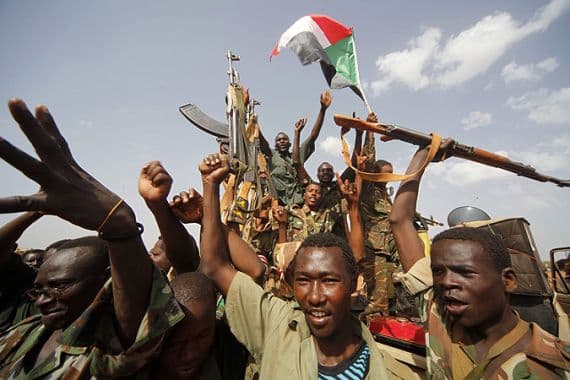
This prediction market topic focuses on whether Sudan's civil war will see an official ceasefire agreement by December 31, 2025. The conflict is between the Sudanese Armed Forces (SAF), the country's official military, and the Rapid Support Forces (RSF), a powerful paramilitary group. For the market to resolve to 'Yes,' a publicly announced and mutually agreed halt in military engagement must be formally declared by that deadline. Informal truces or temporary pauses do not count. The war, which began in April 2023, has created one of the world's worst humanitarian crises and drawn in regional powers. People are interested in this market because a ceasefire would represent a critical, though fragile, step toward ending widespread violence and famine conditions. The topic gauges confidence in diplomatic efforts led by the United States, Saudi Arabia, and regional African bodies, which have so far failed to produce a lasting agreement. Recent negotiations in Jeddah have stalled, and both sides continue to make territorial gains, suggesting a protracted conflict. The market's timeline through 2025 reflects skepticism about a quick resolution and allows traders to assess the probability of a breakthrough over a longer period.
The roots of this conflict stretch back to the long rule of President Omar al-Bashir, who governed from 1989 until his overthrow in 2019. Al-Bashir created the RSF in 2013, transforming the Janjaweed militias into an official paramilitary force to counter insurgencies in Darfur. This created a powerful rival to the national army. Following al-Bashir's fall, a fragile power-sharing government existed between the military and civilians until October 2021, when General al-Burhan and General Dagalo staged a joint coup, dissolving the transitional government. The two generals then spent 18 months negotiating a framework to integrate the RSF into the SAF, a process mandated by a 2022 political framework agreement. Disagreements over the timeline and command structure for this integration were the immediate trigger for the outbreak of fighting on April 15, 2023, in Khartoum. This historical rivalry between two military institutions, both products of al-Bashir's divide-and-rule strategy, explains why the conflict is so intractable. Past ceasefire attempts, like the May 2023 Jeddah Declaration of Commitment to Protect Civilians, have consistently failed, setting a precedent of broken promises.
A ceasefire in Sudan matters because the war has triggered a catastrophic humanitarian emergency. Over 25 million people need aid, and the country is at risk of the world's largest hunger crisis. The conflict has destroyed healthcare, education, and economic infrastructure, setting back development for decades. Without a halt in fighting, famine will likely kill hundreds of thousands in the coming months. The political ramifications extend across Africa and the Middle East. Sudan's strategic location on the Red Sea and its size make it a regional linchpin. Continued war fuels refugee flows into neighboring Chad, South Sudan, and Egypt, destabilizing already fragile states. It also creates a vacuum exploited by armed groups, foreign mercenaries, and geopolitical rivals, turning Sudan into a proxy conflict. The war has disrupted global trade routes and caused a collapse in agricultural production, impacting regional food security.
As of late 2024, the war has entered a more protracted phase with defined frontlines. The SAF holds most of the north and east, including Port Sudan. The RSF controls much of Khartoum and the Darfur and Kordofan regions. Fighting is concentrated around El Fasher, the last Darfur capital not fully under RSF control, where a siege threatens a major humanitarian catastrophe. Diplomatic efforts are fragmented. The Jeddah platform is inactive, and regional initiatives by IGAD and the African Union have made little progress. The UN Security Council passed a resolution in March 2024 demanding a ceasefire, but it has been ignored. Both sides are rearming, suggesting preparations for continued combat rather than negotiation.
The primary obstacles are a complete absence of trust between the SAF and RSF leadership, competing visions for Sudan's future governance, and the economic incentives of war. Both sides believe they can achieve more through military victory than negotiation. Control of resources like gold mines and arms supplies from foreign backers also reduces pressure to make peace.
The SAF receives political support from Egypt and some military supplies from Iran. The RSF has received backing from the Wagner Group and its successor entities in Russia, and has political ties with the United Arab Emirates. These external relationships provide both sides with the means to continue fighting.
No. The UN mission in Sudan (UNITAMS) was terminated by the Security Council in December 2023 at Sudan's request. The UN has focused on humanitarian coordination, but its political leverage is minimal. Security Council resolutions have been ineffective due to a lack of enforcement mechanisms and geopolitical divisions.
A military victory by the RSF would likely establish a paramilitary-dominated state, potentially leading to international isolation due to the group's record of atrocities. It could also trigger prolonged insurgencies from SAF loyalists and ethnic groups in regions like Darfur, resulting in continued instability.
Jeddah, Saudi Arabia, was chosen as a neutral venue away from the immediate region. Saudi Arabia and the United States, as co-mediators, have diplomatic influence and provided a setting for direct talks. However, the location's neutrality has been questioned given Saudi Arabia's own regional interests.
Educational content is AI-generated and sourced from Wikipedia. It should not be considered financial advice.
3 markets tracked

No data available
| Market | Platform | Price |
|---|---|---|
![]() | Poly | 50% |
![]() | Poly | 20% |
![]() | Poly | 11% |


No related news found
Add this market to your website
<iframe src="https://predictpedia.com/embed/m0h9gO" width="400" height="160" frameborder="0" style="border-radius: 8px; max-width: 100%;" title="Sudan civil war ceasefire by...?"></iframe>