$1.23M
1
22

$1.23M
1
22
Trader mode: Actionable analysis for identifying opportunities and edge
Presidential elections are scheduled to be held in Portugal on 18 or 25 January 2026, with a possible second round on 8 or 15 February 2026. A second round will be held if no candidate secures more than 50% of the valid votes in the first round. The two candidates with the greatest number of votes in the first round will advance to the second round. This market will resolve according to the listed candidates that qualify for the second round of this election. If the result of the first round
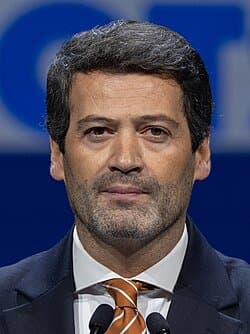
Prediction markets currently assign an 81% probability that André Ventura will qualify for the second round of the 2026 Portugal presidential election. This high confidence level, trading at 81¢ on Polymarket, indicates the market views his advancement as very likely, though not a foregone conclusion. With over $1.2 million in total volume across related markets, liquidity and trader conviction are significant. The market effectively prices in a high likelihood that Ventura, leader of the right-wing populist Chega party, will finish as one of the top two candidates in the first round vote on January 18.
Two primary factors are solidifying Ventura's favored position. First, his party's dramatic rise is the central story of recent Portuguese politics. Chega became the third-largest party in the 2024 legislative election, securing over 18% of the vote and entering into a governing agreement. This established Ventura as a dominant, mainstream political force with a solidified base exceeding the typical protest vote threshold. Second, the fragmented center-left opposition, split between the Socialist Party (PS) and other candidates like former European Commissioner Carlos Moedas, creates a clear path for Ventura to secure one of the top two spots without needing an outright majority. Historical precedent also supports this, as the 2021 presidential election required a second round, demonstrating the electorate's distribution.
The primary risk to the current market pricing is a higher-than-expected consolidation of the anti-Ventura vote behind a single center-left candidate in the final days before the January 18 first round. A surge in turnout among voters mobilized specifically to block his advancement could potentially edge him into third place. Furthermore, any last-minute controversy or gaffe by Ventura himself could dampen support among more moderate conservative voters. The market will be highly sensitive to exit polls and early results on January 18. If Ventura's first-round vote share significantly underperforms polls showing him near or above 30%, his qualification probability would rapidly fall from its current 81% level.
AI-generated analysis based on market data. Not financial advice.
This prediction market topic concerns the qualification process for the second round of the Portuguese presidential election scheduled for January 2026. The Portuguese President is the head of state, elected for a five-year term through a direct popular vote. The election will be held on January 18, 2026, with a potential second round on February 8 if no candidate secures an absolute majority of valid votes in the first round. The two candidates receiving the highest number of votes in the first round will advance to the decisive second round. This market resolves specifically on which candidates qualify for that runoff. The election follows the conclusion of President Marcelo Rebelo de Sousa's second and final term, marking a significant political transition. Interest in this market stems from Portugal's political landscape, where the presidency holds significant symbolic power, can influence government formation, and acts as a check on parliamentary power. The outcome is closely watched as a barometer of national political sentiment, especially following recent parliamentary elections and amidst debates on economic policy and European integration.
Portugal's current semi-presidential system was established following the 1974 Carnation Revolution, which ended decades of dictatorship. The Constitution of 1976 created a directly elected president with significant powers, including the dissolution of parliament and veto authority. Historically, presidential elections have often required second rounds. Since the first direct election in 1976, six out of ten elections have proceeded to a runoff, including the most recent contest in 2021. The 1986 election was particularly historic, resulting in the victory of Mário Soares, the first civilian president in 60 years, after a second round. The tradition of runoffs underscores the fragmented nature of the Portuguese electorate and the difficulty for any single candidate to secure an outright majority in the first round. The presidency has typically been held by candidates from the center-right Social Democratic Party (PSD) or the center-left Socialist Party (PS), though often running as independents. The 2021 election saw incumbent Marcelo Rebelo de Sousa win in the first round, a rare occurrence that highlighted his broad personal popularity transcending traditional party lines.
The qualification for the second round of Portugal's presidential election matters significantly for the nation's political stability and direction. The president, while largely ceremonial, holds reserve powers to dissolve parliament, veto legislation, and influence foreign policy and national discourse. A president from a different political family than the governing coalition can create a period of 'cohabitation,' potentially leading to political gridlock or early elections, affecting legislative agendas and economic reforms. The election serves as a crucial mid-term referendum on the government of Prime Minister Luís Montenegro. A strong showing by a candidate critical of the government could weaken its authority and complicate its reform program, particularly concerning fiscal policy and Portugal's role within the European Union. Furthermore, the potential entry of a candidate from the populist Chega party into a second round would represent a profound challenge to Portugal's established political order, similar to trends observed elsewhere in Europe, with implications for social cohesion and policy priorities.
As of late 2024, the presidential race is in its early formative stage. President Marcelo Rebelo de Sousa is serving the final years of his term and is constitutionally barred from seeking a third consecutive term. Potential candidates from across the political spectrum are engaged in informal positioning and coalition-building discussions. The governing Democratic Alliance coalition and the opposition Socialist Party have not yet officially endorsed candidates. The political landscape is still absorbing the results of the March 2024 parliamentary elections, which saw a shift to a center-right government. The next major milestone will be the official opening of the candidacy submission period, expected in late 2025.
The President is elected by direct universal suffrage for a five-year term, with a maximum of two consecutive terms. If no candidate wins more than 50% of the valid votes in the first round, a second round is held two weeks later between the top two vote-getters. The winner of the second round is elected president.
The President is the head of state and commander-in-chief of the armed forces. Key powers include appointing the Prime Minister, dissolving the Assembly of the Republic, vetoing legislation, and representing Portugal internationally. The role is largely ceremonial in day-to-day governance but holds important reserve powers.
Any Portuguese citizen by origin who is at least 35 years old and in full possession of their political and civil rights is eligible. Candidates must be nominated by at least 7,500 and up to 15,000 registered voters, depending on the electoral district.
The last election to require a second round was in 2016, when Marcelo Rebelo de Sousa defeated António Sampaio da Nóvoa. The 2021 election was an exception, with Rebelo de Sousa winning re-election in the first round with over 60% of the vote.
Portugal has a semi-presidential system. The Prime Minister is the head of government, responsible for running the country's day-to-day affairs and implementing policy through a cabinet. The President is the head of state, a more ceremonial role with powers to ensure the normal functioning of democratic institutions, acting as an arbiter and guarantor of national independence.
Educational content is AI-generated and sourced from Wikipedia. It should not be considered financial advice.
Share your predictions and analysis with other traders. Coming soon!
22 markets tracked

No data available
| Market | Platform | Price |
|---|---|---|
![]() | Poly | 81% |
![]() | Poly | 78% |
![]() | Poly | 33% |
![]() | Poly | 11% |
![]() | Poly | 3% |
![]() | Poly | 1% |
![]() | Poly | 0% |
![]() | Poly | 0% |
![]() | Poly | 0% |
![]() | Poly | 0% |
![]() | Poly | 0% |
![]() | Poly | 0% |
![]() | Poly | 0% |
![]() | Poly | 0% |
![]() | Poly | 0% |
![]() | Poly | 0% |
![]() | Poly | 0% |
![]() | Poly | 0% |
![]() | Poly | 0% |
![]() | Poly | 0% |
![]() | Poly | 0% |
![]() | Poly | 0% |


No related news found
Add this market to your website
<iframe src="https://predictpedia.com/embed/mbhZDb" width="400" height="160" frameborder="0" style="border-radius: 8px; max-width: 100%;" title="Who will qualify for the second round of the Portugal Presidential Election?"></iframe>