$16.98K
1
1

Trader mode: Actionable analysis for identifying opportunities and edge
If Xi Jinping visits the United States between market creation and December 31, 2026, 11:59 PM ET, this market will resolve to "Yes". Otherwise, this market will resolve to "No". For the purpose of this market, a "visit" is defined as Xi Jinping physically entering the terrestrial or maritime territory of the United States. Whether or not Xi Jinping enters US airspace during the timeframe of this market will have no bearing on a positive resolution. The primary resolution source for this infor
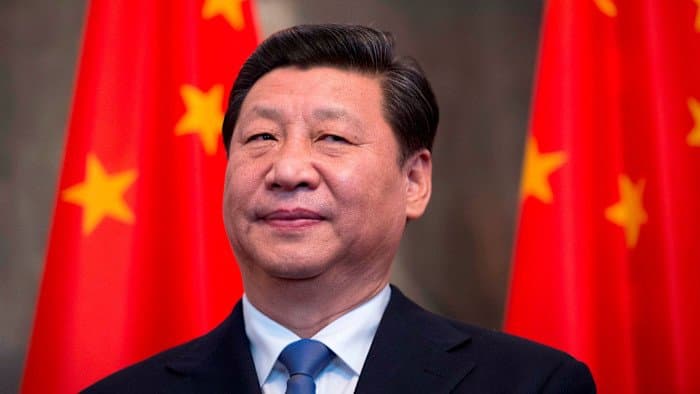
Prediction markets currently give roughly a 3 in 5 chance that Chinese leader Xi Jinping will visit the United States before the end of 2026. This is essentially a coin flip, showing that traders collectively see the visit as possible but far from guaranteed. The market reflects deep uncertainty about the future of diplomatic contact between the world's two largest economies.
The even odds stem from conflicting pressures. On one side, high-level visits are a basic tool of major power diplomacy. The last time Xi visited the U.S. was in 2017. With both countries managing a complex relationship involving trade, military tensions, and global issues, a leaders' summit could help stabilize ties. Some analysts think both sides see value in preventing a complete breakdown in communication.
On the other side, relations have grown more strained. Disputes over Taiwan, technology restrictions, and espionage allegations have led to frosty exchanges. In recent years, diplomatic interactions have often been handled by lower-level officials. A state visit requires significant political will and groundwork that may not exist. The current odds suggest traders believe a trip is just as likely to be deemed too politically risky or unproductive by either side.
The most direct signal would be an official announcement from Chinese or U.S. diplomatic channels. Such visits are planned months in advance.
Watch for the outcomes of meetings between U.S. and Chinese cabinet-level officials, like the Secretary of State or Secretary of the Treasury. Successful lower-level talks often pave the way for summits. Also monitor the U.S. presidential election in November 2024. The result could change the diplomatic approach from the American side, either creating an opening or causing further delay. The window for a visit is wider in 2025 and 2026, after the U.S. election cycle concludes.
Markets are generally decent at aggregating known diplomatic schedules and political sentiment, but they can be surprised by sudden breakthroughs or cancellations in international politics. For an event like this, which depends on secret negotiations and high-stakes political decisions, the odds are a snapshot of informed speculation rather than a sure bet. The probability will likely shift significantly if concrete news about planning emerges.
The Polymarket contract "Will Xi Jinping visit US before 2027?" is trading at 59¢, indicating a 59% probability of a visit occurring by the end of 2026. This price suggests the market sees a state visit as slightly more likely than not, but remains highly uncertain. The market has thin liquidity with only $17,000 in volume, meaning a single large bet could shift the odds significantly. The resolution deadline is December 31, 2026.
The current pricing reflects a cautious assessment of diplomatic calendars and geopolitical necessity. High-level summits between US and Chinese leaders typically require extensive planning and a specific strategic context. The last in-person meeting between Xi Jinping and a US president on American soil was in 2017. The market's 59% probability likely factors in the established rhythm of major-power diplomacy, where leaders often meet after significant political transitions. With both the US presidential election in November 2024 and the Chinese Communist Party's 21st National Congress in 2027, a window for a symbolic summit exists in 2025 or 2026 to stabilize relations.
However, the probability is suppressed by persistent bilateral tensions. Core disputes over Taiwan, technology restrictions, and trade tariffs remain unresolved. Historical precedent shows that during periods of acute tension, such as following the 2001 EP-3 incident or the 1999 Belgrade embassy bombing, planned state visits were canceled. The current "managed competition" framework makes a visit politically feasible only if both sides can secure tangible, face-saving outcomes to announce.
The single largest catalyst is the outcome of the November 2024 US presidential election. A second Biden term would likely maintain the current framework for diplomacy, potentially making a 2025 visit more probable as both administrations seek legacy-defining stability. A new administration, whether Trump or another candidate, would create immediate uncertainty. An initial period of heightened rhetoric or policy shocks could drive the "No" probability higher, while a swift, pragmatic outreach from a new president could increase the "Yes" odds.
Specific diplomatic milestones will also move the market. Progress on military-to-military communication channels or a formal resumption of climate cooperation talks would be positive signals. Conversely, a major new crisis over Taiwan or expanded US sanctions on Chinese financial institutions would make a visit politically untenable for Beijing, crashing the "Yes" probability. The market will be most reactive to official statements from either capital explicitly confirming or denying planning for a summit.
AI-generated analysis based on market data. Not financial advice.
1 market tracked

No data available
| Market | Platform | Price |
|---|---|---|
![]() | Poly | 59% |
$16.98K
1
1
This prediction market addresses whether Chinese President Xi Jinping will make an official visit to the United States before the end of 2026. The market resolves to 'Yes' if Xi physically enters U.S. territory, including its land or maritime borders, before December 31, 2026, at 11:59 PM Eastern Time. The question is significant because high-level state visits between the world's two largest economies are major diplomatic events that signal the state of bilateral relations and often precede policy announcements or agreements. Interest in this topic stems from the current strained U.S.-China relationship, characterized by strategic competition across trade, technology, and geopolitics. A visit would represent a potential thaw or managed stabilization of ties. The timeline extends through 2026, covering the remainder of the current U.S. presidential term and aligning with China's political calendar, where Xi is expected to continue his leadership. Observers monitor diplomatic channels, statements from both capitals, and the scheduling of international summits like APEC or G20 meetings, which could serve as venues for a visit.
Presidential visits between the U.S. and China have been important markers in the relationship for decades. Chinese leader Deng Xiaoping's 1979 visit to the U.S., shortly after normalization of relations, was a historic event. In the 21st century, state visits became more regular. President Hu Jintao made a state visit to the U.S. in 2011, which included a full honors welcome at the White House. Xi Jinping's first state visit as president was in 2015, featuring a 21-gun salute and state dinner hosted by President Barack Obama. His last visit was in 2017, a more informal meeting with President Donald Trump at Mar-a-Lago, Florida. The period since 2018 has seen no U.S. visit by Xi, coinciding with a sharp deterioration in relations due to a trade war initiated by the Trump administration, tensions over technology, human rights, and geopolitical disputes in the South China Sea and regarding Taiwan. The COVID-19 pandemic further reduced high-level travel. The November 2023 meeting between Xi and Biden in San Francisco, held on the sidelines of the APEC summit, was not a formal state visit to the U.S. but occurred on American soil, demonstrating a working-level engagement. The precedent suggests that formal state visits are reserved for periods of relatively stable or improving relations.
A state visit by Xi Jinping would be a major diplomatic event with global implications. It would likely involve extensive negotiations, potentially leading to agreements on trade, climate cooperation, or military communication protocols to reduce the risk of conflict. For businesses, a visit could signal a reduction in immediate tensions, affecting investment decisions and supply chain strategies in sectors from technology to agriculture. The political ramifications are significant for both leaders. For Biden, hosting Xi could be framed as a foreign policy achievement demonstrating capable management of a complex rivalry. For Xi, a successful visit could bolster his image as a global statesman and provide economic reassurance at home. Conversely, the absence of a visit through 2026 would reinforce perceptions of a deep, persistent strategic rivalry with limited high-level diplomacy, increasing uncertainty for allies and corporations navigating U.S.-China competition. The outcome affects not just the two nations but also global governance on issues like artificial intelligence regulation and debt relief for developing countries, where U.S.-China coordination is often necessary.
As of early 2024, no official state visit by Xi Jinping to the United States has been announced. The most recent high-level interaction was the meeting between Xi and Biden in San Francisco in November 2023 on the margins of the APEC Economic Leaders' meeting. Following that summit, both sides noted the resumption of military-to-military communications and cooperation on fentanyl precursors. U.S. officials, including Secretary Blinken, have indicated expectations for continued high-level dialogue in 2024. However, several friction points remain unresolved, including U.S. restrictions on advanced semiconductor exports to China, China's support for Russia, and tensions around Taiwan. The U.S. presidential election in November 2024 adds a layer of uncertainty, as diplomatic planning for a major visit would typically consider the American political calendar.
Xi Jinping last visited the United States in April 2017. He met with then-President Donald Trump at the Mar-a-Lago resort in Florida. That meeting was an informal working visit, not a full state visit with the accompanying ceremonies.
A state visit is a formal diplomatic event where a foreign head of state is officially invited by the U.S. president. It typically includes a ceremony on the South Lawn of the White House, a state dinner, and meetings with congressional leaders. The 2023 meeting in San Francisco was a bilateral meeting held alongside an international summit (APEC), which involves less protocol and is focused on substantive talks rather than ceremonial hospitality.
Yes. The prediction market's definition includes any physical entry into U.S. territory. If Xi attended the UN General Assembly in New York, which China's president or premier often does, it would qualify as a 'visit' and resolve the market to 'Yes,' even if no formal state visit to Washington occurred.
Elections create uncertainty. An incumbent administration may be hesitant to plan a major diplomatic event close to an election where China policy is a contentious topic. A newly elected or re-elected president in 2025 might seek an early summit to set the tone for the relationship, making 2025 or 2026 a more likely window for a visit.
Key agenda items would likely include managing military risks in the Asia-Pacific, trade and economic issues, cooperation on climate change and global health, China's role in regional conflicts, and continued dialogue on artificial intelligence. Taiwan would be a principal topic, with the U.S. seeking reassurance against forceful unification attempts.
Educational content is AI-generated and sourced from Wikipedia. It should not be considered financial advice.

No related news found
Add this market to your website
<iframe src="https://predictpedia.com/embed/mgKlAz" width="400" height="160" frameborder="0" style="border-radius: 8px; max-width: 100%;" title="Will Xi Jinping visit US before 2027?"></iframe>