This event has ended. Showing historical data.
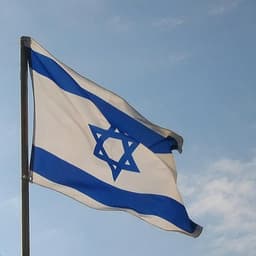
Israeli parliament dissolved by...?
$1.94M
1
2
Israeli parliament dissolved by...?
$1.94M
1
2
AI Analysis
Trader mode: Actionable analysis for identifying opportunities and edge
About This Event
This market will resolve to "Yes" if the sitting Israeli Knesset (Israel's parliament), as of this market's inception, is dissolved between September 3 and October 31, 2025, 11:59 PM ET. Otherwise, this market will resolve to "No". The primary resolution source for this market is official information from the government of Israel; however, a consensus of credible reporting will also be used.
This saved analysis is awaiting a background update.
Current Market Outlook
Polymarket traders are pricing an 85% probability that the Israeli Knesset will dissolve before July 31, 2025. That is a strong consensus. The market sees early elections as nearly inevitable. The linked market for dissolution between September 3 and October 31, 2025 is less active but suggests traders expect the trigger to come sooner rather than later.
The $1.9 million in total volume across these two markets indicates serious money is behind this view. An 85% probability means the market sees dissolution as the baseline expectation, not a tail risk.
Key Factors Driving the Odds
Prime Minister Benjamin Netanyahu's governing coalition has been fraying for months. The coalition holds a razor-thin 64-seat majority in the 120-seat Knesset, but internal fractures are widening. Ultra-Orthodox parties are demanding passage of a military draft exemption law that secular coalition partners oppose. Defense Minister Yoav Gallant publicly warned in June 2025 that the coalition cannot survive unless the Haredi draft issue is resolved.
The October 2023 Hamas attack and the subsequent Gaza war created a temporary unity government, but that expired in June 2024. Since then, the coalition has been lurching from crisis to crisis. The 2025 budget passed by a single vote in March. That level of instability historically leads to early elections within 6-12 months.
Netanyahu himself has personal incentive to call elections before his corruption trial reaches a verdict stage that could produce political damage. The opposition has been unable to form an alternative government, meaning dissolution is the most likely path to a new coalition.
What Could Change These Odds
A sudden national security crisis could freeze coalition politics. An escalation with Hezbollah or Iran might produce another unity government extension. But that scenario would require an external threat severe enough to override domestic grievances, which is not the current trajectory.
The Knesset's summer recess ends in October. If the coalition survives through July without dissolving, the odds would shift toward a fall dissolution. But the 85% number suggests traders expect the collapse to happen before the summer break.
The real question is not whether the Knesset dissolves, but when. Markets are betting on sooner rather than later.
AI-generated analysis based on market data. Not financial advice.
Saved Jul 10, 2026 UTCThis saved content is awaiting a background update.
Overview
The Knesset, Israel's unicameral parliament, holds the country's legislative power and is central to its political system. The question of whether the Knesset will be dissolved between September 3 and October 31, 2025, reflects the ongoing instability that has characterized Israeli governance in recent years. This market focuses on a specific timeframe, asking if the sitting Knesset, elected in November 2022, will be dissolved before the end of October 2025, triggering early elections. Israel has a history of short-lived governments and early elections, with the current Knesset being the fifth elected in under four years, a period of political deadlock and coalition fragility. The current government, led by Prime Minister Benjamin Netanyahu, is a coalition of right-wing and religious parties, including Likud, Shas, United Torah Judaism, Religious Zionism, and Otzma Yehudit. This coalition, formed in late 2022, has faced internal tensions over issues like judicial reform, Haredi military conscription, and budget allocations. The government's stability has been tested by mass protests against judicial overhaul plans, ongoing security challenges, and disagreements within the coalition. The possibility of dissolution arises from these pressures, as well as from the Knesset's own mechanisms: early elections can be triggered by a vote of no confidence, the failure to pass a budget, or a bill to dissolve the Knesset passed by a majority of 61 of the 120 members. People are interested in this prediction because it directly impacts the political direction of Israel, including policies on security, the economy, and relations with other countries. Early elections could shift the balance of power, potentially bringing new parties or leaders to the forefront. The timing is also significant, as it overlaps with ongoing regional tensions and diplomatic efforts. The market's resolution depends on official Israeli government announcements or credible reporting confirming the Knesset's dissolution within the specified window.
Historical Context
Israel has a long history of early elections, with no government completing a full four-year term since 1988. Between 2019 and 2022, the country held five elections in under four years, reflecting deep political divisions over Netanyahu's leadership, corruption trials, and coalition formation. The current Knesset was elected on November 1, 2022, and the government was sworn in on December 29, 2022. This was the first government formed after the 2019-2022 electoral cycle, which saw four inconclusive elections. The 2022 election gave Netanyahu's bloc a clear majority of 64 seats out of 120, allowing for a stable coalition on paper. However, the coalition has been plagued by internal disputes. In 2023, the government pushed a controversial judicial reform plan that aimed to limit the Supreme Court's power. This sparked massive protests, with hundreds of thousands of Israelis demonstrating weekly. The plan was paused in April 2023 after a public backlash, but the coalition's far-right and religious parties have continued to push for other contentious legislation. Another flashpoint is the Haredi (ultra-Orthodox) military conscription issue. A 2017 Supreme Court ruling made the longstanding exemption for yeshiva students illegal, but successive governments have delayed enforcement. The current coalition includes Haredi parties that demand the exemption be enshrined in law, while secular and nationalist parties oppose it. This issue has the potential to break the coalition. Budget disputes are also a common trigger for dissolution. The government passed a two-year budget in May 2023, but disagreements over spending priorities for 2025 could lead to a crisis. If the Knesset fails to pass a budget by a statutory deadline, it triggers automatic dissolution. The current deadline for the 2025 budget is not fixed but typically falls in early 2025, which could set the stage for the period covered by this market.
Why It Matters
The dissolution of the Knesset would trigger early elections, likely within 90 days, upending the current political landscape. This matters because it would delay or change policy on key issues: the judicial reform agenda, Haredi conscription, West Bank settlement expansion, and economic policy. An early election could bring a different coalition to power, potentially shifting Israel's stance on the Palestinian conflict, Iran, and relations with the United States. The outcome would also affect Netanyahu's legal situation, as he is on trial for corruption charges. A new government might pass legislation to grant him immunity or halt proceedings, or he could be removed from power if his party loses. Economically, political instability often leads to currency volatility, reduced foreign investment, and delayed budget approvals. The shekel weakened significantly during the 2023 judicial reform crisis. A dissolution could also impact Israel's international standing, as allies may view political chaos as a sign of weakness. For Israelis, early elections mean more campaign spending, potential policy paralysis, and uncertainty over government services. The timing of the market (September to October 2025) coincides with the Jewish high holidays and the potential for a new budget cycle, making it a plausible window for a political crisis.
Current Status
As of mid-2025, the Knesset is still sitting, and the coalition remains in power but is increasingly fragile. The government passed a budget for 2024, but negotiations for the 2025 budget have been contentious. The Haredi conscription issue has not been resolved, and the Supreme Court has set deadlines for the government to submit a new law. The far-right parties have threatened to leave the coalition if their demands on settlement funding and judicial appointments are not met. The opposition has been emboldened by declining poll numbers for Likud and Netanyahu. In early 2025, there were reports of backchannel talks between opposition leaders and some coalition members about a possible unity government or early elections. However, no formal dissolution bill has been introduced as of late 2024. The period from September to October 2025 is seen as a critical window because the Knesset will be considering the 2025 budget, and any failure to pass it could trigger automatic dissolution. Additionally, the Knesset's summer recess ends in late October, so the market's end date of October 31 covers the period just before the new session begins, a time often used for political maneuvering.
Frequently Asked Questions
How is the Israeli Knesset dissolved?
The Knesset can be dissolved by a majority vote of 61 members on a bill to dissolve itself. It can also be dissolved automatically if the government fails to pass a budget by a statutory deadline, or if a no-confidence motion passes with a majority of 61.
What happens after the Knesset is dissolved?
After dissolution, elections are held within 90 days. The outgoing government remains in a caretaker capacity until a new government is formed. The Knesset can also pass a special law to extend the election period if needed.
Educational content is AI-generated and sourced from Wikipedia. It should not be considered financial advice.