$31.08K
1
1
1 market tracked

No data available
| Market | Platform | Price |
|---|---|---|
![]() | Poly | 0% |

$31.08K
1
1
Trader mode: Actionable analysis for identifying opportunities and edge
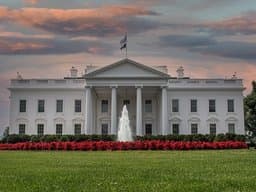
This market will resolve to "Yes" if one or more Iranian government officials physically visit the White House complex in Washington, D.C., for any diplomatic engagement, meeting, or official reception by February 28, 2026, 11:59 PM ET. Otherwise, this market will resolve to "No." Qualifying officials must be formal representatives of the Islamic Republic of Iran, including but not limited to ministers, ambassadors, diplomats, envoys, or senior advisors officially affiliated with the Iranian go
Prediction markets currently give about a 15% chance that an Iranian official will visit the White House by February 28, 2026. In simpler terms, traders see this as a roughly 1 in 7 possibility. This indicates a low level of confidence that such a high-profile diplomatic meeting will occur within this timeframe. The market is effectively forecasting that a visit is unlikely, but not impossible.
The low probability reflects the deep and persistent tensions between the United States and Iran. Direct, high-level meetings at the White House are rare and politically sensitive for both governments. Recent years have been dominated by disputes over Iran's nuclear program, its regional military activities, and U.S. sanctions.
There is also no public indication from either capital that such a visit is being planned. Diplomatic contact often happens through intermediaries or in neutral locations first. A White House visit would typically be the result of a major breakthrough, which markets do not currently anticipate happening in the next two years.
The deadline itself, February 28, 2026, is the main date. More important are events that could change the diplomatic landscape. Watch for outcomes in long-running nuclear deal negotiations, shifts in regional conflicts where both nations are involved, or unexpected results in the 2024 U.S. presidential election. A change in U.S. administration could alter foreign policy approach, potentially making a visit more or less likely.
Markets are generally decent at aggregating available information about geopolitical events, but they can be slow to react to sudden diplomatic surprises. For niche questions like this with limited trading volume, the odds can be more speculative. They reflect the consensus of informed traders based on today's information, but a single secret negotiation could quickly make the current forecast obsolete.
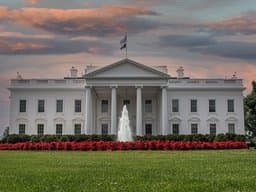
The Polymarket contract "Will Iranian officials visit the White House by February 28?" is trading at a 1% probability for "Yes." This price indicates the market views a visit as virtually impossible. With a resolution date of February 28, 2026, the thin $31,000 volume suggests limited speculative interest in a long-term geopolitical bet. A 1% chance is the market's baseline for an event considered so unlikely that it is not worth actively hedging against.
The near-zero probability directly reflects the state of US-Iran relations. There has been no official diplomatic engagement at this level for decades, with interactions typically occurring through intermediaries or in third countries like Switzerland. The core disputes over Iran's nuclear program, regional proxy activities, and US sanctions create a fundamental barrier. Recent escalations, including attacks involving Iranian-backed groups and stalled nuclear talks, reinforce a cycle of hostility that makes a symbolic White House visit politically untenable for both administrations. The market price accounts for this entrenched diplomatic freeze.
A shift from the current 1% price would require a major, unforeseen geopolitical realignment. Potential catalysts include a breakthrough in nuclear negotiations that leads to a direct leaders' summit, or a regional security crisis so severe that it forces emergency face-to-face talks. However, any movement toward dialogue would likely see initial meetings in neutral locations, not a White House visit. The 2024 US presidential election could alter the diplomatic approach, but a change in administration alone would not immediately overcome decades of mutual distrust. The market will likely remain near zero unless concrete, official talks are announced with the White House as a specified venue.
AI-generated analysis based on market data. Not financial advice.
This prediction market addresses whether Iranian government officials will visit the White House complex in Washington, D.C., for any diplomatic engagement by February 28, 2026. The question directly tests the potential for a significant diplomatic thaw between the United States and Iran, two nations with a history of profound hostility and no formal diplomatic relations since 1980. A visit of this nature would represent a major symbolic and practical shift, requiring substantial political will from both governments to overcome decades of mutual suspicion. The market's resolution depends on a physical visit by formal representatives of the Islamic Republic, such as ministers, ambassadors, or senior envoys, to the White House grounds for an official meeting or reception. Interest in this topic stems from ongoing international efforts to revive the 2015 nuclear deal, regional tensions in the Middle East, and the potential for a strategic realignment in U.S. foreign policy. Observers are watching for signals of whether the two countries can establish a direct channel of communication at the highest levels, which would be a prerequisite for addressing complex issues like Iran's nuclear program, sanctions relief, and regional proxy conflicts. The February 2026 deadline provides a specific timeframe to assess the trajectory of bilateral relations under the current and possibly next U.S. administration.
Diplomatic relations between the United States and Iran collapsed following the 1979 Iranian Revolution and the subsequent hostage crisis, where 52 American diplomats were held for 444 days. The U.S. severed formal ties in 1980, establishing the Swiss Embassy in Tehran as a protecting power. For decades, contact was minimal and often hostile, characterized by U.S. sanctions and Iranian support for groups opposed to American interests in the Middle East. A significant shift occurred with the 2015 Joint Comprehensive Plan of Action (JCPOA), a nuclear agreement negotiated between Iran and the P5+1 nations (the U.S., UK, France, Russia, China, and Germany). While the deal was finalized in Vienna, it involved sustained, direct bilateral talks between U.S. Secretary of State John Kerry and Iranian Foreign Minister Mohammad Javad Zarif. These talks did not result in a visit to the White House. The diplomatic opening reversed in 2018 when President Donald Trump withdrew the U.S. from the JCPOA and reinstated severe sanctions under a 'maximum pressure' campaign. The highest-level known direct contact since then occurred in 2023, when the U.S. and Iran engaged in a prisoner swap deal, indirectly negotiated through Qatari and Omani intermediaries, which included the unfreezing of $6 billion in Iranian oil revenue. No Iranian official has visited the White House since before the 1979 revolution.
A White House visit by Iranian officials would have profound geopolitical consequences. It would signal a de facto U.S. recognition of the current Iranian government as a legitimate negotiating partner, potentially altering the balance of power in the Middle East. U.S. allies like Israel and Saudi Arabia, which view Iran as a primary adversary, would likely perceive such a move as a major shift in American commitment to their security, possibly driving them to accelerate their own security arrangements independent of Washington. Domestically in both countries, a visit would ignite fierce political debate. In the U.S., it would face immediate criticism from Republicans and some Democrats, potentially triggering congressional hearings or legislative attempts to block sanctions relief. In Iran, hardliners in the Islamic Revolutionary Guard Corps and the judiciary could accuse the government of capitulation to the 'Great Satan,' risking internal political instability for President Raisi. Economically, a successful high-level meeting could pave the way for a broader agreement leading to the lifting of U.S. sanctions on Iranian oil exports, which would increase global supply and affect energy markets. Conversely, a failed visit could deepen the rift, closing diplomatic channels and increasing the risk of military confrontation.
As of late 2024, direct diplomatic engagement remains frozen. Nuclear negotiations have been at a standstill since mid-2022. The U.S. continues to enforce oil sanctions and has imposed new sanctions related to Iran's support for regional militant groups and its supply of drones to Russia. Iran has continued to advance its nuclear program, reducing its breakout time to potentially produce fissile material for a weapon. Regional tensions are high due to the conflict in Gaza and attacks by Iran-backed groups on U.S. forces in the region. The U.S. presidential election in November 2024 adds a major variable; a second Biden term might renew push for diplomacy, while a new administration could adopt a harder line. There are no publicly announced plans or preparatory talks for a White House visit by any Iranian official.
Iranian officials have visited the United Nations headquarters in New York for General Assembly meetings, which is permitted under host country agreements. Foreign Minister Hossein Amir-Abdollahian attended the UN General Assembly in September 2023. However, no senior Iranian official has visited Washington, D.C., for bilateral diplomatic meetings with U.S. counterparts since before the 1979 revolution.
Several conditions would likely be required. First, a substantive agreement in principle on reviving the nuclear deal or a new framework would need to be reached through indirect talks. Second, both governments would need to agree that a high-level political meeting is necessary to finalize details. Third, the U.S. would need to provide security guarantees for the visiting delegation, and Iran would need to secure internal consensus from hardline factions.
No U.S. president has extended a formal invitation for an Iranian president to visit the White House since the 1979 revolution. In 1998, President Mohammad Khatami proposed a 'dialogue among civilizations' and gave an interview to CNN, but no invitation for a Washington visit followed. Relations deteriorated further under subsequent administrations.
Oman and Qatar often act as neutral diplomatic channels because they maintain working relations with both the U.S. and Iran. They host secret talks, relay messages, and help negotiate prisoner swaps. Their involvement is essential for maintaining communication when direct talks are politically untenable, but they cannot substitute for a final, direct meeting between principals.
The 2024 U.S. presidential election is a critical factor. A second Biden term might create a final window for diplomacy before 2026. A new administration, particularly a Republican one, would almost certainly not pursue an invitation for Iranian officials, as the party platform strongly opposes the JCPOA and favors maximum pressure on Iran.
Educational content is AI-generated and sourced from Wikipedia. It should not be considered financial advice.

No related news found
Add this market to your website
<iframe src="https://predictpedia.com/embed/nmqSEH" width="400" height="160" frameborder="0" style="border-radius: 8px; max-width: 100%;" title=" Will Iranian officials visit the White House by February 28?"></iframe>