$411.97K
1
11

$411.97K
1
11
Trader mode: Actionable analysis for identifying opportunities and edge
The Gorton and Denton parliamentary by-election is currently scheduled for February 26, 2026. This market will resolve according to the candidate who wins the Gorton and Denton parliamentary by-election in Greater Manchester. If the election results are not clear by December 31, 2026, 11:59 PM ET, this market will resolve to "Other". Any change in party affiliation will not affect the resolution of this market. The resolution source for this market will be a consensus of credible reporting.
Prediction markets currently give Hannah Spencer a 72% chance of winning the Gorton and Denton parliamentary by-election. In simpler terms, traders see her victory as more likely than not, roughly a 3 in 4 probability. This shows a clear, though not overwhelming, confidence in her candidacy. The market resolves based on the official winner of the election scheduled for February 26, 2026.
Several factors explain Spencer’s strong position. First, Gorton and Denton is a new constituency created for the next UK general election, merging parts of historically safe Labour seats in Greater Manchester. Hannah Spencer is the Labour Party’s selected candidate. Labour has held the predecessor constituencies for decades, making this area a traditional stronghold.
Second, by-elections often function as referendums on the national government. With the next general election likely before this by-election, a potential new Labour government led by Keir Starmer could be in power. This national backdrop would likely boost the Labour candidate’s appeal further in a by-election held under a Labour government.
Third, while specific local campaigning will matter, the structural advantage for the Labour candidate here is significant. Markets are pricing in that historical voting patterns and the national political environment are difficult for other parties to overcome.
The main event is election day itself, February 26, 2026. The official result will be announced shortly after. Before then, watch for the formal publication of the candidate list and any major local campaign events or controversies. A significant shift in national polling or a major scandal involving the candidate could change the odds, but with Labour’s deep roots in the area, the race is seen as Spencer’s to lose.
Prediction markets have a solid track record in forecasting election outcomes, often outperforming polls by aggregating many opinions. For UK by-elections in safe seats, they are typically accurate. The main limitation here is time. The election is about two years away, which is a long period in politics. Unforeseen local issues or a dramatic change in the national political scene could shift probabilities considerably between now and 2026. For now, the market reflects a stable, historically-informed expectation.
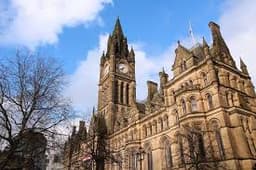
Prediction markets on Polymarket assign a 72% probability that Labour candidate Hannah Spencer will win the Gorton and Denton parliamentary by-election. This price indicates a strong favorite, but not a certainty. The market has attracted over $400,000 in wagers, providing moderate liquidity and confidence in the current odds. The remaining 28% is split among other candidates, primarily Conservative and Liberal Democrat challengers, with a small share for "Other."
The primary driver is the constituency's electoral history. Gorton and Denton is a new seat created by boundary changes, but it absorbs areas of the former Manchester Gorton constituency, which Labour has held since 1935. In the 2024 general election, Labour won the predecessor seat with a majority of over 9,000 votes. Hannah Spencer, a local councillor, is the Labour candidate for this by-election, benefiting from strong party machinery and name recognition in a traditionally Labour-voting area of Greater Manchester. The national political climate also favors Labour, which holds a commanding lead in national opinion polls.
A 72% probability leaves room for a significant upset. Voter turnout is a critical risk; by-elections often see depressed participation, which can amplify the impact of a motivated opposition or protest vote. Local issues specific to Denton or Gorton, such as a major unresolved constituency concern, could shift votes away from the national party narrative. A strong, unified campaign from a single challenger—most likely the Conservatives or Liberal Democrats—could consolidate the anti-Labour vote. The final days of campaigning and any major gaffes by the frontrunner will be decisive. The result on February 26 will provide a fresh data point on Labour's standing in its heartland seats.
AI-generated analysis based on market data. Not financial advice.
The Gorton and Denton parliamentary by-election is a special election to fill a vacant seat in the UK House of Commons. The by-election is scheduled for February 26, 2026, in the newly created constituency of Gorton and Denton in Greater Manchester. This seat was formed from parts of the former Manchester Gorton and Denton and Reddish constituencies during the 2023 boundary review. The election will determine who represents approximately 73,000 constituents in Parliament until the next general election. The vacancy was created by the resignation of the sitting MP, triggering a contest that political analysts view as a significant test for the major parties in a key Greater Manchester area. The constituency's demographic mix and political history make it a notable bellwether for wider political trends in Northern England. Interest in the by-election stems from its potential to shift the balance of power in a closely divided Parliament and to serve as a public verdict on the government's performance midway through its term. Media attention focuses on whether Labour can retain this traditionally strong seat or if other parties can make gains in a region that has shown increased political volatility in recent years.
The Gorton and Denton constituency is a product of the 2023 Parliamentary Constituency Boundary Review, which reduced the number of seats in Greater Manchester from 27 to 26. The new seat primarily combines the former Manchester Gorton constituency, which existed from 1885 to 2024, and the Denton and Reddish constituency, which existed from 1983 to 2024. Manchester Gorton was a Labour stronghold for decades, held by figures like Gerald Kaufman from 1970 to 2017 and then Afzal Khan. The seat never elected a Conservative MP in its 139-year history. Denton and Reddish was also consistently Labour since its creation, represented by Andrew Gwynne since 2010. The last time either area elected a non-Labour MP was in 1931, when Manchester Gorton briefly returned a Conservative. The 2024 general election saw Labour's vote share decline in both predecessor constituencies compared to 2019, with Manchester Gorton dropping from 77.4% to 65.8% and Denton and Reddish falling from 52.5% to 46.2%. This decline followed a longer trend of decreasing Labour majorities in Greater Manchester since the party's peak performance in 1997. The 2026 by-election will test whether this trend continues or if Labour can consolidate support in a newly drawn seat.
The Gorton and Denton by-election matters because it could alter the government's working majority in the House of Commons. A loss for Labour would reduce their parliamentary numbers at a time when the government faces difficult votes on legislation related to the economy and public services. The result will be interpreted as a measure of public opinion on the government's performance after approximately two years in power. For the Conservative Party, a strong showing or an upset victory would be presented as evidence of a political recovery in the North of England, potentially changing the strategic calculations for the next general election. The by-election also has local significance for Greater Manchester. The winning MP will advocate for the area's share of funding from the Greater Manchester Combined Authority and influence decisions on local infrastructure projects, including the proposed expansion of the Metrolink tram system. A change in representation could affect the political balance on issues like housing development in the Gorton area and regeneration plans for Denton town centre. Community groups and businesses are watching closely, as the outcome may shift political attention and resources toward different priorities within the constituency.
As of late 2025, candidate selection processes are underway. The Labour Party is conducting interviews with potential candidates, with local councillors and party activists considered frontrunners. The Conservative Party has begun its candidate longlisting process, focusing on individuals with local government experience in Greater Manchester. The Liberal Democrats have opened applications and are reportedly seeking a candidate with strong community campaigning credentials. The Workers Party of Britain has not officially announced a candidate but George Galloway has mentioned the constituency in speeches. The Reform Party has stated it will contest the seat but has not named a candidate. Local issues dominating early campaigning include the proposed closure of a Sure Start centre in Gorton, traffic congestion on the A57, and the future of Denton Library. The official writ for the by-election is expected to be moved in Parliament in January 2026, formally triggering the campaign period.
A by-election occurs when a parliamentary seat becomes vacant between general elections. In this case, the sitting MP for the predecessor constituency of Manchester Gorton did not seek re-election in the redrawn seat, creating a vacancy. The exact reason for the vacancy is the MP's resignation, which triggers the need for a special election under UK parliamentary rules.
The constituency includes the Gorton area of Manchester (covering neighborhoods like Gorton North, Gorton South, and Abbey Hey) and the town of Denton in Tameside. Specific wards include Gorton & Abbey Hey, Gorton & Levenshulme, Denton North East, and Denton South from the 2023 boundary review. It does not include Reddish, which moved to a different constituency.
Based on historical results from the areas forming the new seat, the Labour Party begins as the favorite. However, by-elections often produce unexpected results due to lower turnout and protest voting. The Conservative Party, Liberal Democrats, and Workers Party of Britain are all expected to mount serious campaigns that could make the outcome competitive.
Educational content is AI-generated and sourced from Wikipedia. It should not be considered financial advice.
11 markets tracked

No data available
| Market | Platform | Price |
|---|---|---|
![]() | Poly | 72% |
![]() | Poly | 20% |
![]() | Poly | 7% |
![]() | Poly | 0% |
![]() | Poly | 0% |
![]() | Poly | 0% |
![]() | Poly | 0% |
![]() | Poly | 0% |
![]() | Poly | 0% |
![]() | Poly | 0% |
![]() | Poly | 0% |


No related news found
Add this market to your website
<iframe src="https://predictpedia.com/embed/p1xJA4" width="400" height="160" frameborder="0" style="border-radius: 8px; max-width: 100%;" title="Gorton and Denton by-election Winner"></iframe>