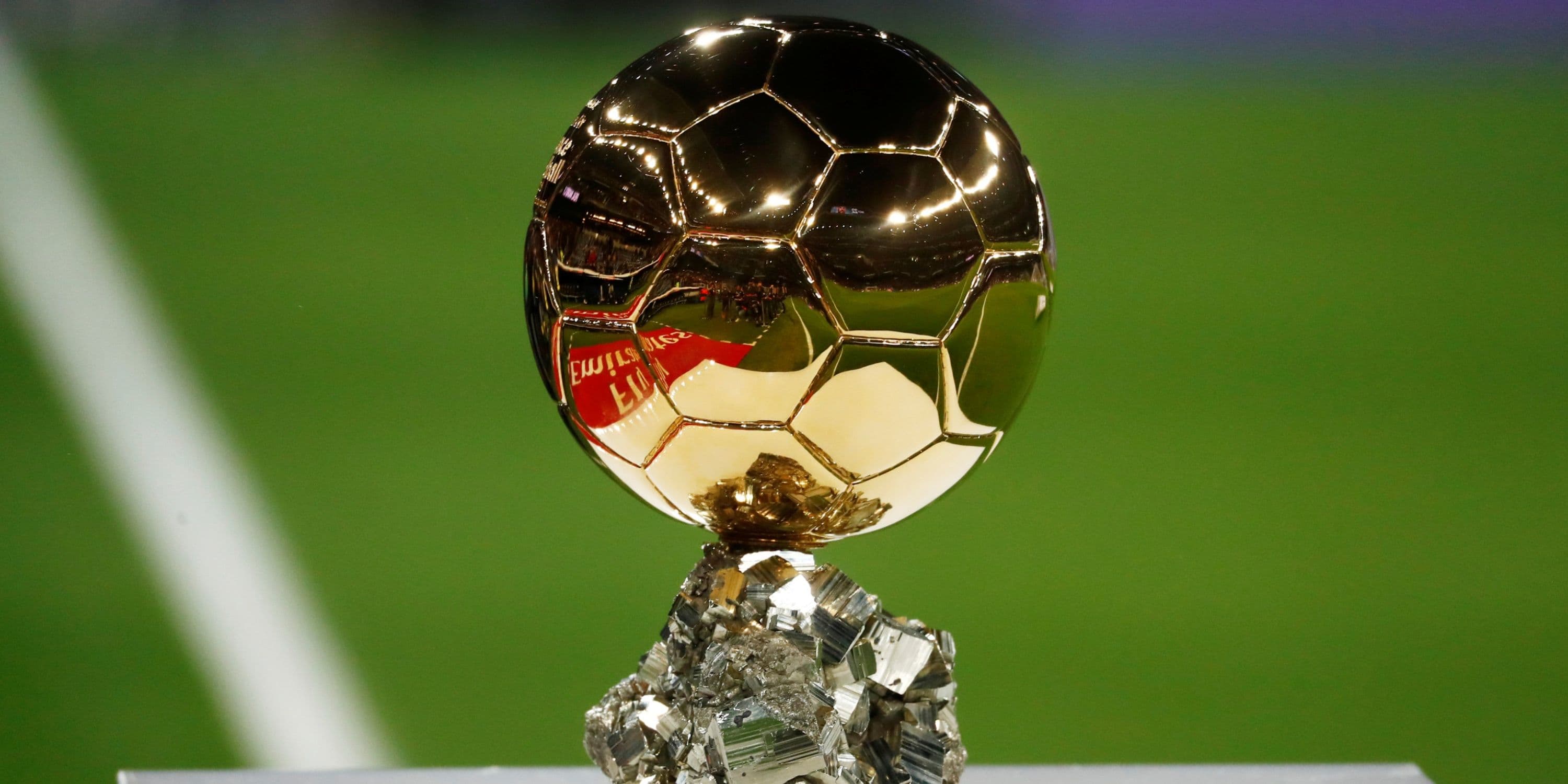
Ballon d'Or Winner 2026
$48.61M
1
19
Ballon d'Or Winner 2026
$48.61M
1
19
AI Analysis
Trader mode: Actionable analysis for identifying opportunities and edge
About This Event
This market will resolve according to the winner of the 2026 Ballon d’Or. If no 2026 Ballon d’Or winner is declared by December 31, 2026, 11:59 PM ET, this market will resolve to "Other". The primary resolution source for this market is official information from France Football (https://www.francefootball.fr/).
This saved analysis is awaiting a background update.
Current Market Outlook
The market is pricing Kylian Mbappé as the 2026 Ballon d'Or winner at 31%. That is not a favorite. A 31% probability means the market sees Mbappé as the most likely individual candidate, but the field is wide open. With 25 markets trading $6.6M in volume, this is a liquid market that reflects real money opinions.
The "Other" category at 69% combined means the market collectively believes someone else wins. That could be Vinícius Júnior, Erling Haaland, Jude Bellingham, or a surprise breakout. Mbappé is the frontrunner by default, not by dominance.
Key Factors Driving the Odds
The Ballon d'Or is a calendar-year award judged on individual performance, team trophies, and major tournament success. 2026 is a World Cup year. That changes everything.
Mbappé at 31% reflects his status as France's star. France reached the 2022 final and won 2018. If France wins the 2026 World Cup and Mbappé performs, he is the clear winner. But France's odds of winning the World Cup are around 15-20% depending on the book. That caps Mbappé's ceiling.
The other factor is Real Madrid's Champions League run. Mbappé joined Real Madrid in 2024. If he leads them to a Champions League title in 2025-26, that adds weight. But Vinícius Júnior and Jude Bellingham share that spotlight. The market is pricing in that Real Madrid's success spreads votes across multiple candidates.
What Could Change These Odds
The World Cup is the single biggest catalyst. It runs June-July 2026. If Mbappé scores a hat trick in a semifinal or France wins, his price jumps to 60%+. If France loses in the quarterfinals, it drops to 10%.
The Champions League final is May 2026. A dominant Mbappé performance there could push his odds to 40-45% before the World Cup.
The biggest risk to the current price is a breakout from someone else. If Vinícius wins the Champions League and Brazil wins the World Cup, Mbappé is irrelevant. Or if Haaland scores 60 goals for Manchester City and Norway surprises, that changes the math entirely.
The market is pricing Mbappé fairly given that no one has a clear path yet. Come July 2026, this market will move fast.
AI-generated analysis based on market data. Not financial advice.
Saved Jul 10, 2026 UTCThis saved content is awaiting a background update.
Overview
The Ballon d'Or is an annual football award presented by French magazine France Football, recognizing the best male and female footballer of the previous season. Established in 1956 by journalists Gabriel Hanot and Jacques Ferran, it originally honored the best European player but expanded to include global players from any club and nationality in 1995. The 2026 Ballon d'Or will be awarded based on performances during the 2025-26 season, with voting by international journalists from the top 100 FIFA-ranked nations. The winner is determined by a points system, with each journalist selecting a top 10 ranking from a 30-player shortlist. The award has been dominated by Lionel Messi and Cristiano Ronaldo in recent decades, but a new generation of players has emerged since 2018, including Karim Benzema, Robert Lewandowski, and Erling Haaland. The 2026 edition will be the 70th Ballon d'Or ceremony, likely held in late October 2026 at the Théâtre du Châtelet in Paris. Interest in the 2026 race centers on whether a player from the 2026 FIFA World Cup (scheduled for June-July 2026 in the United States, Canada, and Mexico) will gain a decisive advantage, as World Cup performances have historically influenced voting. The award's credibility has faced scrutiny due to voting transparency and perceived biases, but it remains football's most prestigious individual honor. The 2026 market allows bettors to speculate on the winner based on current form, World Cup prospects, and historical voting patterns.
Historical Context
The Ballon d'Or was first awarded in 1956 to Stanley Matthews of Blackpool. The early years were dominated by European players, with Alfredo Di Stéfano winning consecutive awards in 1957 and 1958. The award expanded to include non-European players in 1995, when George Weah became the first African winner. The voting system has changed multiple times: from 1956 to 2006, only European journalists voted; from 2007 to 2009, global journalists and national team coaches participated; and since 2010, a panel of 100 international journalists from FIFA's top-ranked nations selects the winner. The Ballon d'Or merged with FIFA World Player of the Year from 2010 to 2015, before France Football regained sole control in 2016. Lionel Messi holds the record with eight Ballon d'Or wins, followed by Cristiano Ronaldo with five. The last non-Messi or Ronaldo winner before 2018 was Kaka in 2007. The 2020 award was canceled due to the COVID-19 pandemic, the first cancellation since 1956. World Cup years have historically favored the tournament's best player: 2018 winner Luka Modric led Croatia to the final, 2014 winner Ronaldo had a strong World Cup, and 2006 winner Fabio Cannavaro captained Italy to victory. The 2022 World Cup winner Messi was the favorite, but he won the 2023 award primarily for his World Cup performance rather than club form. The 2026 World Cup will be hosted across three countries for the first time, with 48 teams instead of 32, potentially giving more players international exposure.
Why It Matters
The Ballon d'Or is the most recognized individual award in football, influencing player valuations, transfer fees, and endorsement deals. Winning the Ballon d'Or can increase a player's market value by 20-30% and lead to lucrative sponsorship opportunities. For example, after winning in 2018, Luka Modric signed a reported €150 million lifetime deal with Nike. Clubs also benefit from having a Ballon d'Or winner on their roster, as it boosts global brand recognition and merchandise sales. Real Madrid has produced the most winners (12), and the award has become a key marketing tool for elite clubs. The 2026 race will be particularly significant because it coincides with the expanded World Cup, which could produce a surprise winner from a smaller nation. The award also carries cultural weight in countries like Argentina, where Messi's 2022 win was celebrated as a national holiday. For betting markets, the Ballon d'Or offers a long-term speculative opportunity, with odds fluctuating based on seasonal performance, injuries, and World Cup results. The market's resolution date of December 31, 2026, allows for post-World Cup adjustments, as the ceremony typically occurs in late October or early November.
Educational content is AI-generated and sourced from Wikipedia. It should not be considered financial advice.