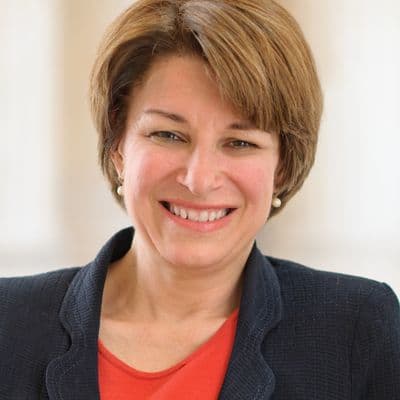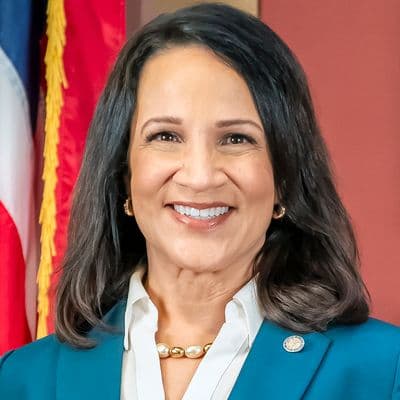
Minnesota Governor Election Winner
$88.45K
1
2
Minnesota Governor Election Winner
$88.45K
1
2
AI Analysis
Trader mode: Actionable analysis for identifying opportunities and edge
About This Event
This market will resolve according to the winner of the 2026 Minnesota gubernatorial election. A candidate shall be considered to represent a party in the event that he or she is the nominee of the party in question. Candidates other than the Democratic or Republican nominee (e.g., Greens, Libertarian, independent) may be added at a later date. Candidates who run as independents will not be encompassed by the “Democrat” or “Republican” options regardless of any affiliation they may have with t
This saved analysis is awaiting a background update. Its prices and claims may be outdated; compare them with the dated market data above.
Current Market Outlook
Polymarket traders see a 94% probability that Democrats will win the Minnesota governor race in 2026. That is near-certain territory. The market is thin, with only $63,000 in total volume across two contracts, so the price reflects a small group of bettors rather than deep institutional money.
The Republican side trades at roughly 6%. This spread suggests the market believes Minnesota's governorship is essentially locked for Democrats heading into the next cycle.
Key Factors Driving the Odds
Minnesota has elected only one Republican governor since 1970: Tim Pawlenty, who served from 2003 to 2011. The state leans Democratic at the statewide level, even as some rural districts vote heavily Republican. Incumbent Governor Tim Walz, a Democrat, won reelection in 2022 by 7.7 points over Scott Jensen, a margin of roughly 213,000 votes.
Walz has not announced whether he will seek a third term. If he runs, he starts as a strong favorite. If he retires, Democrats still hold structural advantages. The state party has a deep bench, including Lieutenant Governor Peggy Flanagan and Attorney General Keith Ellison. Republicans, meanwhile, lack a clear top-tier challenger. The 2022 GOP nominee, Jensen, lost decisively and has not signaled another run.
What Could Change These Odds
A Walz retirement announcement would be the single biggest catalyst. It would open a competitive primary and could narrow the Democratic advantage. Republicans would also need a credible candidate. If former state senator or 2022 nominee Jensen declines, the party may struggle to recruit a name with statewide recognition.
The 2026 election is 98 days from resolution, meaning the market will not shift until candidate filing deadlines and primary outcomes become clear. Midterm turnout dynamics could matter. If national political winds blow hard against Democrats, a generic Republican might outperform expectations. But the current odds reflect a state where Democrats have held the governor's office for 16 of the last 20 years, and nothing on the horizon suggests that streak is in danger.
AI-generated analysis based on market data. Not financial advice.
Saved Jul 28, 2026 UTCThis saved content is awaiting a background update. It may contain outdated claims; use the dated market data and provider rules for the latest available information.
Overview
The 2026 Minnesota gubernatorial election will determine the next governor of Minnesota. The election is scheduled for November 3, 2026. Minnesota has a two-year gubernatorial term, meaning the winner will serve from January 2027 to January 2031. The current governor, Tim Walz (Democrat), is term-limited and cannot seek reelection after serving two full terms. This open seat creates a competitive race in a state that has not elected a Republican governor since Tim Pawlenty in 2006. Minnesota is known for its high voter turnout, consistently ranking first in the nation for voter participation. The state has a Democratic trifecta as of 2025, with Democrats controlling the governorship, state House, and state Senate. However, the 2026 election occurs in a midterm cycle, which historically favors the party out of the White House. Minnesota's political landscape is divided, with the Twin Cities metro area leaning Democratic and greater Minnesota leaning Republican. The state's electoral competitiveness makes this race a key battleground for both parties. Recent elections have been close, with Walz winning by 7.5 points in 2022 and 11.4 points in 2018. The 2026 race will test whether Democrats can hold a key Midwestern state without an incumbent. National issues such as the economy, abortion rights, and education funding are expected to dominate the campaign. The primary elections will take place on August 11, 2026. Candidates must file for office by June 2, 2026. The race has already attracted interest from several potential candidates on both sides. Political analysts rate the election as a toss-up or lean Democratic depending on the national environment. The outcome could have implications for control of state government and redistricting after the 2030 census.
Historical Context
Minnesota has a history of electing governors from both parties. From 1970 to 2026, the state has had six governors: three Democrats and three Republicans. The last Republican governor was Tim Pawlenty, who served from 2003 to 2011. He was succeeded by Democrat Mark Dayton, who served two terms from 2011 to 2019. Governor Tim Walz has been in office since 2019. The state has a strong tradition of third-party candidates, with Jesse Ventura winning as a Reform Party candidate in 1998. Ventura's win was a major upset and remains the only time a third-party candidate has won the governorship in Minnesota. The 1962 gubernatorial election was one of the closest in U.S. history, with Republican Elmer L. Andersen initially leading by 142 votes, then losing after a recount to Democrat Karl Rolvaag. That election was decided by 91 votes after a five-month recount. Minnesota's gubernatorial elections have become more competitive in recent decades. The 2010 election was won by Mark Dayton with 43.7% of the vote in a three-way race. The 2014 election had Dayton winning with 50.1% against Republican Jeff Johnson. The 2018 election saw Walz win with 53.9% against Republican Jeff Johnson. The 2022 election had Walz win with 52.3% against Scott Jensen. The state's political geography has shifted, with the Twin Cities metro area becoming more Democratic and rural areas more Republican. This has made statewide elections competitive, with margins typically in the single digits.
Why It Matters
The Minnesota gubernatorial election matters for several reasons. First, the governor controls the state budget, which was $72 billion in the 2024-2025 biennium. The governor appoints state commissioners, judges, and board members. The governor also has veto power over legislation. Control of the governorship affects policies on education, health care, taxes, and transportation. Minnesota has a Democratic trifecta as of 2025, and a Republican win in 2026 would break that control. The election will also influence redistricting after the 2030 census. The governor appoints members to the redistricting commission. The outcome could affect Minnesota's congressional map for a decade. The election is also a bellwether for national politics. Minnesota is a swing state that has voted Democratic in presidential elections since 1976, with the exception of 1972 and 1984. However, Republican Donald Trump came within 1.5 points of winning Minnesota in 2016. The 2026 governor's race will test whether Democrats can hold the state without an incumbent. The election will also impact state-level policies on abortion, which is currently legal in Minnesota. Governor Walz signed a law in 2023 codifying abortion rights. A Republican governor could change that. The state's economy is also at stake. Minnesota has a AAA credit rating from all three major agencies. The governor's budget priorities affect business taxes, infrastructure spending, and social programs. The election will also affect the state's response to climate change, with Minnesota having a goal of 100% carbon-free electricity by 2040.
Frequently Asked Questions
Who is running for governor of Minnesota in 2026?
As of early 2025, no candidates have officially declared. Potential Democratic candidates include Lieutenant Governor Peggy Flanagan, Senator Amy Klobuchar, and House Majority Leader Jimmy Carter. Potential Republican candidates include 2022 nominee Scott Jensen and former state senator Michelle Benson.
Can Tim Walz run for governor again in 2026?
No. Tim Walz is term-limited after serving two consecutive four-year terms. He cannot run for a third term. He was first elected in 2018 and reelected in 2022.
When is the Minnesota gubernatorial election in 2026?
The general election is Tuesday, November 3, 2026. The primary election is Tuesday, August 11, 2026. Candidate filing opens May 19, 2026 and closes June 2, 2026.
AI-written background. References identify the evidence used; Wikipedia links under Learn More are additional reading. Prices and provider rules are dated snapshots. This is not financial advice.