$83.44K
1
7

$83.44K
1
7
Trader mode: Actionable analysis for identifying opportunities and edge
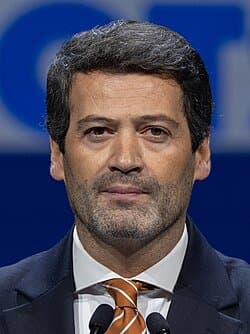
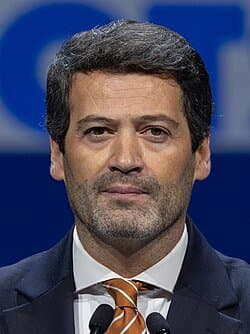
First-round presidential elections are scheduled to be held in Portugal on January 18, 2026. This market will resolve according to the vote share André Ventura wins in the first round of the Portuguese presidential election. If the reported value falls exactly between two brackets, then this market will resolve to the higher range bracket. If a recount is initiated before the vote total has been made official, the market will remain open until the recount is completed and the vote is made off
Prediction markets currently assign a low probability to André Ventura securing a vote share between 24% and 26% in the first round of Portugal's presidential election. The leading contract on this specific bracket trades at just 31¢, implying the market sees only a 31% chance of this outcome. This suggests traders view a result in this narrow band as possible, but significantly less likely than alternative outcomes. With total market volume at $83,000 spread thinly across seven vote-share brackets, liquidity is limited, indicating lower confidence in precise forecasts.
The pricing reflects Ventura's solidified position as a strong third-force candidate, yet acknowledges the historical ceiling for his Chega party in national elections. In the 2021 presidential election, Ventura captured 11.9% of the vote. His support has grown substantially since, with Chega winning 18.1% in the 2024 legislative elections. Markets are likely pricing a further presidential surge, but the 24-26% bracket represents a very specific, high-end projection of that growth. The low probability indicates skepticism he can reach that threshold against a fragmented field, where the leading center-right candidate, Luís Montenegro, and a potential center-left unity candidate could consolidate moderate votes.
The final 72 hours of campaigning and last-minute polling will be the decisive catalysts. A major endorsement, a significant gaffe by a rival, or a final poll showing Ventura polling at or above 25% could rapidly shift probabilities toward this bracket. Conversely, evidence of strong voter mobilization for his main opponents would likely depress odds further. The market's thin liquidity means it could be highly volatile in response to news. The official exit polls released immediately after voting closes on January 18 will provide the clearest signal before final results.
AI-generated analysis based on market data. Not financial advice.
This prediction market focuses on the vote share that André Ventura, the leader of Portugal's right-wing populist Chega party, will receive in the first round of the Portuguese presidential election scheduled for January 18, 2026. The Portuguese President, elected to a five-year term, serves as the head of state with significant powers including the ability to dissolve parliament, veto legislation, and appoint the prime minister. While the role is non-executive, presidential elections serve as a crucial barometer of the nation's political climate and can influence the balance of power between parties. André Ventura's performance is of particular interest as it measures the electoral strength and mainstream acceptance of Chega, a party that has rapidly grown from a fringe movement to the third-largest force in the Portuguese parliament, challenging the traditional center-left and center-right political establishment. Political analysts and investors are closely watching this metric to gauge the potential for further political fragmentation in Portugal and the durability of the 'cordon sanitaire' that mainstream parties have maintained against formal cooperation with Chega. The result will also signal whether Ventura's brand of nationalist, anti-establishment politics continues to resonate with a segment of the Portuguese electorate dissatisfied with the status quo.
The political ascent of André Ventura and Chega represents a dramatic break in Portugal's post-1974 democratic history, which had been characterized by a stable alternation between the center-left Socialist Party (PS) and the center-right Social Democratic Party (PSD). Chega was founded in April 2019, just months before that year's legislative election, where it won 1.3% of the vote and a single seat, held by Ventura himself. Its breakthrough came in the 2022 legislative election, where it surged to 7.2% and 12 seats, establishing itself as a parliamentary force. This growth continued in the March 2024 legislative election, where Chega more than doubled its vote share to 18.1%, securing 50 seats and becoming the third-largest party. Ventura first tested his presidential appeal in the January 2021 election, finishing third with 11.9% of the vote behind the overwhelming winner, Marcelo Rebelo de Sousa. Historically, far-right candidates have performed poorly in Portuguese presidential races. The previous significant far-right candidacy was by Francisco Lopes of the Portuguese Communist Party in 1980, who won 7.1%. Ventura's 2021 result was thus the highest for a candidate from a party outside the traditional PS/PSD duopoly in decades, setting a new benchmark for his 2026 campaign.
The vote share for André Ventura is a critical indicator of the normalization and electoral ceiling of far-right politics in Portugal, a country long considered an exception to the populist wave seen elsewhere in Europe. A result significantly above his 2021 showing of 11.9% would signal a deepening political realignment, suggesting Chega's legislative gains reflect a durable shift in voter sentiment rather than a protest vote. This could further pressure the center-right Social Democratic Party (PSD) to formalize its current parliamentary reliance on Chega into a full governing coalition, fundamentally altering Portugal's political landscape. Conversely, a stagnant or declining vote share for Ventura would indicate a limit to his appeal in a national, personality-driven contest and could strengthen the 'cordon sanitaire' maintained by other parties. The outcome also has implications for European politics, as a strong showing would reinforce the narrative of a sustained far-right presence in Southern Europe, influencing policy debates in the European Union on issues like migration and EU integration.
As of late 2024, the field for the January 2026 presidential election is beginning to take shape. Incumbent President Marcelo Rebelo de Sousa has confirmed he will not seek a third term, guaranteeing an open race. André Ventura has strongly indicated he will be a candidate again, aiming to build on his 2021 result. The center-left Socialist Party (PS) and the center-right Social Democratic Party (PSD) have not yet officially nominated their candidates, but internal discussions are underway. The political context is dominated by the unprecedented parliamentary influence of Chega, which provides crucial support to Prime Minister Luís Montenegro's minority government. This arrangement keeps Chega and Ventura consistently in the national spotlight, which his campaign is likely to leverage.
The Portuguese President is the head of state with significant political powers, though the role is largely ceremonial in day-to-day governance. Key powers include the ability to dissolve the Assembly of the Republic, appoint the Prime Minister, veto legislation, and serve as the supreme commander of the armed forces. The president also represents Portugal internationally.
The president is elected by direct universal suffrage for a five-year term, with a maximum of two consecutive terms. If no candidate receives more than 50% of the vote in the first round, a second round is held two weeks later between the top two finishers. The election scheduled for January 18, 2026, is this first round.
Chega's platform combines nationalist, populist, and anti-establishment themes. Its key policy positions include stricter law-and-order measures, reducing immigration, fighting political corruption, introducing life prison sentences, and criticizing what it calls excessive Portuguese nationalism. The party also advocates for economic liberalism and smaller government in some sectors.
The main opponents will likely be the candidates from the two largest traditional parties, the center-left Socialist Party (PS) and the center-right Social Democratic Party (PSD). As neither has yet chosen a nominee, the specific dynamics are unclear, but the race is expected to be a multi-candidate contest where Ventura will compete against figures from the established political center.
In the January 2021 presidential election, incumbent Marcelo Rebelo de Sousa (supported by PSD and CDS-PP) won re-election in the first round with 60.7% of the vote. Ana Gomes (independent, supported by PS) came second with 12.9%, and André Ventura (Chega) came third with 11.9%. Voter turnout was 39.2%.
Educational content is AI-generated and sourced from Wikipedia. It should not be considered financial advice.
Share your predictions and analysis with other traders. Coming soon!
7 markets tracked

No data available
| Market | Platform | Price |
|---|---|---|
![]() | Poly | 31% |
![]() | Poly | 19% |
![]() | Poly | 13% |
![]() | Poly | 8% |
![]() | Poly | 3% |
![]() | Poly | 2% |


No related news found
Add this market to your website
<iframe src="https://predictpedia.com/embed/qBj7rv" width="400" height="160" frameborder="0" style="border-radius: 8px; max-width: 100%;" title="André Ventura vote share in Portuguese presidential first round?"></iframe>