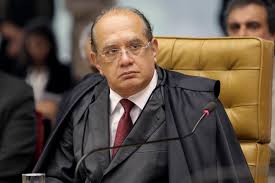
Any Brazil STF Justice removed by impeachment before 2027?
$96.50K
1
1
Any Brazil STF Justice removed by impeachment before 2027?
$96.50K
1
1
AI Analysis
Trader mode: Actionable analysis for identifying opportunities and edge
About This Event
This market will resolve to “Yes” if any justice of the Brazil Supreme Federal Court (STF) is permanently removed from the court as a result of impeachment or a trial for a crime of responsibility by December 31, 2026, 11:59 PM ET. Otherwise, this market will resolve to “No”. Justices leaving the court due to term limits, voluntary resignation, or any other reason not resulting from impeachment or a trial for a crime of responsibility will not count. Impeachments, trials for crimes of responsi
This saved analysis is awaiting a background update. Its prices and claims may be outdated; compare them with the dated market data above.
Current Market Outlook
Polymarket traders price a 14% chance that any Brazil Supreme Federal Court (STF) justice is removed by impeachment before the end of 2026. That is a low probability, but not a negligible one. A 14% price means the market sees this as an unlikely but entirely plausible tail risk. With only $65K in volume and 145 days until resolution, this is a thin market, so the price can swing sharply on any single headline.
Key Factors Driving the Odds
The market is pricing in the reality that Brazil's political class has both motive and history when it comes to attacking the STF. President Lula's administration and congressional allies have openly clashed with the court over decisions on the Amazon fund, indigenous land rights, and the criminal prosecution of January 8 rioters. In 2023, the Senate's Constitution and Justice Committee actually advanced an impeachment request against Justice Alexandre de Moraes, though it never reached a floor vote.
But the mechanics matter. Removing a justice requires a two-thirds Senate vote, which is a high bar. The current Senate composition does not have that supermajority aligned against any single justice. And impeachment is a political process, not a legal one. The court has also been careful to avoid giving opponents a single, unified target. The market's 14% reflects a realistic assessment: the appetite exists, but the votes do not yet.
What Could Change These Odds
The biggest catalyst is the 2026 presidential election cycle. Campaign season intensifies in the second half of 2025, and STF rulings on candidate eligibility or campaign finance could inflame tensions. Justice Moraes is the most likely target given his role overseeing the January 8 investigations, which have ensnared dozens of Bolsonaro allies.
A single scandal could shift this market fast. If a justice is caught in corruption allegations similar to the Odebrecht era, the political calculus changes overnight. Conversely, if the court avoids major confrontations through the election, the odds should drift lower. Watch for Senate committee votes on impeachment requests, which are the visible leading indicators, and any STF ruling that blocks a major presidential candidate from running.
AI-generated analysis based on market data. Not financial advice.
Saved Aug 8, 2026 UTCThis saved content is awaiting a background update. It may contain outdated claims; use the dated market data and provider rules for the latest available information.
Overview
This prediction market asks whether any justice of Brazil's Supreme Federal Court (STF) will be permanently removed through impeachment or a trial for a crime of responsibility by December 31, 2026. The STF is the highest judicial body in Brazil, and its justices are appointed for life, with mandatory retirement at age 75. Removal can only occur through impeachment, which is a political process initiated by the Chamber of Deputies and judged by the Senate, or through a criminal conviction for a crime of responsibility. The market resolves to 'Yes' only if a justice is removed via these specific mechanisms, not through voluntary resignation, retirement, or death. The topic has gained traction because of the highly charged political climate in Brazil, where the STF has been at the center of numerous controversies, including investigations into former President Jair Bolsonaro and his allies. Critics, including Bolsonaro and his supporters, have accused the court of overreach and have called for the impeachment of some justices, particularly Alexandre de Moraes, who has led several high-profile investigations. At the same time, the court has faced scrutiny from both ends of the political spectrum, with some arguing that it has become too powerful and others defending its role as a check on executive and legislative excesses. Recent developments have intensified these tensions. In 2023 and 2024, the STF ruled on several politically sensitive issues, including the criminal liability of former President Bolsonaro for spreading election misinformation, and the suspension of the X platform (formerly Twitter) after a dispute with Justice Moraes. These rulings have fueled calls for impeachment from Bolsonaro's allies, who argue that the court is acting beyond its constitutional authority. However, no formal impeachment proceedings have been initiated against any justice, and the political and legal hurdles to removal are high. Interest in this market reflects broader questions about judicial independence, political accountability, and the stability of Brazil's democratic institutions. Observers are watching whether the STF will continue to assert its authority, and whether the political backlash will lead to any concrete attempts to remove justices. The outcome of this market will have significant implications for the balance of power in Brazil, the credibility of its judicial system, and the future of its democratic governance.
Historical Context
The Brazilian Constitution of 1988 established the STF as the guardian of the constitution, with justices appointed by the president and confirmed by the Senate. Justices serve for life until mandatory retirement at 75, a rule added by a constitutional amendment in 2015. Impeachment of a justice is possible but has never occurred in Brazil's history. The process requires a request from a citizen or entity, acceptance by the Chamber of Deputies, and a trial by the Senate, where a two-thirds majority is needed for conviction. This high threshold makes removal difficult, and no justice has ever been removed this way. Historically, the STF has faced periods of tension with other branches of government, but impeachment threats have been rare. During the military dictatorship (1964-1985), the court was often subservient to the regime, and justices were sometimes forced to retire. In the democratic era, the court has asserted its independence, notably in the 'Mensalão' corruption trial in 2012-2013, which convicted several politicians. More recently, the court has been involved in controversial rulings on issues like same-sex marriage, affirmative action, and the investigation of corruption in the 'Lava Jato' operation. The current wave of impeachment calls began during Bolsonaro's presidency, when the court repeatedly blocked his administration's policies and investigated his allies. In 2019, Bolsonaro called for the impeachment of Justice Moraes after the court authorized an investigation into fake news attacks. The tension escalated in 2021 when Bolsonaro held an Independence Day rally where he threatened the court. In 2022, the court ordered Bolsonaro to testify in an investigation into his claims of election fraud. After Bolsonaro lost the 2022 election, his supporters attacked government buildings in Brasília on January 8, 2023, leading to a STF-led investigation that has targeted Bolsonaro and his allies, further fueling impeachment calls.
Why It Matters
The removal of an STF justice through impeachment would be a historic event with profound implications for Brazil's judicial independence and democratic stability. It could set a precedent for political interference in the judiciary, potentially undermining public confidence in the court's impartiality. Conversely, if no justice is removed, it would reinforce the court's resilience against political pressure, but could also lead to continued tensions and accusations of unaccountability. Economically, political instability in Brazil can affect investor confidence, currency valuation, and capital flows. A constitutional crisis involving the STF could lead to market volatility, as seen during past political upheavals. Socially, the outcome could deepen divisions between supporters and opponents of the court, potentially leading to protests or further polarization. The market's resolution will be watched by political analysts, investors, and citizens, as it reflects the health of Brazil's democratic institutions and the balance of power among its branches.
Frequently Asked Questions
Can a justice of the Brazilian Supreme Court be impeached?
Yes, the Constitution allows impeachment of STF justices for crimes of responsibility, but it has never occurred. The process requires a request accepted by the Chamber of Deputies and a trial in the Senate, with a two-thirds majority needed for conviction.
What is the process for impeaching a Brazilian Supreme Court justice?
The process starts with a request from any citizen or entity, which is reviewed by the Chamber of Deputies. If a majority of deputies accept, the case goes to the Senate, where a trial is held. A two-thirds majority of senators is required to remove the justice.
Has any Brazilian Supreme Court justice ever been removed by impeachment?
No, in the history of Brazil, no STF justice has been removed through impeachment. The only removals have been due to retirement, resignation, or death.
AI-written background. References identify the evidence used; Wikipedia links under Learn More are additional reading. Prices and provider rules are dated snapshots. This is not financial advice.
Market Insights
Price gaps of 2 pp+
0
Saved price pairs
0
No exact saved pairs with both binary Yes prices are available.
Price differences do not establish arbitrage. Check each pair's review, current order prices, fees and settlement rules.