2026 Nobel Peace Prize winner
$0.00
1
21
2026 Nobel Peace Prize winner

$0.00
1
21
AI Analysis
Trader mode: Actionable analysis for identifying opportunities and edge
About This Event
In 2026 If X wins the Nobel Peace Prize in 2026, then the market resolves to Yes. Early close condition: This market will close and expire early after the award is announced. This market will close and expire early after the award is announced.
What Prediction Markets Are Forecasting
Traders on Kalshi currently give Sudan's Emergency Response Rooms (ERRs) roughly a 1 in 4 chance of winning the 2026 Nobel Peace Prize. That's not a confident bet by any stretch, but it puts the ERRs near the top of a crowded field where no single candidate is a clear favorite. In prediction market terms, 26% suggests the market sees them as a serious contender, not a frontrunner.
The market is essentially asking: will the Nobel Committee reward grassroots civilian organizing over more traditional diplomatic figures? The ERRs are volunteer networks that coordinate food distribution, medical care, and evacuation in Sudan's war zones. They've become the main lifeline for millions caught between the Sudanese Armed Forces and the Rapid Support Forces.
Why the Market Sees It This Way
Three factors are driving that 26% number.
First, the ERRs fit the Nobel Committee's recent pattern. The 2024 prize went to Nihon Hidankyo, a Japanese grassroots group of atomic bomb survivors. The 2023 winner was jailed Belarusian activist Ales Bialiatski and two human rights organizations. The committee has shown a taste for civil society heroes over heads of state.
Second, Sudan's humanitarian catastrophe keeps escalating. The UN calls it the world's worst displacement crisis, with over 11 million people forced from their homes. The ERRs have grown more visible internationally as Western media covers the famine and ethnic violence. Nobel buzz tends to follow global attention.
Third, there's a timing problem. The 2026 prize will be announced in October 2026, and the committee's nomination deadline is typically early February. If Sudan's situation stabilizes or shifts toward peace talks, the ERRs might lose their urgency. If the war grinds on, their case only strengthens.
Key Dates and Events to Watch
The Nobel Peace Prize announcement lands in early October 2026, but the market could move sooner. Watch for the February nomination deadline, when credible leaks or committee signals often surface. Also monitor major developments in Sudan: a ceasefire agreement, a new wave of atrocities, or recognition from bodies like the African Union or the UN Security Council.
The ERRs also received a nomination for the 2025 prize, which didn't win. If they're renominated for 2026, that continuity could matter. Keep an eye on whether they receive other major awards in the meantime, like the Right Livelihood Award or the Sakharov Prize, which sometimes foreshadow Nobel picks.
How Reliable Are These Predictions?
Prediction markets have a mixed record on the Nobel Peace Prize. They're better at forecasting elections and economic events, where data is plentiful. Nobel picks involve a secretive Norwegian committee that deliberately avoids leaks, so even well-informed traders are guessing. Historically, the favorite in these markets wins less often than the odds suggest, because the committee loves surprises.
That said, the 26% number isn't meaningless. It reflects genuine uncertainty, not noise. If you're following this story, the ERRs are worth watching, but so are a dozen other possibilities the market hasn't priced in yet. The Nobel Committee has a habit of choosing people nobody predicted, and that's exactly what makes this market so hard to read.
Current Market Outlook
Kalshi traders currently price Sudan's Emergency Response Rooms (ERRs) at 26% to win the 2026 Nobel Peace Prize. That means the market sees this as a real contender but far from a lock. For context, the Nobel Peace Prize typically goes to established institutions or long-serving figures, not grassroots volunteer networks. A 26% price implies roughly one-in-four odds, which is unusually high for an organization that barely existed before April 2023.
The ERRs emerged during Sudan's civil war as local volunteer groups coordinating evacuations, food distribution, and medical aid in Khartoum and Darfur. They've become the de facto humanitarian infrastructure in a country where state institutions collapsed. The Nobel Committee has a history of rewarding humanitarian networks, as with the 2022 prize to human rights advocates in Belarus, Russia, and Ukraine, but it rarely picks such recent, decentralized movements.
Key Factors Driving the Odds
Three forces push this price upward. First, the ERRs represent the most visible civilian response to the world's largest active displacement crisis. Over 10 million Sudanese have fled their homes, and the ERRs operate where UN agencies cannot safely reach. Second, the Nobel Committee has shown growing appetite for recognizing grassroots resilience over traditional diplomacy. The 2018 prize to Denis Mukwege and Nadia Murad signaled this shift toward civil society actors. Third, no other candidate has consolidated support. Traditional favorites like the International Court of Justice or UNRWA carry baggage from the Gaza conflict, leaving a vacuum the ERRs could fill.
What Could Change These Odds
The biggest risk is timing. The 2026 prize will be announced in October 2026, and the committee's nomination window closes in January. Sudan's war could end before then, shifting attention to peace negotiators. The African Union and Intergovernmental Authority on Development have brokered talks, and a durable ceasefire would make diplomats the natural laureates. Conversely, if the war grinds on and the ERRs expand their scope, particularly into famine prevention, their case strengthens. The committee also occasionally surprises with a head-of-state pick, as with Abiy Ahmed in 2019, which would crush this market.
Cross-Platform Analysis
Kalshi is the only platform trading this market. Polymarket has no equivalent contract, so there's no arbitrage opportunity. That said, Kalshi's 26% price looks rich compared to bookmaker odds on similar Nobel markets historically. Long-shot humanitarian picks typically trade below 15% until the nomination deadline passes. The absence of a Polymarket counterpart means this price reflects a single market's liquidity and sentiment, so treat it as one data point, not a consensus.
AI-generated analysis based on market data. Not financial advice.
Overview
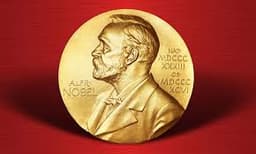
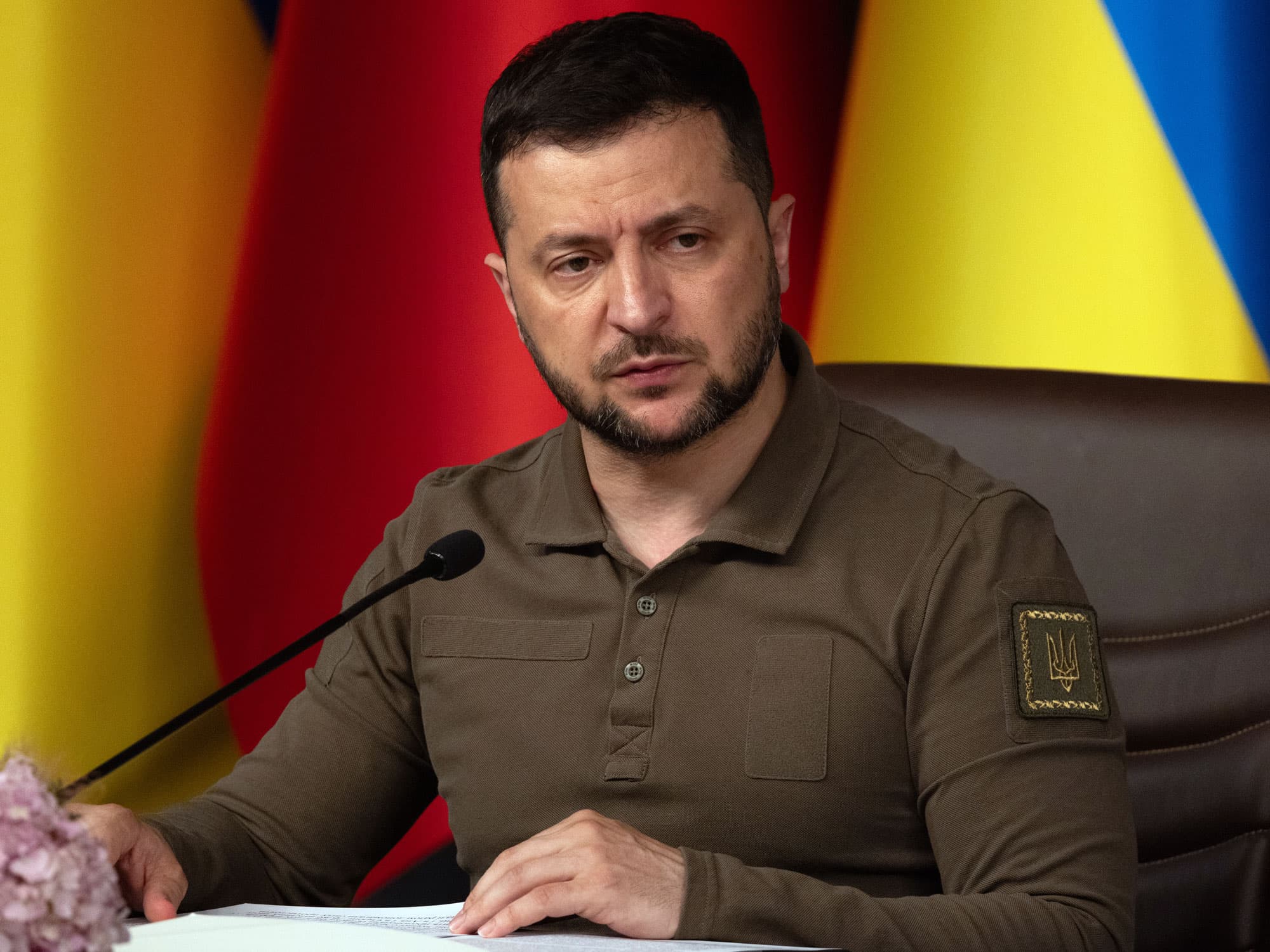
The Nobel Peace Prize is one of the most prestigious international awards, presented annually in Oslo, Norway, to individuals or organizations that have 'done the most or the best work for fraternity between nations, for the abolition or reduction of standing armies and for the holding and promotion of peace congresses,' as stipulated in Alfred Nobel's 1895 will. The 2026 prize, like its predecessors, will be announced in early October by the Norwegian Nobel Committee, a five-member body appointed by the Norwegian Parliament. The winner receives a gold medal, a diploma, and a monetary award, which in 2025 was set at 11 million Swedish kronor (approximately $1.1 million USD). The prize is widely seen as the highest honor in the field of peace and conflict resolution, and its recipients often include heads of state, diplomats, activists, and organizations that have made significant contributions to ending conflict, promoting human rights, or advancing disarmament. Interest in the 2026 prize is particularly high due to ongoing global conflicts, including the war in Ukraine, the Israel-Hamas conflict, and tensions in the South China Sea, as well as the persistent threats of nuclear proliferation and climate change. The Norwegian Nobel Committee has historically used the prize to spotlight pressing issues, and recent laureates have included journalists (Maria Ressa and Dmitry Muratov in 2021), human rights advocates (Narges Mohammadi in 2023), and organizations like the International Campaign to Abolish Nuclear Weapons (ICAN) in 2017. The 2026 announcement will likely reflect the committee's priorities and the current state of world affairs. Prediction markets have become a popular way to speculate on the outcome, as the prize is notoriously difficult to predict. The committee keeps its deliberations secret, and the list of nominees is not publicly disclosed for 50 years. This secrecy creates a fertile ground for speculation, with odds shifting based on geopolitical events, recent peace efforts, and the committee's historical patterns. The 2026 market, in particular, has attracted attention due to the potential for a Nobel to be awarded to a figure or organization central to ending one of the current major conflicts, such as Ukrainian President Volodymyr Zelensky or the International Court of Justice. For readers, understanding the 2026 Nobel Peace Prize involves not only knowing the likely candidates but also grasping the historical context, the nomination and selection process, and the broader implications of the award. This article provides a comprehensive overview, from the key players and historical precedents to the current status and frequently asked questions, offering a one-stop resource for anyone interested in this year's most anticipated peace award.
Historical Context
The Nobel Peace Prize has been awarded 104 times between 1901 and 2024, with 17 of those years seeing no award due to world wars or other circumstances. The prize has recognized a diverse array of laureates, from political leaders like Theodore Roosevelt (1906) and Barack Obama (2009) to activists like Martin Luther King Jr. (1964) and Malala Yousafzai (2014). Organizations have also been honored, including the International Committee of the Red Cross (three times), the United Nations High Commissioner for Refugees (twice), and the European Union (2012). The committee's choices have not always been uncontroversial; for example, the 2009 award to Obama was criticized for being premature, while the 1973 award to Henry Kissinger and Le Duc Tho (who declined) sparked protests. In recent years, the committee has shown a pattern of recognizing human rights defenders and advocates for disarmament. The 2018 award to Denis Mukwege and Nadia Murad highlighted sexual violence as a weapon of war, and the 2020 award to the World Food Programme addressed hunger as a driver of conflict. The 2023 award to Narges Mohammadi continued this trend, focusing on women's rights and peaceful protest. These choices reflect a broader shift toward recognizing civil society actors rather than solely political leaders. The nomination process is equally important to understand. Nominations can be made by qualified individuals, including members of national assemblies, heads of state, university professors in relevant fields, and previous laureates. The deadline for nominations is typically January 31 of the award year. The committee then shortlists candidates, with input from expert advisers, before making a final decision in late September or early October. The secrecy of the process adds to the unpredictability, and the committee's decisions are often seen as a barometer of global peace efforts.
Why It Matters
The Nobel Peace Prize carries immense symbolic weight, often elevating a cause or individual to global prominence. For winners, the prize can provide a platform to advance their agenda, attract funding, and influence policy. For example, Malala Yousafzai's Nobel win amplified her advocacy for girls' education, and ICAN's 2017 award brought renewed attention to the Treaty on the Prohibition of Nuclear Weapons. Conversely, the prize can also be a source of controversy, as seen with the 2019 award to Ethiopian Prime Minister Abiy Ahmed, which was later undermined by the Tigray conflict. Thus, the 2026 winner will likely shape international discourse on peace and conflict for years to come. Beyond the laureate, the prize's selection has geopolitical implications. If the committee chooses a figure like Zelensky, it would be seen as a strong endorsement of Ukraine's position in its war with Russia, potentially straining relations with Moscow. On the other hand, awarding the prize to a neutral party, such as the ICJ, could be interpreted as a call for greater adherence to international law. The prize also impacts the reputation of the Nobel Peace Prize itself; a controversial choice could lead to criticism and calls for reform, as seen after the 2009 Obama award. For the public, the prize serves as a rallying point for peace activism and a reminder of the ongoing struggles for justice and human rights worldwide.
Educational content is AI-generated and sourced from Wikipedia. It should not be considered financial advice.