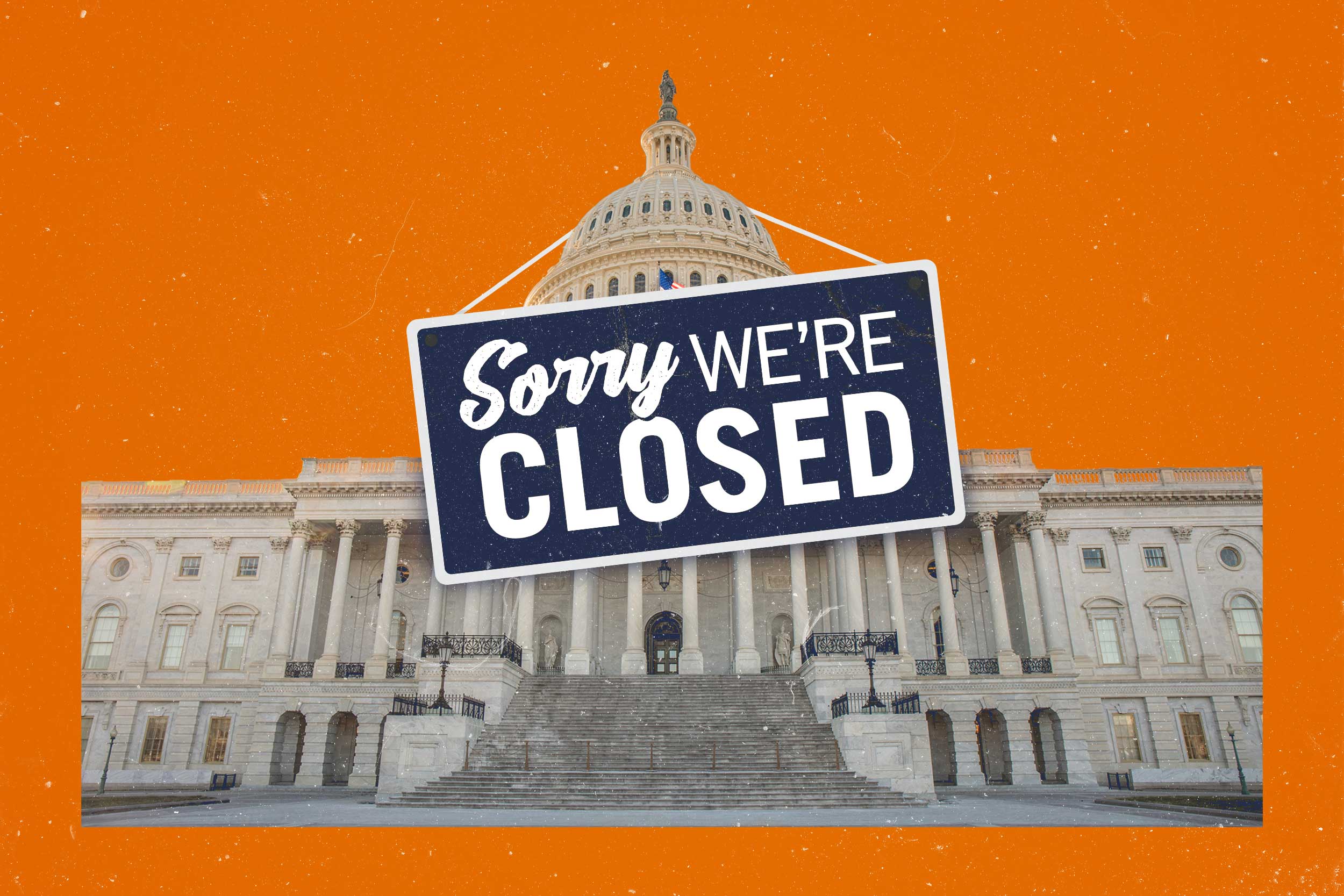
This event has ended. Showing historical data.

$23.47M
1
6

$23.47M
1
6
Trader mode: Actionable analysis for identifying opportunities and edge
This market will resolve to "Yes" if the government is shut down for the listed number of days, inclusive of the beginning and ending dates. Otherwise, this market will resolve to "No". A qualifying government shutdown will be defined as having begun when the Office of Personnel Management (OPM) announces that the U.S. federal government is shut down due to a lapse in appropriations. The end date of the shut down will be determined by the date on which the funding package required to reopen t
Traders on prediction markets currently believe a US government shutdown in 2026 is almost certain. The leading question asks if a shutdown will last at least 7 days. The market price shows a 100% probability, meaning traders see this as a virtual lock. This doesn't predict the exact length, but it shows strong consensus that any shutdown will extend beyond a week. In simpler terms, the collective bet is that politicians won't reach a funding deal quickly.
Two main factors drive this pessimistic forecast. First, the political timing is significant. 2026 is a midterm election year. Historical patterns show that spending fights often intensify during election cycles, as both parties use budget deadlines to highlight differences and motivate voters. Compromise becomes harder when lawmakers are campaigning.
Second, recent history matters. The US has experienced multiple shutdowns and near-shutdowns over the past decade, including a 35-day partial shutdown in late 2018. The repeated use of short-term funding patches suggests the underlying disagreements on spending priorities are persistent. Traders are betting that the structural issues causing past impasses will still be present in 2026.
The market specifies a window from February 7 to December 31, 2026. The key event to watch will be the expiration of the federal fiscal year on September 30, 2026. Congress must pass funding bills by October 1 to avoid a shutdown. This deadline is the most likely trigger. Other potential flashpoints could be tied to votes on raising the federal debt ceiling, which often gets entangled with spending debates. News about early budget negotiations in the summer of 2026 will be a major signal of whether a long shutdown is coming.
Prediction markets have a mixed record on shutdowns. They are often good at sensing high risk and political dysfunction, but less precise at forecasting exact durations. A 100% probability this far in advance is extreme. It likely reflects the high baseline risk of any shutdown occurring, rather than certainty about a 7-day event. Markets can shift quickly with breaking news. Their main value here is highlighting that traders, based on current political trends, see a lengthy funding fight as the default expectation for 2026.
Prediction markets are pricing in a near-certainty of a significant government shutdown in 2026. On Kalshi, the contract asking if a shutdown will last at least 7 days is trading at 100 cents, implying a 100% probability. This price indicates traders see a prolonged shutdown as a virtual guarantee. The contract for a shutdown lasting at least 14 days trades at 95 cents, a 95% chance. The market assigns an 85% chance to a shutdown exceeding 30 days. High trading volume, over $1.7 million, confirms strong conviction in these outcomes.
Two structural issues make a long shutdown likely. First, the 2024 elections could produce a divided government, such as a Republican-controlled Congress facing a Democratic president. Historical data shows that divided government, especially with polarized parties, is the primary catalyst for extended funding gaps. The 35-day shutdown in 2018-2019 occurred under similar conditions. Second, the expiration of key provisions from the 2023 Fiscal Responsibility Act in 2025 removes a recent framework that temporarily eased negotiations. This will reignite battles over spending levels and policy riders, with neither side having a clear incentive to concede quickly. Markets are betting that the political cost of a shutdown has diminished, making it a viable tactical tool.
The current pricing could be wrong if the 2024 elections result in a unified government, where one party controls the White House and both chambers of Congress. This scenario, while currently given low odds by betting markets, would significantly reduce the probability of a protracted impasse. The odds for a very long shutdown (30+ days) would also fall if early 2026 polling shows severe public backlash against the party perceived as responsible, creating pressure for a faster resolution. However, the market’s 100% price on a 7-day shutdown suggests traders believe some closure is inevitable regardless of these variables, viewing short-term funding patches as a temporary fix that ultimately leads to a longer lapse.
This market is trading exclusively on Kalshi, which specializes in US political and economic events. The absence of this contract on platforms like Polymarket limits arbitrage opportunities but concentrates liquidity. Kalshi’s regulatory status as a CFTC-designated exchange attracts institutional participants, which may explain the high volume and extreme confidence reflected in the prices. The market structure, with 12 sequential duration buckets (e.g., 1-3 days, 4-6 days), allows precise bets on shutdown length and creates a clear term structure of probabilities.
AI-generated analysis based on market data. Not financial advice.
This prediction market addresses the potential duration of a US federal government shutdown occurring between February 7, 2026, and December 31, 2026. A government shutdown is triggered when Congress fails to pass appropriations bills or a continuing resolution to fund federal agencies before existing funding expires. When this happens, agencies must cease non-essential operations and furlough non-excepted employees until funding is restored. The market specifically resolves to 'Yes' if the first shutdown in that period lasts for at least a predetermined number of days, with shutdown status recorded daily at 10:00 AM Eastern Time. The topic includes partial shutdowns where only some agencies lose funding. Government shutdowns are a recurring feature of American political brinkmanship, typically stemming from partisan disagreements over spending priorities, policy riders, or broader fiscal issues. The period from February to December 2026 is significant as it encompasses multiple fiscal deadlines, including the potential expiration of a full-year budget or short-term funding measures passed earlier in the fiscal year, which begins October 1, 2025. Interest in this market stems from the substantial economic and political consequences of shutdowns. Investors, policymakers, and observers use such markets to gauge the likelihood of prolonged political impasse, the potential economic disruption, and the political will of key actors to reach a compromise. The outcome reflects confidence in the legislative process and the stability of federal operations during a presidential election year.
The modern era of government shutdowns began with the interpretation of the 1884 Antideficiency Act, which was clarified by Attorney General Benjamin Civiletti in 1980 and 1981. Civiletti's opinions established that agencies could not operate without appropriations, leading to the first significant shutdowns in the 1980s. The longest shutdown in US history lasted 35 days from December 22, 2018, to January 25, 2019, during a dispute between President Donald Trump and Congress over funding for a border wall. That event furloughed approximately 800,000 federal employees and required the passage of three separate continuing resolutions before it ended. Another major shutdown occurred for 16 days in October 2013 after House Republicans sought to defund or delay the Affordable Care Act. Historically, shutdowns have become more frequent and politically weaponized since the 1990s, often occurring when different parties control Congress and the White House. The precedent shows that shutdowns typically end when public pressure mounts, critical services are affected, or financial markets react negatively, forcing political leaders to compromise. The period leading to 2026 will be influenced by these historical patterns and the electoral cycle following the 2024 presidential election.
Government shutdowns have immediate and widespread consequences. Federal employees, including those in agencies like the FBI, TSA, and National Parks Service, are furloughed or forced to work without pay until funding is restored, creating financial hardship for hundreds of thousands of families. Contractors often do not receive back pay, and businesses reliant on federal operations or tourism suffer lost revenue. Economists estimate that each week of a shutdown reduces quarterly GDP growth by approximately 0.1 to 0.2 percentage points, though some growth is recouped after funding resumes. Beyond economics, shutdowns disrupt government services. They can delay clinical trials at the NIH, suspend food safety inspections by the FDA, halt permits and loans processed by the Small Business Administration, and create backlogs in federal courts. The erosion of public trust in government and the perception of political dysfunction can have longer-term corrosive effects on governance and civic engagement, influencing voter behavior in subsequent elections.
As of late 2024, the federal government is operating under a series of continuing resolutions for Fiscal Year 2025, which began on October 1, 2024. Congress has not yet completed the full suite of annual appropriations bills. The political dynamics are shaped by the aftermath of the 2024 elections, which determined control of the White House, Senate, and House of Representatives for the 119th Congress. The composition of the new Congress, particularly the size of majorities and the ideological leanings of key members, will set the stage for the appropriations battles leading to the February 2026 deadline referenced in the prediction market. Budget negotiations for FY 2026 will begin with the President's budget submission in early 2025.
A government shutdown occurs when Congress fails to pass legislation funding federal agencies, leading to a lapse in appropriations. A debt ceiling crisis happens when the US Treasury reaches its statutory borrowing limit and cannot issue new debt to pay existing obligations, risking a default on US debt. They are separate fiscal events, though political conflicts can cause both.
No. Employees whose work is deemed 'excepted' because it protects life or property continue to work, though they do not receive pay until after the shutdown ends. This includes many roles in law enforcement, air traffic control, and border protection. All other employees are furloughed.
Contractors working on projects funded by lapsed appropriations typically must stop work. Unlike most federal employees, contractors have no guarantee of recovering lost pay or revenue. This can cause significant financial strain for small businesses and their employees.
A partial shutdown happens when Congress passes some, but not all, of the required annual appropriations bills before funding expires. Only agencies without enacted funding must shut down, while others continue normal operations. This has become more common as Congress increasingly fails to pass a complete budget on time.
Each federal agency creates a contingency plan following guidance from the Office of Management and Budget (OMB). These plans identify 'excepted' functions and employees based on legal interpretations of what activities are necessary for safety or the protection of property.
Yes. Notable examples include a brief shutdown in November 1995 during the lead-up to the 1996 election, and a three-day shutdown in January 2018, which was an election year for Congress. Political calculus often changes in election years, as both parties weigh the public relations impact of a closure.
Educational content is AI-generated and sourced from Wikipedia. It should not be considered financial advice.
6 markets tracked

No data available
| Market | Platform | Price |
|---|---|---|
![]() | Poly | 0% |
![]() | Poly | 0% |
![]() | Poly | 0% |
![]() | Poly | 0% |
![]() | Poly | 0% |
![]() | Poly | 0% |


No related news found
Add this market to your website
<iframe src="https://predictpedia.com/embed/r4OKES" width="400" height="160" frameborder="0" style="border-radius: 8px; max-width: 100%;" title="How long will the Government Shutdown last?"></iframe>