Trader mode: Actionable analysis for identifying opportunities and edge
90%
Top Probability
$15.90K
Volume
10
Markets
1
Platforms
About This Event
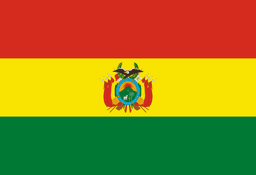
The Cochabamba mayoral election is scheduled to take place in Bolivia on March 22, 2026.
This market will resolve according to the candidate who wins this election.
If the result of this election isn't known by December 31, 2026, 11:59 PM ET, the market will resolve to "Other".
This market will resolve based on the result of the election as indicated by a consensus of credible reporting. If there is ambiguity, this market will resolve based solely on the official results as reported by the Bo
AI-generated analysis based on market data. Not financial advice.
Overview
The Cochabamba mayoral election on March 22, 2026, will determine the executive leader of Bolivia's fourth-largest city and a key political battleground. Cochabamba, with a metropolitan population exceeding 1.3 million, is the capital of its namesake department and a major commercial hub. The mayor oversees a significant municipal budget and sets policy for urban development, transportation, and public services in a city known for its political activism and pivotal role in national politics. This election occurs within Bolivia's broader electoral calendar, where local races often serve as indicators of national political sentiment and party strength.
Cochabamba's political landscape is historically competitive, with no single party holding a permanent majority. The city has been governed by figures from across the political spectrum, including the Movement for Socialism (MAS), which has dominated national politics since 2006, and various opposition coalitions. The 2026 election follows the 2025 national general elections, where Bolivians will elect a new president and legislature. The outcome of the Cochabamba race may reflect public approval of the national government's performance or signal shifting regional alliances.
Interest in this election stems from Cochabamba's economic importance and its history as a site of major political conflict. The city was the epicenter of the 2000 Cochabamba Water War, a series of protests against water privatization that reshaped Bolivian politics. This legacy of grassroots mobilization continues to influence local elections, where candidates must appeal to a diverse electorate of urban professionals, market vendors, and rural migrants. The election also matters for infrastructure projects, including ongoing debates about water management, public transit expansion, and responses to urban sprawl.
Predictive markets are tracking this race because it offers a measurable contest with clear outcomes, influenced by national political trends, candidate popularity, and local issues. The result will affect investment in the central Bolivian region and could alter the balance of power between the national ruling party and departmental opposition forces. Analysts watch Cochabamba for clues about voter behavior ahead of other municipal elections and for insights into the stability of Bolivia's political system.
Historical Context
Cochabamba's modern political significance was cemented by the Cochabamba Water War of 2000. A coalition of labor unions, neighborhood groups, and farmers protested the privatization of the city's water system to a multinational consortium, Aguas del Tunari. The protests, which included roadblocks and mass demonstrations, forced the government to cancel the contract in April 2000. This event propelled the political career of Evo Morales and the Movement for Socialism, linking local resource conflicts to national anti-neoliberal politics. The water war established Cochabamba as a symbol of popular resistance and directly influenced the 2005 election of Morales as president.
Electorally, the city has alternated between left-wing and right-wing mayors. Manfred Reyes Villa, a conservative, held the office for two terms in the 1990s. The MAS party first won the mayoralty in 2010 with Edwin Castellanos. In 2015, José María Leyes of the opposition UD coalition won, followed by the return of MAS with Humberto Sánchez in 2021. This volatility reflects the city's status as a swing district. Municipal elections are held every five years, synchronized with other local elections across Bolivia. The 2021 election saw Sánchez win with approximately 48% of the vote, avoiding a runoff by a narrow margin against a fragmented opposition.
The 2026 election will occur in the shadow of the 2025 national elections. Historically, local elections held shortly after national votes can produce outcomes that either reinforce or rebuke the national result. For example, after Morales' re-election in 2014, MAS lost key cities including Cochabamba in the 2015 municipal elections. This pattern suggests the 2026 mayoral race could serve as an early referendum on the government elected in 2025.
Why It Matters
The election determines control over Cochabamba's municipal budget, which exceeded 1.8 billion Bolivianos (roughly 260 million USD) in 2023. The mayor allocates funds for critical infrastructure, including the city's troubled public water system (SEMAPA), road projects, and the integrated transit system. Policy decisions on urban zoning, public markets, and environmental regulation directly impact the livelihoods of hundreds of thousands of residents and the city's economic growth. Cochabamba is a central node in Bolivia's agricultural and manufacturing supply chains, making its governance relevant to national economic performance.
Politically, a victory for the opposition in Cochabamba would break MAS's control over three of Bolivia's four largest cities, potentially weakening the party's organizational network ahead of the next national election cycle. A MAS win would consolidate the party's urban strength and demonstrate its ability to retain support beyond its rural heartlands. The result also influences the balance of power within the Cochabamba Department, where the opposition controls the governorship. A mayor from a different party can lead to political gridlock, affecting regional development projects and the implementation of national policies.
Current Status
As of late 2024, the electoral field for the 2026 mayoral race is not formally defined. Incumbent Mayor Humberto Sánchez of MAS is governing but has not officially declared whether he will seek re-election. The opposition parties, including Creemos and Democratic Unity, are engaged in internal discussions about potential candidates and the possibility of forming a united electoral pact to avoid splitting the anti-MAS vote. The national political climate is focused on the 2025 general elections, which will set the context for the following year's municipal races. Preliminary polling data specific to the 2026 mayoral election is not yet available, but national polls measuring party approval will begin to influence local candidate calculations in 2025.
Frequently Asked Questions
Who is the current mayor of Cochabamba?
Humberto Sánchez Sánchez of the Movement for Socialism (MAS) party is the mayor. He was elected in the 2021 municipal elections and his term runs through 2026.
How often are mayoral elections held in Cochabamba?
Mayoral elections in Cochabamba are held every five years. The last election was in 2021, and the next is scheduled for March 22, 2026.
Was this helpful?
Updated Feb 20, 2026
Educational content is AI-generated and sourced from Wikipedia. It should not be considered financial advice.