$59.42K
1
1

1 market tracked

No data available
| Market | Platform | Price |
|---|---|---|
![]() | Poly | 10% |
Trader mode: Actionable analysis for identifying opportunities and edge
This market will resolve to "Yes" if Iran conducts a nuclear test by December 31, 2026 11:59pm ET. Otherwise, this market will resolve to "No". A nuclear test is defined as the intentional non-combat detonation of a device by Iran that produces a nuclear chain reaction (fission or fusion), regardless of yield. Accidents, radiological dispersal devices (bombs that spread radioactive material using conventional explosives such as "dirty bombs"), or actions by third parties will not count toward
Prediction markets currently give about a 1 in 8 chance that Iran will conduct a nuclear test before the end of 2026. This means traders collectively see it as unlikely, but not impossible. The low probability suggests the dominant view is that Iran will continue its nuclear program without crossing the explicit threshold of a test detonation in the near term.
Several factors contribute to the low probability. First, conducting an overt nuclear test would be a major escalation, likely triggering severe international retaliation, including possible military action. Iran has historically advanced its nuclear capabilities under the guise of a civilian program while stopping short of a weaponized test.
Second, the 2015 nuclear deal (JCPOA), though weakened, established inspection frameworks and diplomatic channels. Even with the deal in crisis, both Iran and world powers have an interest in avoiding a point-of-no-return event like a test. Iran may gain more from maintaining a "threshold" status, where it possesses the knowledge and materials for a weapon without assembling or testing one.
Finally, internal political and economic pressures within Iran make a provocative test a risky move. The government is likely weighing the domestic prestige of a nuclear weapon against the crippling sanctions and isolation that would certainly follow a test.
The U.S. presidential election in November 2024 is a significant variable. A change in U.S. administration could alter diplomatic pressure and sanctions enforcement, potentially influencing Iran's calculations.
Ongoing reports from the International Atomic Energy Agency (IAEA) will be critical. Any IAEA announcement that Iran has enriched uranium to weapons-grade levels (90% purity) or has moved to expel inspectors could signal a shift toward testing.
Tensions in the region, particularly a major conflict involving Iranian proxies or a direct strike on Iranian nuclear facilities, could also force Iran's hand. An event that threatens regime survival might be seen as justifying a rapid test to demonstrate nuclear deterrence.
Prediction markets have a mixed record on geopolitical events that hinge on secretive state decisions. They often accurately reflect the consensus of informed observers, which in this case is skepticism about an imminent test. However, markets can be slow to price in sudden intelligence revelations or clandestine breakthroughs. The low trading volume on this specific question also means the price may be less stable and more sensitive to new information than a heavily traded market. While useful for gauging expert sentiment, these odds should be seen as a snapshot of current expectations, not a guarantee.
Prediction markets assign a low 12% probability to Iran conducting a nuclear test before the end of 2026. This price indicates traders view a test as a low-likelihood tail risk event within this timeframe. With only $59,000 in total volume, the market lacks deep liquidity, meaning a single large trade could shift the odds significantly.
The primary factor suppressing the probability is Iran's strategic doctrine. Historically, Iran has pursued nuclear latency, advancing its technical capabilities just to the threshold of weaponization without crossing it. This posture provides geopolitical leverage while avoiding the severe consequences of an overt test. A 2023 IAEA report confirmed Iran had enriched uranium to 84% purity, but the regime has consistently denied any intention to build or test a weapon. Market pricing suggests traders believe this strategy of deliberate ambiguity will hold.
International diplomatic pressure and regional deterrence also cap the odds. An Iranian nuclear test would almost certainly trigger a military response from Israel or the United States and collapse any remaining JCPOA framework. The market reflects a judgment that Iran's leadership calculates the costs of testing outweigh the benefits, at least through 2026.
A major shift in the security environment could force a reassessment. A direct military strike by Israel on Iran's nuclear facilities, similar to operations against Iraq and Syria, might push Tehran to accelerate its program and test a device as a fait accompli. Conversely, a successful revival of the 2015 nuclear deal with verified rollbacks of Iranian enrichment would likely drive the probability toward zero.
Domestic political change within Iran is another catalyst. The death of Supreme Leader Ali Khamenei, who has maintained the threshold strategy, could empower factions advocating for an overt nuclear deterrent. The market's current low probability does not price in this kind of leadership transition or a fundamental shift in strategic calculus. Monitoring IAEA Board of Governors meetings and U.S. intelligence community assessments will provide early signals of any change in Iran's posture.
AI-generated analysis based on market data. Not financial advice.
$59.42K
1
1
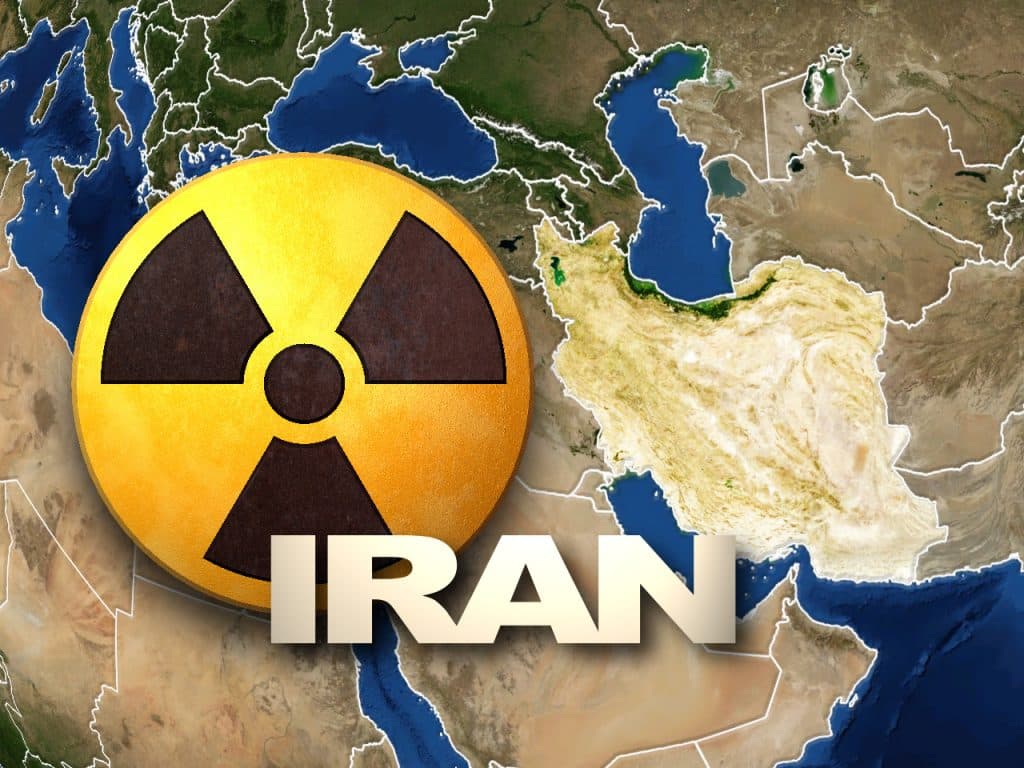
This prediction market addresses whether Iran will conduct a nuclear test before the end of 2026. A nuclear test is specifically defined as an intentional, non-combat detonation by Iran that produces a nuclear chain reaction, either fission or fusion. This excludes accidents, radiological dispersal devices like 'dirty bombs,' or actions by third parties. The question sits at the intersection of nuclear non-proliferation, regional security in the Middle East, and international diplomacy. Iran's nuclear program has been a persistent source of global tension for decades, with the country gradually increasing its uranium enrichment capabilities while denying any intention to build nuclear weapons. The potential for a test represents a definitive crossing of a threshold that Iran has long avoided, moving from a latent nuclear capability to an overtly demonstrated one. Recent years have seen the 2015 Joint Comprehensive Plan of Action (JCPOA) effectively collapse, Iran's stockpile of highly enriched uranium grow significantly, and diplomatic efforts to revive the agreement stall. International observers, intelligence agencies, and regional adversaries closely monitor Iran's activities for signs of weaponization, making the possibility of a test a critical benchmark for assessing the program's direction and the effectiveness of global counter-proliferation efforts.
Iran's nuclear program began in the 1950s with US support under the 'Atoms for Peace' program. After the 1979 Islamic Revolution, the program continued covertly. In 2002, an Iranian opposition group revealed the existence of undeclared nuclear facilities at Natanz and Arak, sparking an international crisis. The International Atomic Energy Agency began investigations, and the UN Security Council imposed its first sanctions in 2006. For years, Iran maintained its program was purely peaceful, but Western intelligence agencies assessed it had a structured nuclear weapons program until 2003. The 2015 Joint Comprehensive Plan of Action (JCPOA) was a landmark agreement that placed strict limits on Iran's nuclear activities in exchange for sanctions relief. Iran complied until 2019, when the US under President Donald Trump withdrew from the deal and reinstated severe sanctions. Iran responded by incrementally violating the JCPOA's limits, increasing uranium enrichment levels and stockpiles. This pattern of action and reaction has defined the last two decades, with Iran advancing its technical capabilities while stopping short of the final steps toward weaponization and testing. The country has never conducted a nuclear test, unlike its regional rival Pakistan, which tested in 1998.
An Iranian nuclear test would fundamentally alter security dynamics in the Middle East and globally. It would prove Iran possesses a deliverable nuclear weapon, triggering a potential regional arms race. Neighboring countries like Saudi Arabia, Turkey, and Egypt might feel compelled to pursue their own nuclear capabilities. For Israel, which has a policy of opposing a nuclear-armed Iran, a test could precipitate military action. The global non-proliferation regime, centered on the Treaty on the Non-Proliferation of Nuclear Weapons (NPT), would suffer a severe blow, potentially encouraging other states to pursue nuclear weapons. Economically, a test would guarantee the imposition of 'snapback' UN sanctions and likely new, crippling unilateral sanctions from the US and EU, devastating Iran's economy. It could also lead to military conflict that disrupts oil shipping through the Strait of Hormuz, causing a global energy price shock. Domestically, a test could be used by the Iranian government to rally nationalist support, but it could also deepen the country's international isolation and economic hardship.
As of mid-2024, Iran continues to enrich uranium at high levels and has severely limited cooperation with IAEA inspectors. Diplomatic efforts to restore the JCPOA are dormant. In April 2024, Iran launched a direct military attack on Israel using drones and missiles, marking a significant escalation in regional conflict. In response, Israel reportedly conducted a limited strike inside Iran. This exchange has increased fears of a broader war, which could influence Iran's calculus on its nuclear program. Concurrently, the IAEA reports that Iran has made no progress in explaining traces of uranium found at undeclared sites. The overall trajectory suggests Iran is preserving and advancing its nuclear options while carefully avoiding actions that would guarantee a massive military response.
No, Iran has never conducted a nuclear test. The country maintains its nuclear program is for peaceful purposes only, such as energy production and medical research. All known nuclear tests in history have been conducted by the nine nuclear-armed states recognized under the NPT or those outside it (US, Russia, UK, France, China, India, Pakistan, North Korea, and Israel, which has not tested).
A test would trigger immediate and severe international consequences. The UN Security Council would likely impose new sanctions. The US and European Union would enact further economic penalties. Regional powers, especially Israel and Saudi Arabia, would reconsider their security strategies, potentially seeking their own nuclear deterrents. The risk of a preemptive military strike by Israel or the US would increase dramatically.
Most analysts believe Iran would conduct an underground test to contain radioactive fallout and conceal preparations. Potential locations include remote areas of the Dasht-e Lut or Dasht-e Kavir deserts, or within the network of tunnels and bunkers associated with military sites like Parchin. An underground test requires specific geological surveys and site preparation that intelligence agencies might detect.
Preparations could be detected through satellite imagery (showing excavation activity at a suspected test site), seismic monitoring networks designed to detect underground explosions, intelligence on weaponization activities, or the detection of specific gases associated with a test. The IAEA's monitoring, though currently limited, would also be a key source of information.
A nuclear test involves a nuclear chain reaction (fission or fusion) that releases immense energy from atomic nuclei. A 'dirty bomb' or radiological dispersal device (RDD) uses conventional explosives to scatter radioactive material, causing contamination and panic but not producing a nuclear explosion. The prediction market specifically counts only the former.
Educational content is AI-generated and sourced from Wikipedia. It should not be considered financial advice.

No related news found
Add this market to your website
<iframe src="https://predictpedia.com/embed/rOG4n9" width="400" height="160" frameborder="0" style="border-radius: 8px; max-width: 100%;" title="Iran nuclear test before 2027?"></iframe>