This event has ended. Showing historical data.
Events
GroupPOLYMARKET
Event GroupPOLYMARKETPolitics
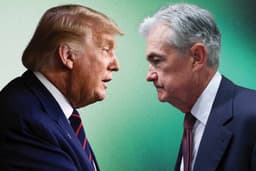
Will Trump try to Fire Powell by January 31?
Total Volume
$238.54K
Events
1
Markets
1
Will Trump try to Fire Powell by January 31?
Platform StatsQuick Platform Comparison
Polymarket
1
markets · $238.54K
Kalshi
0
markets · $0.00
Price Spread
0.0%avg
max 0.0%
Arbitrage
0
of 0 cross-platform
Volume DistributionTotal: $238.54K
100%
Polymarket leads
Price ChartMatched Markets Price Graph
1 market tracked
Will Trump try to Fire Powell by January 31?
No data available
Single-Platform Markets(1)
| Market | Platform | Price |
|---|---|---|
| Poly | 0% |
AI Analysis
Trader mode: Actionable analysis for identifying opportunities and edge
0%
Top Probability
$238.54K
Volume
1
Markets
1
Platforms
About This Event
This market will resolve to "Yes" if Donald Trump publicly and unequivocally announces that he is removing Jerome Powell as Chair of the Federal Reserve before his term is up, or takes formal action toward doing so, such as issuing a directive or formal request by January 31, 2026, 11:59 PM ET. Otherwise, this market will resolve to “No”. Statements which are contingent (e.g. “Powell must step down or lower rates”), statements of intent (e.g.“I am planning to fire Powell”) or other informal sta
What Prediction Markets Are Forecasting
Traders on prediction markets currently give about a 9% chance that Donald Trump will attempt to fire Federal Reserve Chair Jerome Powell by March 31, 2026. In simpler terms, this means the collective bettors see roughly a 1 in 11 chance of this happening. The market views a direct attempt to remove Powell as very unlikely, though not completely impossible.
Why the Market Sees It This Way
The low probability stems from legal precedent and political risk. First, the law provides Fed chairs significant protection. While the Federal Reserve Act states a chair can be removed "for cause," the accepted legal interpretation is that this means misconduct or neglect of duty, not simply policy disagreements. A president trying to fire a chair over interest rates would likely face immediate legal challenges.
Second, such a move would be seen as a major assault on the central bank's independence, a norm that both parties have largely upheld for decades. Markets could react with severe volatility, which a new administration typically wants to avoid. Trump criticized Powell frequently during his first term but never took formal action to remove him, setting a precedent that suggests public criticism is more likely than an actual firing attempt.
Key Dates and Events to Watch
The deadline for this market is March 31, 2026. The most relevant period is the start of a potential new Trump administration in January 2025. Watch for early personnel announcements or executive orders related to the Federal Reserve. Public statements from Trump about Powell or Fed independence in late 2024 or early 2025 would be the clearest early signals. Any proposed legislation in Congress to alter the Fed's structure or the chair's tenure could also indicate increased pressure.
How Reliable Are These Predictions?
Prediction markets are generally reliable for forecasting clear, binary political events, but they can struggle with unprecedented actions. There is no direct historical example of a president trying to fire a Fed chair, making this a unique scenario. Markets are good at aggregating known legal and political constraints, which strongly favor the "No" outcome. However, they can underestimate the possibility of a norm-shattering move, especially in a politically volatile environment. The very low trading volume on this specific question also means the price is less robust and could swing more easily on news.
Current Market Outlook
The Polymarket contract "Will Trump try to Fire Powell by March 31?" is trading at 9¢, indicating a 9% probability. This price reflects a market consensus that a direct, public attempt by Donald Trump to remove Jerome Powell before the end of March is highly unlikely. With only $2,000 in total volume, liquidity is thin, meaning this price is more indicative of speculative sentiment than a deeply held market conviction.
Key Factors Driving the Odds
Two structural realities anchor the low probability. First, the Federal Reserve Chair’s independence is a long-standing norm. While a President can technically choose not to renominate a Chair when their term expires, the legal authority for a sitting President to directly fire a Fed Chair before the end of their four-year term is untested and widely considered legally dubious. A 2024 Brookings Institution analysis concluded such an action would likely trigger an immediate constitutional crisis and legal challenge.
Second, Jerome Powell’s current term as Chair expires in May 2026. The March 31 date on this market falls two months before that expiration. Market logic suggests Trump would have little incentive to provoke a major institutional and market crisis over a two-month difference when he could simply announce a different nominee for the next term. Historical precedent shows Trump criticized Powell heavily during his first term but did not attempt removal.
What Could Change These Odds
The primary catalyst for a dramatic shift would be an unexpected public escalation from Trump himself. A direct statement explicitly calling for Powell’s immediate removal, framed as an order rather than criticism, could force a re-evaluation. Such rhetoric would be a sharp break from traditional presidential deference to Fed independence. The thin market liquidity means any credible news headline on this topic could cause significant price volatility, but the fundamental legal and institutional barriers make a sustained price surge above 30% improbable before the resolution date.
AI-generated analysis based on market data. Not financial advice.