$1.75M
1
10

$1.75M
1
10
Trader mode: Actionable analysis for identifying opportunities and edge
Parliamentary elections are scheduled to be held in Sweden on September 13, 2026. This market will resolve to the next individual who is officially appointed and assumes office as Prime Minister of Sweden following the next parliamentary election. To count for resolution, the individual must officially assume office. Any interim or caretaker Prime Minister will not count toward the resolution of this market. If no such Prime Minister assumes office by June 30, 2027, 11:59 PM ET, this market
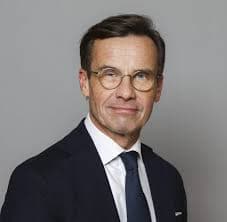
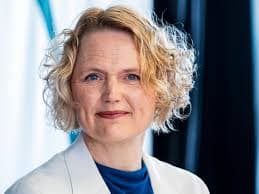
Prediction markets currently give Magdalena Andersson roughly a 55% chance of becoming Sweden's next prime minister. This means traders see her return as slightly more likely than not, essentially a coin flip. The market shows high interest with over $1.7 million wagered on various outcomes, but the narrow margin reflects real uncertainty about the September 2026 election results.
Andersson, who leads the Social Democratic Party, served as prime minister for about eight months in 2021-2022. Her party remains Sweden's largest, but the country's political environment has become more fragmented. The market's slight lean toward her reflects two main factors. First, the Social Democrats have been the dominant force in Swedish politics for decades, often forming coalition governments even when they don't win a majority outright. Second, the current center-right government, led by Prime Minister Ulf Kristersson, holds a fragile majority and faces challenges managing a sluggish economy and integrating a large immigrant population. However, the slim 55% probability shows traders doubt any party can secure a clear path to power, remembering the lengthy negotiations needed to form the last government.
The parliamentary election on September 13, 2026, is the main event. Polls in the months before will signal if any bloc is gaining a stable lead. Swedish elections use a proportional system, so the focus is on which coalition of parties can build a majority in the 349-seat Riksdag. Watch for budget negotiations and political alliances forming in early 2026. A strong performance by the anti-immigration Sweden Democrats, who support Kristersson's government, could complicate coalition math for either side. The market resolves when a new prime minister takes office, with a deadline of June 30, 2027.
Prediction markets have a mixed record on European elections. They often capture the direction of public sentiment but can struggle with complex coalition outcomes, which are common in Sweden. Markets correctly foresaw the narrow victory of the right-wing bloc in 2022, but the timing and identity of the eventual prime minister were harder to predict. The current 55% probability should be read as the collective judgment of informed participants, not a sure bet. It is a snapshot of uncertainty in a political system where small shifts can determine who leads.
Prediction markets assign a 55% probability that Magdalena Andersson will become Sweden's next Prime Minister following the September 2026 election. This price, translating to an implied 55 cents on a dollar contract, indicates the market views her return as slightly more likely than not. However, the significant 45% probability priced for all other candidates combined shows substantial uncertainty. The market has high liquidity, with $1.7 million in total volume, suggesting this consensus is backed by considerable capital.
Andersson's lead reflects her position as the incumbent opposition leader. She previously served as Prime Minister for seven months in 2021-2022, heading a minority Social Democratic government. Current polling consistently shows her Social Democrats as the largest single party, though short of a majority. The market pricing accounts for Sweden's complex parliamentary math, where the Prime Minister is elected through a negative parliamentarianism rule. A candidate needs only to avoid a majority against them, making Andersson's path viable even without a formal coalition. The 55% price suggests traders believe she is the most likely figure to navigate this process and secure the Speaker's nomination.
The primary risk to Andersson's lead is the ongoing negotiation dynamics between the center-right Moderate Party and the Sweden Democrats, a right-wing populist party. A formal, stable right-wing bloc agreement ahead of the election could consolidate support behind a single conservative candidate, such as Moderate Party leader Ulf Kristersson. Recent local political shifts and budget negotiations will be tested in the 2026 campaign. Key polling releases in early 2026 will be a major catalyst. If the right-wing bloc shows a stable combined polling lead above 50%, Andersson's contract price will likely fall sharply. Conversely, signs of fragmentation on the right would boost her odds.
AI-generated analysis based on market data. Not financial advice.
This prediction market concerns the identity of Sweden's next Prime Minister following the parliamentary election scheduled for September 13, 2026. The market will resolve to the individual who is officially appointed and assumes the office after that election, with a resolution deadline of June 30, 2027. The outcome depends on the complex process of government formation in Sweden's proportional representation system, where no single party typically wins an outright majority. This requires negotiations to build a coalition that can secure a parliamentary majority, making the eventual Prime Minister uncertain even after election results are known. The 2026 election follows a period of significant political fragmentation in Sweden, with the traditional left-right blocs breaking down and the Sweden Democrats becoming a major force. Interest in this market stems from Sweden's role as a significant European Union member state and a nation undergoing substantial debates on immigration, crime, energy policy, and NATO membership. The political direction set by the next government will influence Sweden's domestic reforms and its international positioning.
Sweden's government formation process has grown increasingly complex since the 2010 election, when the Sweden Democrats first entered the Riksdag, ending the traditional two-block dominance. For decades, governments were typically formed by the Social Democratic-led left bloc or the Moderate-led center-right Alliance. This changed in 2014 when the Social Democratic government under Stefan Löfven relied on informal support from the Left Party and the Green Party while negotiating budgets with the opposition Alliance. The 2018 election produced a deadlocked parliament, leading to a lengthy 134-day negotiation period before Löfven formed a minority government with the Greens, supported by the Centre and Liberal parties. This unstable arrangement collapsed in 2021, leading to Magdalena Andersson becoming Sweden's first female Prime Minister, only for her government to fall hours later over a budget defeat before being reappointed. The 2022 election marked a historic shift. The right-wing bloc, including the Moderate Party, Christian Democrats, and Liberals, secured a thin majority by formally relying on the Sweden Democrats, who won 20.5% of the vote. This allowed Ulf Kristersson to form a government in October 2022 under the Tidö Agreement, integrating the Sweden Democrats into policy-making while keeping them outside the formal cabinet. This new political configuration sets the precedent for the 2026 negotiations.
The choice of Sweden's next Prime Minister will determine the country's policy direction on critical issues for years. Domestically, the government sets the agenda on managing gang-related violent crime, which has become a top public concern, and on the future of the migration system following years of debate. Economic policies, including taxation levels, welfare spending, and the green transition for industries like steel and mining, are directly at stake. The outcome influences Sweden's role within the European Union, particularly regarding further integration, fiscal rules, and defense cooperation. Sweden's recent NATO membership adds another layer, as the next government will shape its contributions to the alliance and its relationship with neighboring Russia. The political stability of Sweden, often viewed as a model of consensus democracy, is also being tested. Prolonged government formation or weak minority administrations could hinder decisive action on long-term challenges. The result will signal whether the political realignment of 2022, with the Sweden Democrats as a central actor, is a permanent feature or a transitional phase.
As of late 2024, Prime Minister Ulf Kristersson leads a minority coalition government of the Moderate, Christian Democrat, and Liberal parties. This government exists through the Tidö Agreement, a detailed policy pact with the Sweden Democrats, who provide external support. The political landscape is in a pre-election phase, with parties beginning to outline their platforms for the 2026 vote. The opposition, led by the Social Democrats, is attempting to forge a cohesive alternative bloc, but differences persist between the Left Party, Centre Party, and Green Party on issues like NATO, nuclear energy, and economic policy. Recent opinion polls show a tight race, with the governing right-wing bloc and the opposition left-wing bloc polling within a few percentage points of each other, suggesting another election with no clear winner is likely.
The Speaker of the Riksdag proposes a Prime Minister after holding consultations with all party leaders. The nominee must be approved by the parliament, meaning more MPs must vote 'yes' than 'no' (abstentions count as a 'no'). If the Speaker's first nominee is rejected, the process continues through up to four votes. If all fail, a new election is called.
Constitutionally, yes, if Jimmie Åkesson can secure majority support in the Riksdag. Politically, it is challenging. Other right-wing parties have historically been reluctant to appoint him due to the party's extremist origins. His path would require his party to become the largest in the right bloc and for coalition partners to accept his leadership.
If the Speaker's nominees fail to secure approval, the process can continue for weeks or months. If no Prime Minister is approved, a new election can be called. The prediction market includes a deadline of June 30, 2027; if no one has assumed office by then, the market would resolve accordingly.
The Tidö Agreement is a 62-page policy document signed in October 2022 by the Moderate Party, Christian Democrats, Liberals, and the Sweden Democrats. It is not a formal coalition pact but outlines the policy platform that the Sweden Democrats support in exchange for influence, allowing Ulf Kristersson's three-party coalition to govern.
Since the 1970s, the average tenure is roughly 5-6 years, but recent terms have been shorter due to political instability. Stefan Löfven served about 7 years, Magdalena Andersson served about 1 year, and Ulf Kristersson's current term will be 4 years if he serves until the 2026 election.
Educational content is AI-generated and sourced from Wikipedia. It should not be considered financial advice.
10 markets tracked

No data available
| Market | Platform | Price |
|---|---|---|
![]() | Poly | 56% |
![]() | Poly | 39% |
![]() | Poly | 3% |
![]() | Poly | 2% |
![]() | Poly | 0% |
![]() | Poly | 0% |
![]() | Poly | 0% |
![]() | Poly | 0% |
![]() | Poly | 0% |
![]() | Poly | 0% |


No related news found
Add this market to your website
<iframe src="https://predictpedia.com/embed/sdibRC" width="400" height="160" frameborder="0" style="border-radius: 8px; max-width: 100%;" title="Next Prime Minister of Sweden"></iframe>