$62.86K
1
2

$62.86K
1
2
Trader mode: Actionable analysis for identifying opportunities and edge
This market will resolve according to the winner of the 2026 Wisconsin gubernatorial election. A candidate shall be considered to represent a party in the event that he or she is the nominee of the party in question. Candidates other than the Democratic or Republican nominee (e.g., Greens, Libertarian, independent) may be added at a later date. Candidates who run as independents will not be encompassed by the “Democrat” or “Republican” options regardless of any affiliation they may have with t
Prediction markets currently give Democrats about a 3 in 4 chance of winning the 2026 Wisconsin governor's race. This means traders collectively believe the Democratic candidate is the clear favorite, though a Republican victory is still seen as a real possibility. With roughly $63,000 wagered so far, this is a moderately active market for an event still over eight months away. The high probability for Democrats suggests strong confidence in the party's position nearly two years before the election.
Several factors explain the current odds. First, Wisconsin has elected a Democratic governor in the last two elections, with Tony Evers winning in 2018 and 2022. This recent history of Democratic success at the state level creates a perception of momentum. Second, the state's political environment is highly polarized and closely divided, but Democratic candidates have recently found success by focusing on issues like education and abortion access following the overturning of Roe v. Wade. Third, the Republican field remains uncertain, with no clear frontrunner yet, while Democrats may benefit from incumbency if Governor Evers seeks a third term or from a relatively unified party structure.
The primary election, scheduled for August 11, 2026, is the most important date. The candidates chosen by each party will immediately reshape the odds. Before that, watch for candidate announcements in early 2026, which will clarify the field. The state party conventions in mid-2026 will also signal each party's unity and strategy. National political trends in the 2024 presidential election could influence Wisconsin's mood, even though the governor's race is two years later. Any major shifts in the state's economy or big policy decisions from the current administration could also change voter sentiment.
Prediction markets have a mixed but generally decent record for state-level political races. They often capture the direction of polling and expert sentiment, but their accuracy improves as the election gets closer and more information becomes available. For an election this far out, the 73% probability is more a snapshot of current assumptions than a firm forecast. The biggest limitation is that unexpected candidates, scandals, or national events could completely change the race. Markets are good at aggregating known information, but they can't predict surprises.
Prediction markets currently price a Democratic victory in the 2026 Wisconsin gubernatorial election at 73%. This price indicates a strong, though not overwhelming, belief that Democrats will retain the governor's office. With a 27% price for a Republican win, the market sees the GOP as a clear underdog. However, the total volume of $63,000 across two markets is thin for an election over two years away, suggesting this consensus is based on early sentiment rather than heavy, informed betting.
The 73% Democratic price reflects Wisconsin's recent electoral history and the power of incumbency. Governor Tony Evers, a Democrat, won re-election in 2022 by a 3.4% margin in a cycle that favored Republicans nationally. His proven ability to win statewide is a primary factor. Furthermore, the 2024 presidential election saw Wisconsin narrowly vote for the Democratic candidate, reinforcing its status as a true purple state where Democrats have recently found success in top-of-ticket races. The market is likely pricing in the historical advantage for the party holding the office in a midterm-like state election.
This race is highly sensitive to candidate selection, which remains unsettled. A strong Republican challenger, such as a well-known congressman or former Senator Ron Johnson, could rapidly shift the odds. Conversely, if Governor Evers were to announce he is not seeking a third term, the Democratic price would likely fall significantly, creating volatility. The political environment in late 2025 and 2026 will be critical. A strong national tailwind for either party, driven by the 2026 congressional elections, will impact this state race. Key filing deadlines and the August 2026 primary will be major catalysts for market movement.
This contract is trading exclusively on Polymarket. The absence of a comparable market on Kalshi or other platforms limits arbitrage opportunities and price discovery. All current liquidity and sentiment are concentrated in one venue, meaning the 73% price is the sole market-derived forecast. This concentration makes the market more vulnerable to large bets or news events causing sharp price swings until volume increases or competing markets are established.
AI-generated analysis based on market data. Not financial advice.
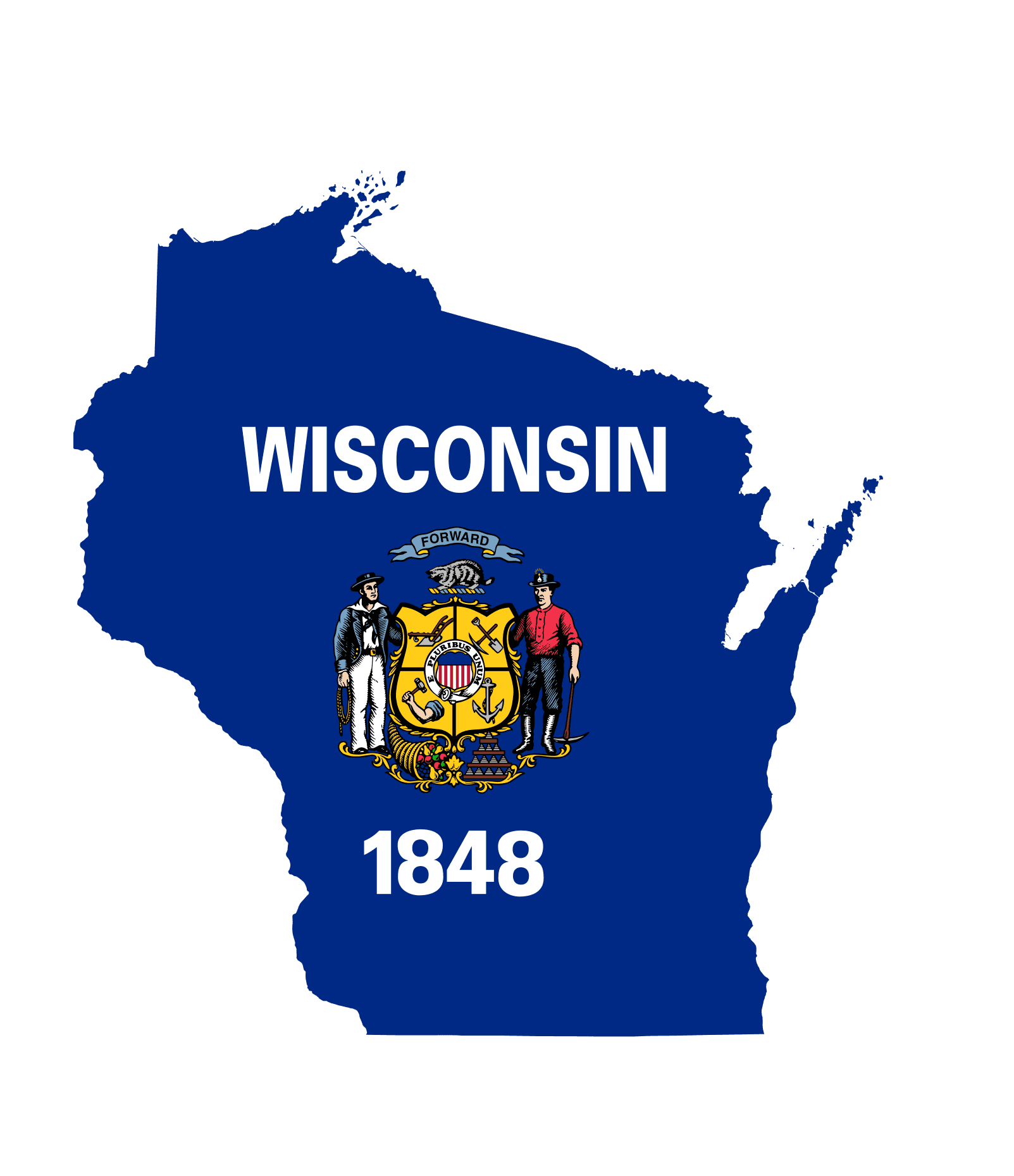
This prediction market concerns the outcome of the 2026 Wisconsin gubernatorial election. Wisconsin voters will elect a governor to a four-year term beginning in January 2027. The election is scheduled for November 3, 2026, with primaries likely held in August of that year. The race will determine control of the executive branch in a politically competitive state that has become a central battleground in national politics. Wisconsin's governor holds significant power over the state's budget, can veto legislation, and appoints heads of major state agencies. The 2026 election follows the 2022 contest where Democratic incumbent Tony Evers narrowly defeated Republican challenger Tim Michels by about 3.5 percentage points. Interest in this market stems from Wisconsin's status as a perennial swing state. Its electoral votes are often decisive in presidential elections, and state-level governance directly impacts policies on abortion, election administration, education funding, and infrastructure. The outcome will shape Wisconsin's political direction for the latter half of the 2020s and could influence the balance of power in the Midwest. Political observers monitor candidate recruitment, fundraising reports, and polling data to gauge the race's trajectory.
Wisconsin's gubernatorial elections have been intensely competitive for over a decade. The state elected Republican Scott Walker three times, in 2010, 2012 (a recall election), and 2014. Walker's policies, including Act 10 which limited public-sector collective bargaining, sparked massive protests and defined a period of Republican control. Democrat Tony Evers defeated Walker in 2018 by 1.1 percentage points, marking a shift. Evers then won re-election in 2022 against Republican Tim Michels. The 2022 margin was 51.2% to 47.8%. This recent history shows neither party holds a durable advantage. The governor's office has frequently been held by the party opposite the legislature. Republicans have controlled both chambers of the state legislature since 2011, creating a divided government dynamic. This has led to frequent vetoes. Governor Evers issued 126 vetoes in the 2023-24 legislative session alone. Past elections have been influenced by national trends, candidate quality, and specific state issues like education and manufacturing. The 2026 election will continue this pattern of close contests with high national stakes.
The winner will set Wisconsin's policy agenda on critical issues for four years. This includes administering elections in a state where rules are constantly debated, implementing environmental and energy regulations, and managing a state budget that exceeded $100 billion for the 2023-25 biennium. The governor appoints the secretary of the Wisconsin Department of Natural Resources and the superintendent of the Department of Public Instruction, shaping environmental and education policy. The election's outcome has direct national implications. Wisconsin is a pivotal state in presidential elections. A governor can influence election administration and campaign for their party's presidential nominee. The result will also signal political trends in the Upper Midwest ahead of the 2028 presidential cycle. For residents, the governor's decisions affect university funding, road projects, healthcare access, and business regulations. The direction of the state's economy, which includes major manufacturing and agricultural sectors, is influenced by the governor's priorities.
As of late 2024, Governor Tony Evers has not formally announced whether he will seek a third term. He has stated he is focused on his current duties. On the Republican side, no major candidate has officially declared. Potential candidates like Eric Hovde are focused on the 2024 Senate race. The Republican field is expected to take shape in 2025. Fundraising is ongoing. Evers' campaign committee reported over $10 million cash on hand as of mid-2024, giving him a significant early financial advantage. The state political environment continues to be shaped by debates over abortion access, election integrity laws, and university funding.
The general election is scheduled for Tuesday, November 3, 2026. Party primaries will likely be held in August 2026, though the exact date is set by state law.
Yes. Wisconsin does not have term limits for governor. Tony Evers is eligible to seek a third four-year term in the 2026 election.
Democratic incumbent Tony Evers is a potential candidate. Possible Republican contenders include businessman Eric Hovde, former Lieutenant Governor Rebecca Kleefisch, and others from the state legislature. Official declarations will likely occur in 2025.
Major issues include abortion policy, election administration, funding for K-12 schools and the University of Wisconsin system, tax policy, and infrastructure projects like road maintenance and broadband expansion.
The governor can influence election administration through the Wisconsin Elections Commission appointments and can be a prominent surrogate for their party's presidential candidate, mobilizing voters in a critical swing state.
Educational content is AI-generated and sourced from Wikipedia. It should not be considered financial advice.
2 markets tracked

No data available
| Market | Platform | Price |
|---|---|---|
![]() | Poly | 73% |
![]() | Poly | 15% |


No related news found
Add this market to your website
<iframe src="https://predictpedia.com/embed/skCTfp" width="400" height="160" frameborder="0" style="border-radius: 8px; max-width: 100%;" title="Wisconsin Governor Election Winner"></iframe>