$22.20K
1
30

$22.20K
1
30
Trader mode: Actionable analysis for identifying opportunities and edge
This market will resolve to "Yes" if neither the US nor Israel initiates a drone, missile, or air strike on Iranian soil or any official Iranian embassy or consulate on a full calendar day by the listed date, Iran Standard Time (GMT+3:30). Otherwise, this market will resolve to "No". If the date/time of a qualifying strike cannot be confirmed by a consensus of credible reporting by the end of the third calendar day after the listed date, the respective market will resolve to "Yes" regardless of
AI-generated analysis based on market data. Not financial advice.
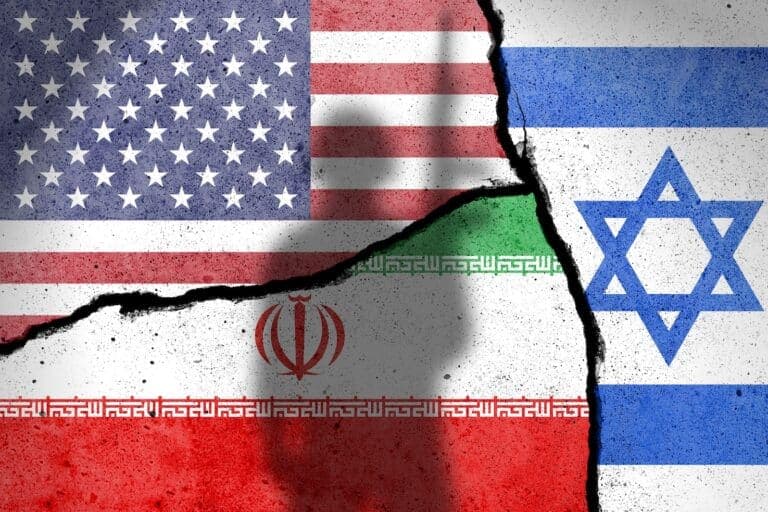
This prediction market topic concerns the risk of direct military strikes against Iran by the United States or Israel. The market resolves based on whether a full calendar day passes without a drone, missile, or air strike on Iranian soil or its official diplomatic missions by a specified date. The specific conditions include attacks on Iranian embassies or consulates, and resolution relies on credible reporting consensus. The topic exists within a period of heightened regional tension following the October 2023 Hamas attack on Israel and the subsequent war in Gaza. This conflict has expanded, with Iran-backed militias like Hezbollah in Lebanon and the Houthis in Yemen attacking Israeli and international targets. Direct confrontations between Iran and Israel, previously characterized by shadow warfare and proxy conflicts, have become more overt, raising fears of a broader regional war. Interest in this market stems from investors and observers gauging the probability of a major escalation that could disrupt global oil supplies, trigger wider conflict, and impact financial markets.
Iran-Israel hostilities date to the 1979 Iranian Revolution, which replaced the pro-Western Shah with an Islamic Republic hostile to Israel. The relationship deteriorated further with Iran's development of a nuclear program, which Israel views as an existential threat. A significant precedent for covert action was the Stuxnet cyberattack around 2010, widely attributed to the U.S. and Israel, which damaged Iranian nuclear centrifuges. Israel has also been accused of assassinating Iranian nuclear scientists, such as Mohsen Fakhrizadeh in 2020. The shadow war intensified with Israeli airstrikes on Iranian targets in Syria, where Iran has built a military presence since the Syrian civil war began in 2011. A major escalation occurred in April 2024 when Israel conducted an airstrike on an Iranian diplomatic compound in Damascus, Syria, killing several IRGC commanders. Iran responded days later with a direct barrage of over 300 drones and missiles launched from its own territory toward Israel, marking the first direct state-on-state attack between the two nations. This event created a new precedent for open military engagement, moving beyond the long-standing proxy conflict model.
A direct military strike on Iran carries profound global consequences. Economically, Iran is a major oil producer, and conflict could disrupt shipping through the Strait of Hormuz, a chokepoint for about 20% of the world's oil trade. This would likely trigger a sharp increase in global oil prices, fueling inflation and economic instability worldwide. Politically, such an event could draw the United States and other regional powers like Saudi Arabia into a wider Middle Eastern war, destabilizing governments and creating a humanitarian crisis. For the Iranian population of over 87 million, a military conflict would mean severe hardship, potential casualties, and further economic isolation. The conflict could also derail any remaining diplomatic efforts to revive the 2015 nuclear deal, pushing Iran to accelerate its nuclear weapons development and potentially triggering a regional arms race.
As of late April 2024, tensions remain extremely high but without a new, large-scale direct strike. Following Iran's April 14 attack and Israel's limited retaliatory strike on April 19, both sides have signaled a desire to de-escalate, at least temporarily. However, the underlying conflict continues. Israel's war against Hamas in Gaza persists, and clashes between Israel and Hezbollah along the Lebanon-Israel border occur daily. Iran-backed Houthi rebels in Yemen continue to attack shipping in the Red Sea. The U.S. maintains a significant naval presence in the region. Diplomacy is active, with the U.S. and European nations urging restraint while also imposing new sanctions on Iran. The situation is volatile, with any perceived provocation capable of triggering another round of strikes.
The market defines Iranian soil as the internationally recognized territory of Iran. It also explicitly includes any official Iranian embassy or consulate building worldwide, as these are considered sovereign Iranian territory under international law. Attacks on Iran-backed militia bases in other countries like Syria or Iraq would not qualify unless they hit an actual diplomatic mission.
There has been no publicly acknowledged large-scale, direct military attack by either country on Iranian soil. The conflict has been characterized by covert operations, cyberattacks, assassinations, and Israeli strikes on Iranian targets in third countries like Syria. The April 2024 exchange, where Iran attacked Israel directly and Israel reportedly struck back inside Iran, represents the closest move to open warfare.
A U.S. strike could be triggered by several scenarios: a successful, mass-casualty attack on U.S. forces by an Iran-backed group that Washington attributes to Tehran, a direct Iranian attack on a U.S. ally like Israel or Saudi Arabia, or a decision by Iran to rapidly advance its nuclear weapons program. U.S. policy has emphasized deterrence and diplomacy, but presidents have reserved the right to use force.
Iran employs a strategy it calls 'strategic patience,' often responding through its network of proxy forces rather than its own military. This includes directing groups like Hezbollah, the Houthis, or Iraqi militias to launch rockets, drones, or other attacks. It also uses cyber warfare and, as demonstrated in April 2024, can launch direct missile and drone strikes from its own territory after a significant provocation.
The International Atomic Energy Agency monitors Iran's declared nuclear facilities under safeguards agreements. Since 2019, Iran has gradually reduced IAEA inspectors' access and advanced its program beyond the limits of the 2015 nuclear deal. The IAEA's regular reports provide critical intelligence on Iran's uranium stockpiles and enrichment levels, which inform assessments of the nuclear threat.
Educational content is AI-generated and sourced from Wikipedia. It should not be considered financial advice.
30 markets tracked

No data available
| Market | Platform | Price |
|---|---|---|
![]() | Poly | 44% |
![]() | Poly | 42% |
![]() | Poly | 41% |
![]() | Poly | 39% |
![]() | Poly | 31% |
![]() | Poly | 25% |
![]() | Poly | 12% |
![]() | Poly | 9% |
![]() | Poly | 8% |
![]() | Poly | 7% |
![]() | Poly | 6% |


No related news found
Add this market to your website
<iframe src="https://predictpedia.com/embed/tf0ei3" width="400" height="160" frameborder="0" style="border-radius: 8px; max-width: 100%;" title="Military action against Iran ends by...?"></iframe>