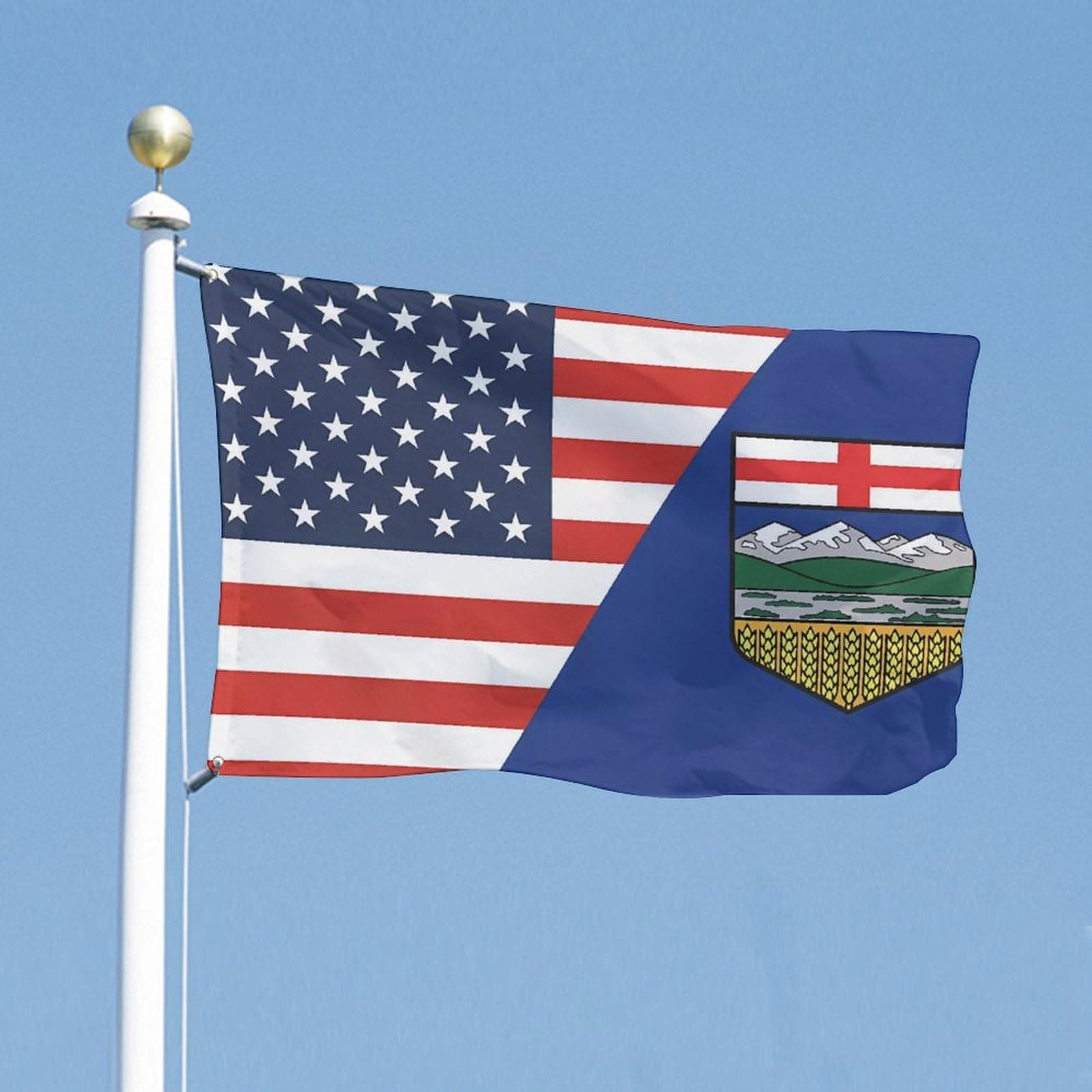
Will Alberta vote for independence in 2026?
$378.55K
1
1
Will Alberta vote for independence in 2026?
$378.55K
1
1
AI Analysis
Trader mode: Actionable analysis for identifying opportunities and edge
About This Event
This market will resolve to "Yes" if a referendum on Alberta's independence from Canada is passed by December 31, 2026, 11:59 PM. Otherwise, this market will resolve to "No". Any referendum that establishes Alberta's desire for independence, sets a framework for independence, or establishes independence from Canada will qualify. The primary resolution source for this market is official information from the government of Alberta, however a consensus of credible reporting will also be used.
This saved analysis is awaiting a background update. Its prices and claims may be outdated; compare them with the dated market data above.
Current Market Outlook
Polymarket gives Alberta independence a 13% probability by December 2026. That is a longshot bet. The market effectively says this is possible but unlikely, with an implied 87% chance nothing happens. With only $63,000 in volume across the single market, liquidity is thin. A few motivated traders could move this price.
Key Factors Driving the Odds
Alberta separatism has existed as a fringe idea for decades, but it gained real traction during the pandemic when Ottawa imposed federal mandates that Alberta's conservative government opposed. The United Conservative Party passed the Alberta Sovereignty Act in 2022, which lets the province refuse to enforce federal laws it deems unconstitutional. That is not independence. It is a legal pressure tactic.
The core problem for independence supporters is math. A 2024 Angus Reid poll found only 15% of Albertans support leaving Canada outright. Even among UCP voters, independence polls below 30%. The 13% market price actually matches polling data almost exactly. The market is pricing in what the polls show.
The other structural barrier is the constitutional process. Alberta cannot unilaterally secede. The Supreme Court ruled in 1998 that any province seeking independence would need a clear referendum question, a majority vote, and then constitutional negotiations with Ottawa and the other provinces. No prime minister would negotiate Alberta's departure.
What Could Change These Odds
A federal Liberal victory in the 2025 election with Justin Trudeau still leading could push Alberta separatism higher. Trudeau is deeply unpopular in Alberta, and his carbon tax policies generate genuine anger. If the federal government imposes new energy sector restrictions or environmental mandates that cost Alberta jobs, the independence polling could spike into the 25-30% range.
The 2027 Alberta provincial election is the real catalyst. Premier Danielle Smith has not called for an independence referendum. She uses the Sovereignty Act as a negotiating tool. If she loses to the NDP in 2027, a more radical conservative leader could emerge and push for a referendum as a rallying issue.
Right now, 13% is fair. The market correctly reflects that Alberta independence is a political fantasy absent a major federal crisis, not a realistic near-term outcome.
AI-generated analysis based on market data. Not financial advice.
Saved Jul 10, 2026 UTCThis saved content is awaiting a background update. It may contain outdated claims; use the dated market data and provider rules for the latest available information.
Overview
The question of Alberta independence, often called 'Wexit' (a portmanteau of Western and exit), has moved from fringe political discussion to a serious topic of debate in Canadian politics. Alberta is a landlocked province in Western Canada, known for its oil and gas reserves. The independence movement is driven by long-standing grievances over federal policies perceived as hostile to Alberta's energy industry, fiscal transfers that send more tax revenue from Alberta to the federal government than the province receives back, and a sense of political alienation from a federal government dominated by parties with little electoral support in Alberta. The movement gained significant traction after the 2019 federal election, which saw the Liberal Party win a minority government with almost no seats in Alberta or Saskatchewan, and intensified during the COVID-19 pandemic when federal environmental and energy policies were seen as targeting the province's economic base. In 2021, the United Conservative Party (UCP) government, led by Premier Jason Kenney, passed the Alberta Sovereignty Act. This legislation, which came into effect in 2022, gives the provincial cabinet the power to direct provincial agencies to not enforce specific federal laws or regulations that are deemed harmful to Alberta's interests. While not a direct step toward independence, the act was framed by its supporters as a tool to assert provincial autonomy and was seen by some as a precursor to a potential independence referendum. The act faced legal challenges and criticism from constitutional experts who argued it could be struck down by the courts. Support for independence in Alberta has fluctuated. Polling by firms like Angus Reid and Leger has shown that support for a referendum on independence typically sits between 25% and 35% of Albertans, with a majority opposing separation. However, support can spike during periods of federal-provincial tension, such as during the 2020 'energy war' with the federal government over pipelines. The 2026 date mentioned in the prediction market is not an official government deadline. No Alberta government has committed to holding an independence referendum by that date. The 2026 date may have been chosen by the market creator as a plausible timeframe for a future election or a political push, given that the next provincial election is scheduled for 2027. The interest in this topic stems from its potential to reshape Canadian confederation. If Alberta were to leave Canada, it would trigger a constitutional crisis, disrupt the Canadian economy (Alberta contributes roughly 15% of Canada's GDP), and set a precedent for other provinces. The movement also reflects broader global trends of regional separatism in resource-rich regions, such as Catalonia in Spain or Scotland in the UK. Understanding the nuances of this movement, its key actors, and the legal and economic barriers to independence is crucial for anyone following Canadian politics or betting on this prediction market.
Historical Context
Alberta's sense of distinct identity and grievance with central Canada dates back to the early 20th century. The province joined Confederation in 1905, but the roots of its alienation are often traced to the 1970s and the National Energy Program (NEP) introduced by Prime Minister Pierre Trudeau's Liberal government in 1980. The NEP imposed price controls on oil and gas, taxed energy exports, and gave subsidies to Eastern Canada and the oil sands, which were seen as a direct attack on Alberta's economic interests. The policy triggered a deep recession in Alberta and a political backlash that lasted for decades. The Progressive Conservative government of Premier Peter Lougheed fought the NEP in court and eventually reached a settlement in 1985, but the memory of that period remains a powerful symbol of federal overreach. In the 1990s and 2000s, Alberta's economy boomed due to high oil prices, and the province became a net contributor to federal equalization payments. By 2019, Alberta was contributing about $20 billion more in federal taxes than it received in federal spending, according to the Fraser Institute. This fiscal imbalance, combined with the federal government's inability to secure new pipeline capacity to tidewater (the Keystone XL pipeline was cancelled in 2021, and the Trans Mountain Pipeline expansion faced years of delays), fueled a new wave of separatism. The 2019 federal election was a tipping point: the Liberal Party won only 10% of the vote in Alberta and no seats, while the Conservative Party won 69% of the vote. This electoral disconnect, where a region with 11% of Canada's population has almost no representation in the governing party, is a core grievance. There have been three formal attempts to hold a referendum on Alberta independence. In 1980, a non-binding plebiscite on whether the province should 'take steps to separate from Canada' was rejected by 60% of voters. In 2005, a similar proposal was defeated in the Alberta legislature. In 2021, the UCP government held a referendum on removing the Senate, but not on independence. The most recent push came in 2022, when the UCP's annual general meeting voted in favor of a resolution calling for a referendum on independence, but Premier Smith did not commit to it. The legal process for secession is unclear. The Supreme Court of Canada's 1998 Reference re Secession of Quebec ruled that a province cannot unilaterally secede and that a clear majority vote on a clear question would require constitutional negotiations. No province has ever attempted to secede, so there is no precedent.
Why It Matters
An Alberta independence referendum would have profound economic consequences. Alberta is the economic engine of Canada, producing roughly 80% of Canada's oil and natural gas. In 2023, Alberta's GDP was about $340 billion Canadian dollars, or 15% of Canada's total. If Alberta left, Canada would lose a major source of tax revenue, and the remaining provinces would face a significant fiscal gap. The Canadian dollar would likely depreciate, and the national debt-to-GDP ratio would rise. Alberta, for its part, would need to negotiate its own trade agreements, establish a currency (likely the Canadian dollar at first, but with no control over monetary policy), and rebuild institutions like a central bank and a military. The oil and gas sector, which relies on pipelines crossing other provinces and access to international markets, would face enormous regulatory uncertainty. Politically, a successful Alberta independence vote would trigger a constitutional crisis. The federal government has stated it would not recognize a unilateral declaration of independence. The Supreme Court's 1998 ruling on Quebec secession set a high bar: a clear majority on a clear question, followed by negotiations with the federal government and other provinces. Those negotiations would likely be contentious and could take years. Socially, the issue is deeply divisive within Alberta itself. Rural areas and the oil patch tend to be more supportive of independence, while urban centers like Calgary and Edmonton are more skeptical. Indigenous communities, which make up about 6% of Alberta's population, have treaty rights with the Crown and have expressed concerns about how their rights would be protected in an independent Alberta. The outcome of this debate could reshape Canadian federalism for generations, regardless of whether independence actually occurs.
AI-written background. References identify the evidence used; Wikipedia links under Learn More are additional reading. Prices and provider rules are dated snapshots. This is not financial advice.
Market Insights
Price gaps of 2 pp+
0
Saved price pairs
0
No exact saved pairs with both binary Yes prices are available.
Price differences do not establish arbitrage. Check each pair's review, current order prices, fees and settlement rules.