$980.30K
1
7

$980.30K
1
7
Trader mode: Actionable analysis for identifying opportunities and edge
Legislative elections are expected to be held in Thailand on February 8, 2026. This market will resolve to the next individual who is officially selected and appointed to be Prime Minister of Thailand following the 2026 general legislative election. To count for resolution, the individual must be formally selected for the role of Prime Minister and appointed to the role by the king of Thailand. Any interim or caretaker Prime Minister will not count toward the resolution of this market. If no
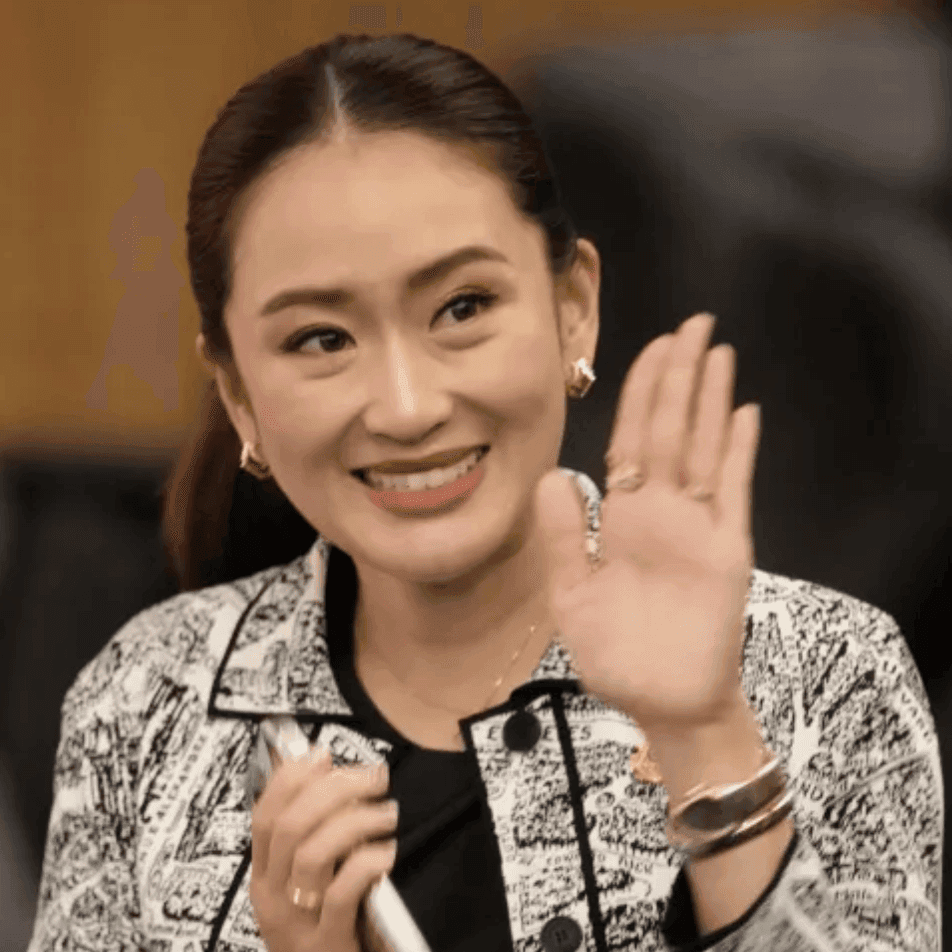
Traders on prediction markets currently believe Anutin Charnvirakul is almost certain to become Thailand's next Prime Minister after the 2026 election. The market gives this a 97% chance, which means traders see it as a near certainty. This is an unusually high level of confidence for a political event over a year away.
Two main factors explain this forecast. First, Anutin is the leader of the Bhumjaithai Party, which performed strongly in the 2023 election. His party holds significant influence in the current coalition government, and he serves as Deputy Prime Minister. This gives him a powerful incumbent advantage.
Second, the market reflects Thailand's unique political rules. The Prime Minister is not chosen by a simple popular vote. Instead, they are selected by a joint vote of the elected House of Representatives and the appointed Senate. Anutin is seen as a compromise figure who is acceptable to both the military-aligned establishment and various political factions. His main rival, the progressive Move Forward Party, faces structural barriers as the military-appointed Senate has historically blocked its candidates.
The official election is scheduled for February 8, 2026. However, Thai politics can be volatile. The main event to watch is the eventual dissolution of parliament, which must happen before the election. Political negotiations and potential court rulings on party eligibility in the months ahead could shift the landscape. The Senate's term ends in May 2024, and its replacement could alter the balance of power in the selection process, though its new composition is uncertain.
Prediction markets are generally good at aggregating political intelligence, but a 97% probability this far out is extreme. It may reflect current consensus more than a guaranteed outcome. In Thai politics, sudden judicial interventions or unexpected coalition shifts have upended predictions before. While Anutin is the clear favorite, the high probability likely doesn't fully account for the potential for surprise over the next 300 days. Markets are better at short-term forecasts, so these odds could change as the election nears.
Prediction markets on Polymarket assign a 97% probability that Anutin Charnvirakul will become Thailand's next prime minister following the 2026 general election. This price indicates near-certainty among traders, with only a 3% chance priced for any other candidate. The market has attracted significant capital, with nearly $1 million in volume across related contracts, suggesting strong liquidity and trader conviction in this outcome.
The overwhelming odds reflect Anutin Charnvirakul's consolidated political position. As the leader of the Bhumjaithai Party and the current Deputy Prime Minister, he has built a durable power base. His party's strong performance in the 2023 election, where it became a necessary coalition partner for the ruling government, demonstrated its pivotal role. Furthermore, the neutral-to-royalist stance of Bhumjaithai aligns with the preferences of Thailand's conservative establishment, including the military-appointed Senate, whose vote is required to confirm a prime minister. The main opposition Move Forward Party, despite winning the popular vote in 2023, faces significant structural and legal barriers, clearing a path for a candidate like Anutin.
A 97% probability leaves little room for error, but several risks could destabilize this consensus. The most direct threat is a sudden shift in the military-aligned and royalist bloc's support. If the ruling Pheu Thai party were to fracture its coalition, it could seek an alternative candidate. Legal interventions also pose a constant risk in Thai politics. Court cases dissolving major parties or banning individual politicians, a recurring event over the past two decades, could abruptly reshape the field. While the election is set for February 2026, political maneuvering and potential early dissolution of parliament in 2025 would be the first major test of this market's thesis.
AI-generated analysis based on market data. Not financial advice.
This prediction market focuses on identifying who will become the next Prime Minister of Thailand following the scheduled general election on February 8, 2026. The market resolves to the individual who is formally selected by the Thai parliament and officially appointed to the role by King Maha Vajiralongkorn. The outcome depends on the complex interplay of election results, coalition negotiations, and constitutional procedures in a political system that has experienced significant instability over the past two decades. The 2026 election follows the 2023 election that resulted in a prolonged political deadlock, highlighting the challenges of forming stable governments under Thailand's current constitution. Interest in this market stems from Thailand's strategic importance in Southeast Asia, its ongoing political polarization between conservative-military establishments and reformist movements, and the economic implications of leadership changes. The selection process involves a joint vote of the 500-member House of Representatives and the 250-member Senate, with the latter body appointed by the military and playing a decisive role in recent prime ministerial selections. Observers are watching whether constitutional amendments or political realignments might alter this dynamic before 2026.
Thailand's prime ministerial selection process has been contentious since the 2006 military coup that ousted billionaire populist Thaksin Shinawatra. This event initiated a cycle of political conflict between his "Red Shirt" supporters and "Yellow Shirt" royalist conservatives that has defined Thai politics for nearly two decades. The 2014 coup led by General Prayut Chan-o-cha resulted in a military government that drafted the 2017 constitution, which created the 250-member Senate appointed by the military. This constitutional design ensured conservative control over prime ministerial selection, as demonstrated in 2023 when senators blocked election-winner Pita Limjaroenrat. Since Thailand transitioned to constitutional monarchy in 1932, the country has experienced 13 successful coups and 20 constitutions, reflecting persistent tension between democratic forces and traditional power structures. The monarchy, under King Maha Vajiralongkorn since 2016, maintains significant influence through its control of crown property and military units, though the king's formal role in appointing the prime minister is typically ceremonial. The 2020-2021 youth protest movement, which openly criticized the monarchy, represented an unprecedented challenge to traditional institutions and continues to influence political alignments.
The selection of Thailand's next prime minister will determine the country's economic direction at a time of slowing growth, with GDP expansion projected at just 2.8% for 2024. Policy decisions on digital wallet stimulus programs, energy subsidies, and foreign investment rules will affect Southeast Asia's second-largest economy. Political stability directly impacts Thailand's tourism industry, which accounted for 12% of GDP before the pandemic and employs millions of workers. The outcome also has regional security implications, as Thailand balances relations between the United States and China while managing tensions in the South China Sea and Myanmar border conflicts. Socially, the prime minister's approach to issues like marriage equality, cannabis legalization, and monarchy reform will either address or exacerbate the generational divide that fueled the 2020-2021 protests. The military's role in politics, defense budgeting, and conscription policies depend on whether reformist or conservative forces control the government. International investors monitor political developments closely, as evidenced by foreign direct investment fluctuations of 30-50% following previous political crises.
Prime Minister Srettha Thavisin's coalition government faces economic headwinds with inflation concerns and debates over a 500-billion-baht digital wallet stimulus program. The Constitutional Court is considering a case that could potentially remove Srettha from office over the appointment of a minister with a criminal record. Parliament is debating amendments to the constitution that could change the prime ministerial selection process before the 2026 election, though military-aligned parties resist changes to Senate powers. Move Forward Party, now in opposition, continues to push for its reform agenda while facing legal challenges that could lead to its dissolution, similar to its predecessor Future Forward Party in 2020. Former Prime Minister Thaksin Shinawatra, recently paroled after returning from exile, remains an influential figure behind Pheu Thai's strategy.
The prime minister is selected through a joint vote of the 500-member House of Representatives and the 250-member Senate. A candidate needs at least 376 votes to win. The Senate was entirely appointed by the military under the 2017 constitution and has equal voting power with elected representatives in this process until at least 2024.
The king's role is formally ceremonial in appointing the prime minister. Constitutionally, he appoints whoever commands majority support in parliament. However, the palace has historically influenced politics through informal channels and its control of significant economic assets and military units.
The Move Forward Party won 151 seats, the most of any party, followed by Pheu Thai with 141 seats. However, Move Forward's leader Pita Limjaroenrat was blocked from becoming prime minister by military-appointed senators. Pheu Thai then formed an 11-party coalition including former military rivals, making Srettha Thavisin prime minister.
The primary division is between conservative-establishment forces (including the military, monarchy, and traditional elites) and reformist-democratic movements. Geographic divisions also exist, with Pheu Thai strong in the north and northeast, Democrats in the south, and Bangkok being more politically diverse.
The military maintains influence through appointed senators who vote on prime ministers, through constitutional provisions that protect its autonomy, and through a history of coups (13 successful ones since 1932). Key military units are formally part of the royal guard, creating institutional links with the monarchy.
Educational content is AI-generated and sourced from Wikipedia. It should not be considered financial advice.
7 markets tracked

No data available
| Market | Platform | Price |
|---|---|---|
![]() | Poly | 97% |
![]() | Poly | 1% |
![]() | Poly | 0% |
![]() | Poly | 0% |
![]() | Poly | 0% |
![]() | Poly | 0% |
![]() | Poly | 0% |


No related news found
Add this market to your website
<iframe src="https://predictpedia.com/embed/uK5Okh" width="400" height="160" frameborder="0" style="border-radius: 8px; max-width: 100%;" title="Next Prime Minister of Thailand"></iframe>