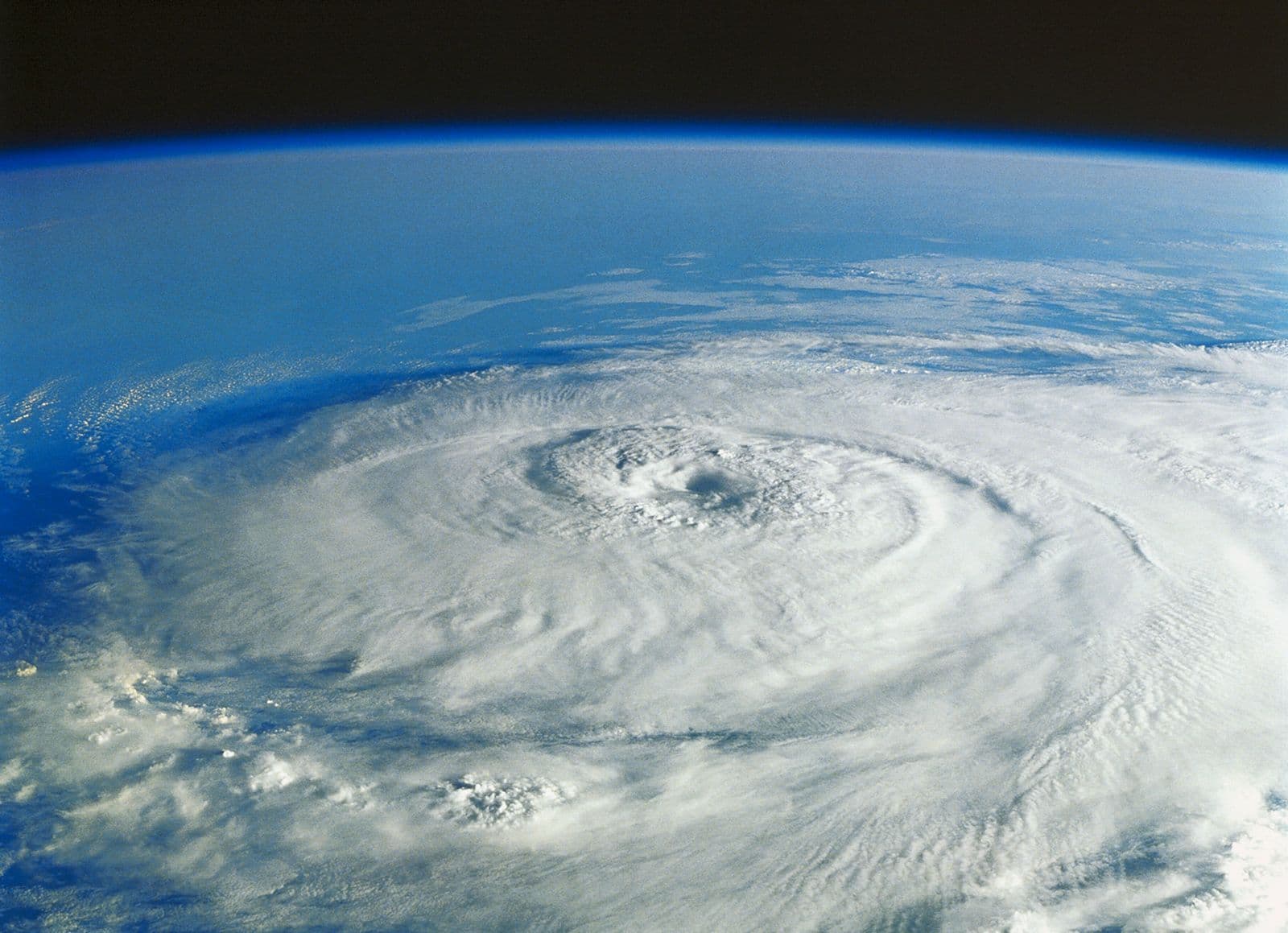
Natural Disaster in 2026?
PM $251.2K
1
1
Natural Disaster in 2026?
PM $251.2K
1
1
Current odds
Snapshot from
As of Oct 27, 2026, 12:00 AM UTC, Yes is priced at 10.5% on Polymarket.
Polymarket
- Yes10.5%
Yes prices. They are not order quotes; check each platform's rules, fees and live prices before trading.
AI Analysis
Trader mode: Market mechanics, assumptions and risks
PM $251.2K
Reported volume · provider units
1
Saved contracts
0
Same-question pairs
Source snapshot: Oct 27, 2026, 12:00 AM UTC
About This Event
This market will resolve to “Yes” if any of the following conditions are met during 2026 ET: - A Category 5 hurricane makes landfall in the US - A major meteor strikes (10kt+) - A major volcano erupts (VEI ≥6) - An 8.5+ earthquake occurs Otherwise, this market will resolve to “No”. If required information from the specified sources remains outstanding, the market may stay open until February 28, 2027, 11:59 PM ET. The full rules for this market can be found here: https://polymarket-upload.s3.us-east-2.amazonaws.com/Natural+Disaster+in+2026.pdf
This analysis is awaiting a background update, so its prices may be older than the odds above.
Current Market Outlook
Polymarket traders currently price a 27% chance that 2026 produces at least one of four catastrophic natural events: a US Category 5 hurricane landfall, a 10-kiloton meteor strike, a VEI 6+ volcanic eruption, or an 8.5+ magnitude earthquake. That 27% price means roughly one-in-four odds, which sounds low until you break down the individual probabilities.
Historical baselines help frame this. The US sees a Category 5 landfall roughly once every 6 to 10 years, putting that leg around 12-15%. An 8.5+ earthquake occurs globally about once every 5 to 8 years, roughly 15-18%. A VEI 6 eruption happens every 50 to 100 years, so around 1-2%. A 10kt meteor strike is the long tail, perhaps 0.5-1%. Combined, independent probabilities suggest roughly 28-32%, so the market's 27% sits just below the actuarial sum. The market is pricing in mild good luck, not complacency.
Key Factors Driving the Odds
The dominant driver is the earthquake leg. The Pacific Ring of Fire has been relatively quiet for major subduction zone events since the 2011 Tohoku quake. Seismic stress accumulates on locked faults, and the statistical clock ticks. The 8.5+ threshold is deliberately broad, covering any location globally, which makes it the most probable trigger.
Hurricane activity follows multi-decade cycles tied to Atlantic Multidecadal Oscillation phases. The Atlantic has been in an active phase since 1995, and recent seasons have produced multiple Category 5 storms, though landfalls remain a matter of track luck. Climate models suggest warmer SSTs increase peak intensity potential, which nudges the hurricane leg upward.
The volcano and meteor legs are essentially background noise. VEI 6 eruptions are rare enough that the Yellowstone or Campi Flegrei chatter rarely moves the needle. Meteor impacts at 10kt equivalent are Tunguska-scale events with centuries-long return periods.
What Could Change These Odds
The market resolves on December 31, 2026, so seasonal patterns matter. Atlantic hurricane season runs June through November, and the odds will climb sharply if a major storm develops and threatens the US coastline. Track forecasts can shift probabilities by 10-15 points within days.
Earthquake risk is time-independent, but a moderate precursor event, say a 7.5-8.0 quake, could boost concerns about a larger follow-up, pushing the market up a few points. Conversely, a quiet first half of 2026 will let the odds drift downward as the calendar compresses.
The meteor leg is the wildcard. Any near-Earth object discovery with a non-trivial impact probability would trigger an immediate repricing. Astronomers are actively surveying, and a new find could move this market more than any hurricane forecast.
Cross-Platform Analysis
This market trades exclusively on Polymarket. Kalshi does not currently list a comparable multi-hazard 2026 natural disaster contract. The $216K volume suggests moderate interest, and the single-market structure means no cross-platform arbitrage exists. Traders looking for hedging alternatives might consider Kalshi's individual earthquake or hurricane contracts if they launch, but as of now, Polymarket holds the only comprehensive multi-peril market for 2026.
AI-generated analysis based on market data. Not financial advice.
Saved Aug 8, 2026 UTCThis saved content is awaiting a background update. It may contain outdated claims; use the dated market data and provider rules for the latest available information.
Overview
The prediction market 'Natural Disaster in 2026?' poses a binary question: will any of four specified catastrophic events occur during the calendar year 2026 (Eastern Time)? The events are: a Category 5 hurricane making landfall in the US, a meteor impact with an energy equivalent of at least 10 kilotons of TNT, a volcanic eruption with a Volcanic Explosivity Index (VEI) of 6 or higher, or an earthquake with a magnitude of 8.5 or greater. This market is a form of event contract, allowing participants to speculate on the likelihood of natural disasters, which are inherently rare but high-impact occurrences. The market resolves to 'Yes' if any single condition is met, and 'No' if none occur, with a possible extension to February 28, 2027, if data verification is pending. Natural disasters of this scale are statistically infrequent but have profound consequences. Category 5 hurricanes, with sustained winds exceeding 157 mph, have made landfall in the US only a handful of times in recorded history, most notably Hurricane Andrew (1992), Hurricane Katrina (2005), and Hurricane Michael (2018). Meteor impacts of 10 kilotons or more are even rarer; the Chelyabinsk meteor in 2013, which exploded with an estimated 400-500 kilotons of energy, is the most recent major event, though it occurred over Russia, not the US. Volcanic eruptions of VEI 6 are century-scale events; the last one was Mount Pinatubo in 1991. Earthquakes of magnitude 8.5 or greater occur roughly once per decade globally; the most recent was the 2012 Indian Ocean earthquake (magnitude 8.6). The market taps into public fascination with disaster prediction and the growing field of catastrophe risk modeling. Advances in seismology, meteorology, and volcanic monitoring have improved early warning systems, but the fundamental unpredictability of these events makes them a subject of intense speculation. For traders, this market offers a way to hedge against disaster-related economic impacts or simply to bet on the odds of a rare event. The probability implied by the market price reflects a consensus of informed participants, incorporating historical frequencies and current scientific assessments. Interest in this market also stems from broader concerns about climate change, which may influence hurricane intensity and frequency, and from the potential for asteroid impacts, which has gained attention following NASA's DART mission in 2022. The market's design, with its clear criteria and resolution timeline, provides a structured approach to a chaotic topic, making it a compelling case study in how prediction markets handle low-probability, high-consequence events.
Historical Context
The history of natural disasters of the scale defined in this market is sparse but instructive. The last Category 5 hurricane to make landfall in the US was Hurricane Michael in 2018, which struck the Florida Panhandle with winds of 160 mph. Prior to that, Hurricane Andrew in 1992 devastated South Florida, and Hurricane Camille in 1969 hit Mississippi. The 2020 Atlantic hurricane season was exceptionally active, with a record 30 named storms, but none reached Category 5 at landfall. The absence of a Category 5 landfall since 2018 is a statistical anomaly, given that the average return period for such an event is about 5-10 years. Meteor impacts of 10 kilotons or more are more frequent than one might think. The Chelyabinsk event in 2013 was the largest since the Tunguska event in 1908, which was estimated at 10-15 megatons. The 2013 meteor exploded with 440 kilotons of energy, injuring over 1,500 people from broken glass. Smaller impacts, in the 1-10 kiloton range, occur several times per year, but a 10+ kiloton impact is a once-in-a-decade occurrence. The most recent confirmed 10+ kiloton impact before Chelyabinsk was the 2009 airburst over Indonesia, estimated at 50 kilotons. Volcanic eruptions of VEI 6 are rare, with the last one being Mount Pinatubo in 1991, which killed over 800 people and caused global temperature drops of 0.5°C. The 1883 Krakatoa eruption, also VEI 6, generated tsunamis that killed tens of thousands. In contrast, VEI 5 eruptions occur every few years, such as the 2010 Eyjafjallajökull eruption in Iceland, which disrupted air travel across Europe. Earthquakes of magnitude 8.5 or greater occur about once every 5-10 years. The 1960 Valdivia earthquake in Chile was the largest ever recorded at 9.5, while the 2004 Sumatra earthquake and tsunami (magnitude 9.1) killed over 230,000 people. The 2012 Indian Ocean earthquake, at 8.6, was the most recent 8.5+ event, occurring off the coast of Sumatra.
Why It Matters
The occurrence of any of these disasters would have immediate and devastating effects. A Category 5 hurricane landfall in the US could cause tens of billions of dollars in damage, as seen with Hurricane Katrina's $125 billion toll. A major earthquake of 8.5+ could trigger tsunamis affecting millions of coastal residents, and a VEI 6 volcanic eruption could disrupt global air travel and climate. The economic costs would ripple through insurance markets, supply chains, and government budgets, potentially triggering federal disaster declarations and international aid efforts. Beyond the immediate human and economic toll, these events shape policy and public perception. A major disaster in 2026 could influence climate change legislation, infrastructure investment, and emergency preparedness. For the insurance industry, a catastrophic event could lead to premium increases and shifts in coverage availability. For the public, such events reinforce the importance of science funding and early warning systems. The prediction market itself reflects a broader societal interest in quantifying risk and preparing for the unpredictable.
AI-written background. References identify the evidence used; Wikipedia links under Learn More are additional reading. Prices and provider rules are dated snapshots. This is not financial advice.
Related prediction markets
Prices are catalog snapshots and may have changed. Check each market's rules and observation time.
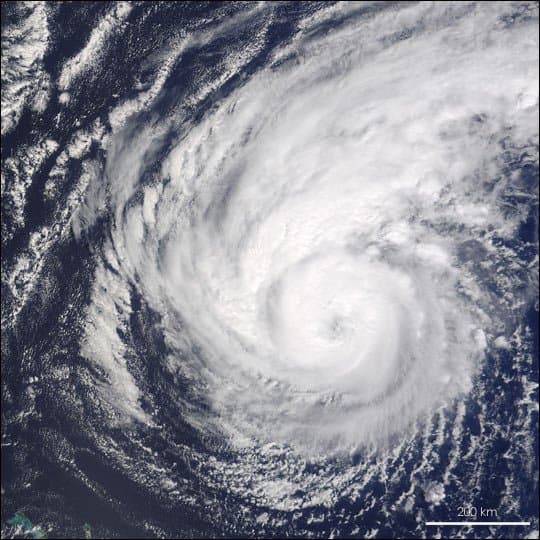
Where will a hurricane make landfall in the US during the 2026 hurricane season?
PM $42.4K
First Solar module volume sold in Q3
K 171.6K contracts
Measles cases in U.S. in 2026?
PM $8.20M · K 645.6K contractsWill there be at least 5000 measles cases in the U.S. in 2026?
Kalshi: Will there be more than 5000 measles cases in 2026?
Related contracts
Will there be at least 6000 measles cases in the U.S. in 2026?
Kalshi: Will there be more than 6000 measles cases in 2026?
Related contracts
Will there be at least 7000 measles cases in the U.S. in 2026?
Kalshi: Will there be more than 7000 measles cases in 2026?
Related contracts
Related or unreviewed contracts may settle differently. Their gap is not an equivalent-contract comparison.
Saved prices; check contract rules.

What named storms will be hurricanes in the Atlantic this year?
K 74.1K contracts
Largest IPO by market cap in 2026?
PM $6.70MWhat named storms will be hurricanes in the Eastern Pacific this year?
K 54.2K contractsMarket Insights
Price gaps of 2 pp+
0
Same-question pairs
0
No outcomes on this page have been reviewed as the same question on both platforms yet.
Price differences do not establish arbitrage. Check each pair's review, current order prices, fees and settlement rules.