$14.32K
1
1

1 market tracked

No data available
| Market | Platform | Price |
|---|---|---|
![]() | Poly | 4% |
Trader mode: Actionable analysis for identifying opportunities and edge
This market will resolve to "Yes" if definitive evidence confirming that Jeffrey Epstein is Satoshi Nakamoto, the pseudonymous creator of Bitcoin, is made public by December 31, 2026, 11:59 PM ET. Otherwise, this market will resolve to "No". Qualifying evidence includes, but is not limited to, verified documentation, blockchain evidence, or other definitive evidence. If Satoshi Nakamoto is conclusively identified as a group or collective rather than a single individual, definitive evidence tha
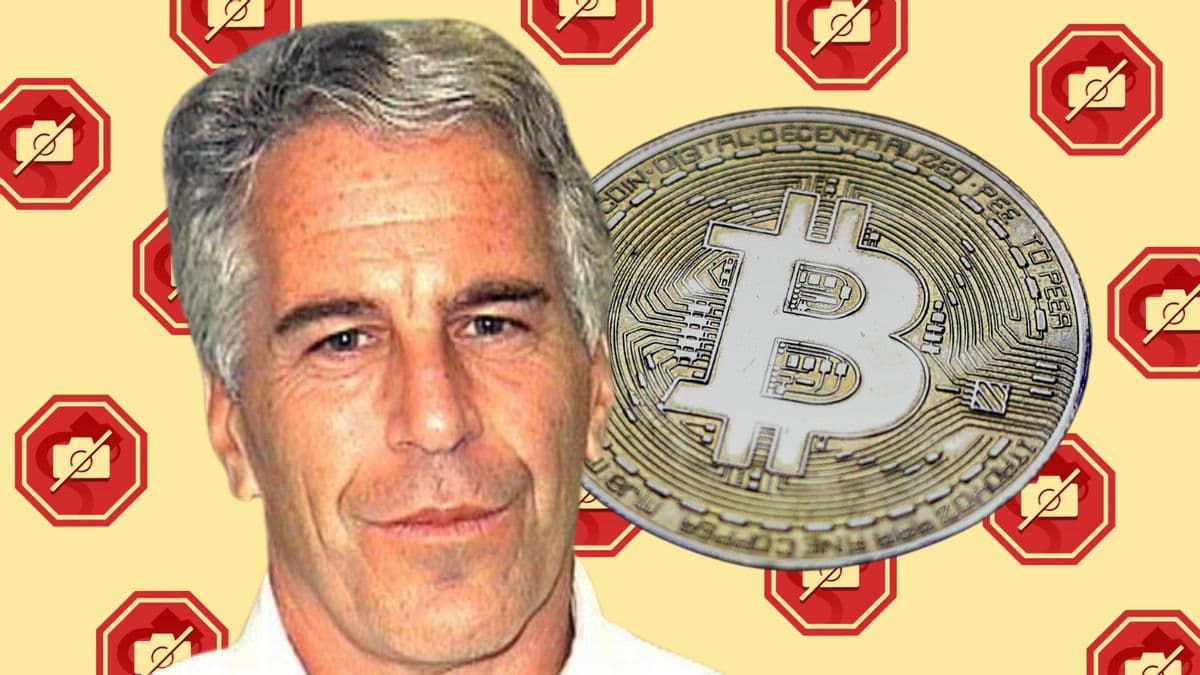
Prediction markets currently give about a 4% chance that definitive evidence will prove Jeffrey Epstein created Bitcoin. This means traders see it as very unlikely, roughly a 1 in 25 possibility. The market reflects a strong consensus that this specific theory is probably false.
The low probability is based on several factors. First, the core theory lacks credible evidence. It typically relies on circumstantial connections, like Epstein's past associations with tech figures or his island's name, "Little St. James," being abbreviated LSJ, which some note resembles lettering in early Bitcoin code. Mainstream cryptocurrency researchers and journalists have widely dismissed these links as speculative.
Second, the known timeline creates problems. Bitcoin's whitepaper was published in 2008 and the network launched in 2009. Epstein was arrested in July 2006 and was largely confined under house arrest or dealing with legal proceedings until his death in August 2019. This makes it difficult to align with the sustained, focused technical effort required to create and initially maintain Bitcoin.
Finally, the search for Satoshi has been a major puzzle for over a decade, with several prominent individuals investigated and many theories debunked. The market is essentially betting that a conclusive link to a figure like Epstein, whose life has been intensely scrutinized, would almost certainly have emerged by now if it were real.
There is no specific scheduled event for a revelation. The market resolves at the end of 2026, so any shift would come from an unexpected leak or publication. Watch for major investigative reports from large media outlets or the unsealing of court documents related to Epstein that might improbably contain cryptographic proof. A credible claim from a well-respected cryptographer or blockchain analyst could also move the market, though such a claim seems unlikely.
For highly speculative conspiracy theories like this, prediction markets are generally good at aggregating skepticism and assigning very low probabilities. They effectively measure what a informed crowd believes is plausible. However, they cannot account for truly unpredictable "black swan" events, like the emergence of impossible-to-fake evidence from an unknown source. The 4% chance isn't zero, acknowledging the remote possibility of a world-altering surprise, but it accurately represents the current view that such a surprise is not expected.
The Polymarket contract "Epstein confirmed to be Satoshi by December 31?" is trading at 4¢, implying a 4% probability. This price indicates the market views the claim as extremely unlikely, but not entirely impossible. With only $14,000 in total volume, liquidity is thin. This suggests the market is driven more by speculative interest than by deep analysis of credible evidence.
The 4% price primarily reflects the sensational and conspiratorial nature of the claim rather than substantive proof. Jeffrey Epstein, who died in 2019, was a convicted sex offender with no documented technical expertise in cryptography or distributed systems. Satoshi Nakamoto’s proven body of work, including the Bitcoin whitepaper and early code commits, demonstrates deep, consistent technical mastery over a period of years. There is no credible evidence linking Epstein to this work. The market’s non-zero probability likely captures remote tail risks, such as the potential for a sophisticated hoax or fabricated evidence to gain temporary public traction.
Any significant price movement would require a major, credible disclosure that directly links Epstein to Bitcoin’s creation. This could theoretically come from a document dump, a credible confession from an associate, or cryptographic proof from the early Bitcoin blocks. The 2026 deadline allows time for such information to emerge from ongoing legal proceedings or investigative journalism related to Epstein’s associates. However, the odds would collapse toward 0% if a different individual or group is authoritatively identified as Satoshi before the resolution date. The market remains highly sensitive to viral misinformation, meaning a coordinated social media campaign could cause temporary volatility despite a low likelihood of the event actually occurring.
AI-generated analysis based on market data. Not financial advice.
$14.32K
1
1
This prediction market addresses the speculative theory that Jeffrey Epstein, the convicted sex offender who died in custody in 2019, is Satoshi Nakamoto, the pseudonymous creator of Bitcoin. The market will resolve to 'Yes' only if definitive, publicly available evidence confirms this identity by December 31, 2026. The theory is a fringe conspiracy that gained traction in certain online communities, particularly after the 2020 publication of the 'Epstein didn't kill himself' meme, which questioned the official narrative of his death. It posits that Epstein used the Bitcoin creation and his subsequent wealth to finance his alleged criminal operations. The idea intersects with broader public fascination with Satoshi's true identity and the unresolved mysteries surrounding Epstein's network. Interest in this specific market stems from its extreme improbability, making it a vehicle for speculative betting on highly unlikely events. The topic also reflects how conspiracy theories can permeate financial and technological discourse, especially in unregulated prediction markets where any narrative can become a tradable asset.
The search for Satoshi Nakamoto's identity began almost as soon as Bitcoin gained attention. In 2014, Newsweek published a cover story claiming to have found Satoshi, identifying him as Dorian Prentice Satoshi Nakamoto, a Japanese-American physicist living in California. Dorian Nakamoto denied any involvement, and the Bitcoin community widely criticized the report as irresponsible journalism. This event set a precedent for media-driven speculation about Satoshi's identity. The conspiracy theory linking Jeffrey Epstein to Satoshi emerged years later, primarily after Epstein's 2019 death. It gained a niche following on platforms like 4chan and Twitter, where users superimposed Epstein's face onto the iconic 'Bitcoin Genesis' hoodie image. The theory lacks any technical or chronological evidence, as Epstein was incarcerated during key periods of Bitcoin's early development and public communication from Satoshi. It exists within a broader ecosystem of internet conspiracies that seek to connect disparate high-profile mysteries.
The outcome of this market matters primarily as a case study in the valuation of information and absurdity within prediction markets. A 'Yes' resolution would represent one of the most shocking revelations in modern financial and criminal history, fundamentally altering the narrative of Bitcoin's origins and potentially triggering legal investigations into the seizure of Satoshi's estimated $70 billion in Bitcoin holdings. It would also validate a class of fringe internet conspiracy theories, potentially lending credibility to other baseless claims. A 'No' resolution is the overwhelming expectation. This outcome reinforces the established historical record and the separation between the technological innovation of cryptocurrency and the criminal activities of Jeffrey Epstein. The market's existence itself highlights how prediction markets can create financial instruments around virtually any narrative, testing the limits of what constitutes a legitimate tradable event based on verifiable public information.
As of late 2024, there is no credible evidence or serious investigation by law enforcement or journalists linking Jeffrey Epstein to the creation of Bitcoin. The conspiracy remains confined to fringe online forums and social media. In March 2024, a UK High Court ruling against Craig Wright in the Crypto Open Patent Alliance case reaffirmed that Satoshi's identity remains officially unknown, but the judgment did not mention Epstein. Mainstream cryptocurrency communities and developers dismiss the Epstein-Satoshi theory as baseless. The prediction market exists as a speculative oddity, with trading likely reflecting the probability of an unforeseeable, world-altering leak of information before the December 2026 deadline.
Proponents typically cite no technical evidence. Arguments are circumstantial, focusing on Epstein's mysterious wealth, his connections to powerful figures, and the meme-driven idea that he faked his death. They often point to a lack of alternative conclusive proof for Satoshi's identity.
No mainstream news organization or law enforcement agency has published an investigation supporting the theory. It is primarily propagated through anonymous online posts, meme accounts, and conspiracy-focused YouTube channels without traditional editorial standards.
The theory appears to have originated on imageboard websites like 4chan in late 2019 or early 2020, following Epstein's death. It gained minor traction as an absurdist extension of the 'Epstein didn't kill himself' meme and was amplified by some cryptocurrency-themed social media accounts.
The market description suggests verified documentation or blockchain evidence. This could include a cryptographically signed message from Satoshi's known private keys admitting the identity, or legally verified documents from Epstein's estates or associates proving he controlled the early Bitcoin keys.
Based on scholarly and community analysis, the most credible candidates are cryptographers Nick Szabo and the late Hal Finney. Others include computer scientist Wei Dai and, controversially, Craig Wright, though Wright's claims were rejected by a UK court in 2024.
Educational content is AI-generated and sourced from Wikipedia. It should not be considered financial advice.

No related news found
Add this market to your website
<iframe src="https://predictpedia.com/embed/vYklfI" width="400" height="160" frameborder="0" style="border-radius: 8px; max-width: 100%;" title="Epstein confirmed to be Satoshi by December 31?"></iframe>