$57.29K
1
2

$57.29K
1
2
Trader mode: Actionable analysis for identifying opportunities and edge
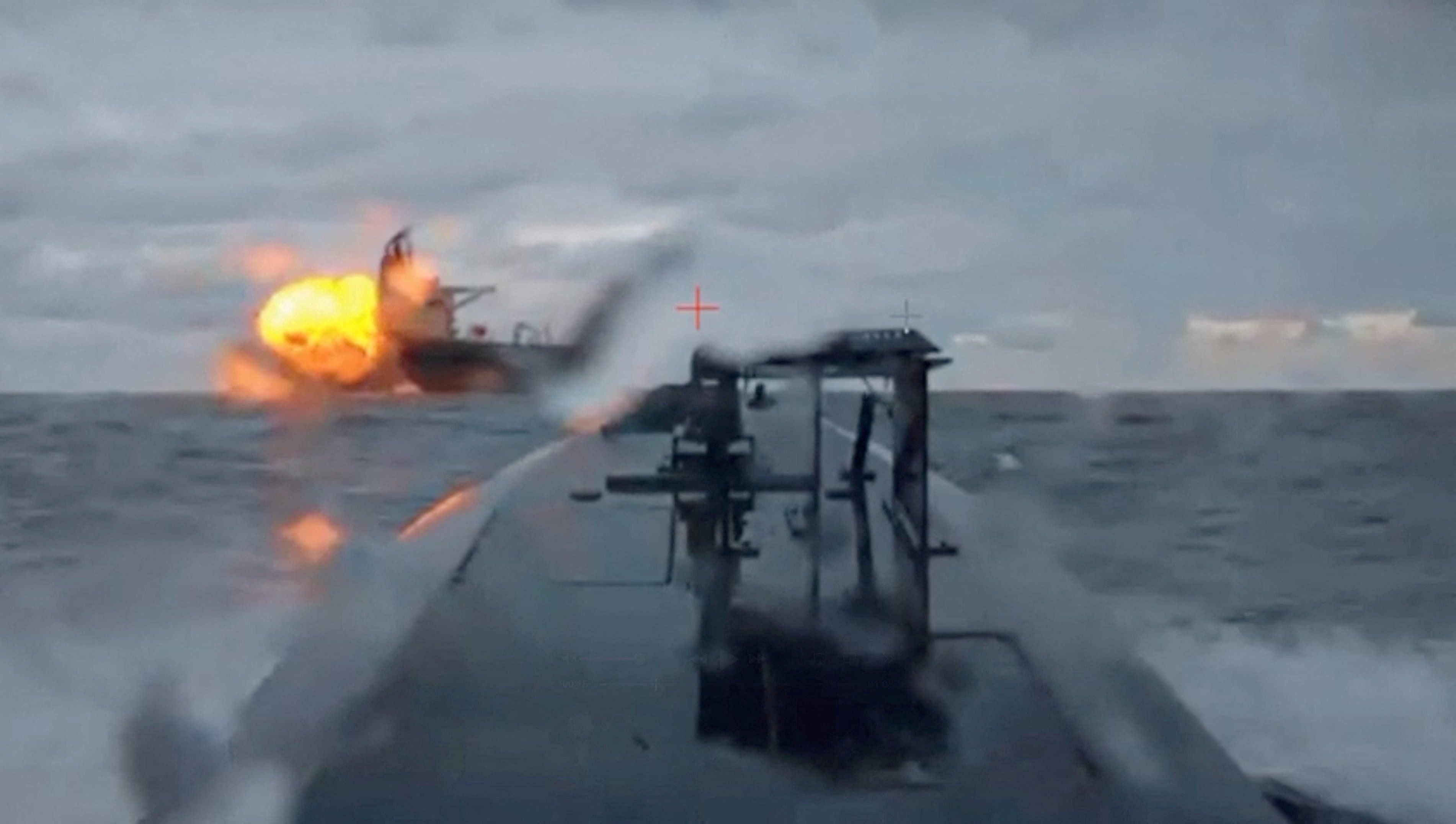
On December 10, 2025, Ukraine hit and disabled "Dashan," a tanker involved in trading Russian oil, as it sailed through Ukraine's exclusive economic zone in the Black Sea to the Russian port of Novorossiysk. You can read more about that here: https://www.reuters.com/world/europe/ukraine-disables-shadow-fleet-vessel-with-sea-drones-black-sea-2025-12-10/. This market will resolve to "Yes" if there is a strike against any tanker in the Black Sea attributed to Ukraine between market creation and th
AI-generated analysis based on market data. Not financial advice.
This prediction market concerns Ukraine's maritime drone campaign against oil tankers in the Black Sea, specifically the likelihood of another strike occurring. The topic centers on Ukraine's use of unmanned surface vessels (USVs), often called sea drones, to target vessels it identifies as part of Russia's "shadow fleet"—tankers used to circumvent international sanctions on Russian oil exports. These attacks represent a significant escalation in Ukraine's asymmetric naval warfare strategy, shifting the conflict's front lines to international waters and directly threatening Russia's critical energy revenue streams. The December 10, 2025, strike on the tanker Dashan, which was disabled while sailing to the Russian port of Novorossiysk, is a recent example of this tactic. People are interested in this topic because it directly impacts global energy markets, tests the limits of maritime law in conflict zones, and signals Ukraine's capacity to project force far beyond its coastline, potentially altering the strategic balance in the Black Sea region. Monitoring these strikes provides insight into the sustainability of Russia's oil trade and the evolving nature of naval combat.
Ukraine's campaign against maritime targets began in earnest in 2022 following Russia's full-scale invasion and its naval blockade of Ukrainian ports. The first major success was the April 2022 sinking of the Russian Black Sea Fleet flagship Moskva using Ukrainian-made Neptune missiles. This demonstrated that Russia's naval dominance was not absolute. By late 2022, Ukraine had shifted to developing and deploying unmanned surface vessels, conducting its first known USV attack on Russian ships at the Sevastopol naval base in October 2022. The strategy evolved from targeting warships to focusing on Russia's economic infrastructure, including the July 2023 strike on the Kerch Bridge connecting Russia to occupied Crimea. The focus on oil tankers intensified in 2024 as Ukraine sought to disrupt the "shadow fleet" of aging tankers that Russia uses to export oil while avoiding Western price caps and sanctions. A precedent for the Dashan strike was set on November 8, 2024, when Ukraine struck the tanker Andromeda Star in the same general area. This established a pattern of targeting vessels transiting to and from Novorossiysk, Russia's primary Black Sea oil terminal.
These strikes have direct economic consequences. Russia relies on oil and gas exports for approximately 30% of its federal budget revenue. Disrupting this trade, even marginally, pressures the Russian economy and complicates its ability to finance the war. The attacks also increase global shipping insurance premiums for the Black Sea region, raising costs for all commercial traffic. Politically, successful strikes demonstrate Ukraine's technological innovation and resilience, potentially influencing Western military aid decisions by showing effective use of asymmetric capabilities. For international law, these operations test the boundaries of permissible military action against civilian-flagged vessels in a contested economic zone. The safety of civilian crews, who are often from third countries like India or the Philippines, remains a serious humanitarian concern, with each attack risking lives and creating diplomatic incidents.
Following the December 10, 2025, strike on the Dashan, the Russian Ministry of Defense stated it repelled a subsequent drone attack on December 12. Maritime traffic monitoring shows some tankers continue to use the Russian-advertised corridor, but at reduced numbers and with apparent delays. Ukraine's Security Service has not officially commented on the Dashan operation but continues to signal its intent to target all vessels supporting Russia's war economy. As of mid-December 2025, the Black Sea remains an active military zone with a high threat level for commercial shipping, particularly vessels associated with Russian oil trades.
A shadow fleet tanker is an older vessel, often poorly insured and operating under opaque ownership, used to transport oil from countries under international sanctions like Iran, Venezuela, or Russia. These tankers frequently engage in ship-to-ship transfers and disable tracking systems to obscure the origin and destination of cargo, helping sellers circumvent price caps and trade restrictions.
Ukraine argues these tankers are not neutral civilian vessels but integral components of Russia's military-economic complex, directly financing its war effort. By disabling them, Ukraine aims to reduce Russian oil export revenue, increase insurance costs, and deter other ships from participating in the trade, applying economic pressure where direct military confrontation is asymmetric.
Ukrainian sea drones are typically unmanned, low-profile boats packed with explosives, remotely controlled via satellite link. They are designed to be difficult to detect by radar. Operators guide them to a target where they detonate on impact. Their low cost, about $250,000 per unit according to Ukrainian estimates, makes them an economical weapon against multi-million dollar warships and tankers.
International law is complex. The UN Convention on the Law of the Sea (UNCLOS) grants coastal states sovereign rights to resources in their EEZ but not full territorial control. Military activities are permitted, but targeting civilian vessels may violate the principle of distinction under the laws of armed conflict if the vessel's use qualifies as a legitimate military objective, a point of legal debate in these cases.
In most documented attacks, including the Dashan strike, crews have been rescued, often by nearby vessels or Russian emergency services. There have been no confirmed reports of crew fatalities from these specific tanker strikes, though the risk remains severe. Crews are typically citizens of neutral countries, and their safety is a major point of concern for international maritime organizations.
Educational content is AI-generated and sourced from Wikipedia. It should not be considered financial advice.
2 markets tracked

No data available
| Market | Platform | Price |
|---|---|---|
![]() | Poly | 39% |
![]() | Poly | 2% |


No related news found
Add this market to your website
<iframe src="https://predictpedia.com/embed/vmf5ss" width="400" height="160" frameborder="0" style="border-radius: 8px; max-width: 100%;" title="Ukraine strikes another tanker in Black Sea by...?"></iframe>