$6.04K
1
1

1 market tracked

No data available
| Market | Platform | Price |
|---|---|---|
![]() | Poly | 32% |
$6.04K
1
1
Trader mode: Actionable analysis for identifying opportunities and edge
This market will resolve to "Yes" if Apple releases a new Apple TV product by March 31, 2026, 11:59 PM ET. Otherwise, this market will resolve to "No". A qualifying product must be named "Apple TV" and be recognized as a successor to the original Apple TV, similar to the relationship between iPhone 14 and iPhone 15. A new Apple TV product released without a number, under a designation other than Apple TV 2 will qualify if it retains the original functions of the Apple TV and expands on them in
Prediction markets currently show a nearly even split on whether Apple will release a new Apple TV model by March 31. The "Yes" shares are trading at about 48¢, which implies traders collectively see roughly a 48% chance. In simpler terms, this is essentially a coin flip. The market is saying there is no clear consensus, with traders almost evenly divided between expecting an announcement and expecting no new hardware before the deadline.
Two main factors explain the split opinion. First, the Apple TV hardware update cycle is historically long and irregular. The current Apple TV 4K model was last updated in late 2022. A gap of over three years by this March would not be unusual for this product line, which sometimes sees updates every 2-4 years. This history makes a release possible, but not urgent.
Second, the product's role has shifted. The Apple TV is now as much a platform for services like Apple TV+ and gaming via Apple Arcade as it is a hardware device. Major new features often come via software updates. Some traders likely believe Apple may prioritize refining its streaming service and content over introducing new hardware with only minor spec improvements. However, others may bet on a strategic hardware refresh to coincide with other spring announcements or to support new entertainment initiatives.
The primary event to watch is Apple's typical spring product announcement period, which often occurs in March. If a new Apple TV is coming by the March 31 deadline, it would almost certainly be unveiled at a spring event or via a press release in March. A lack of any announcement by mid-March would likely cause the "Yes" probability to fall sharply. There are no major industry trade shows like CES that Apple uses for TV launches, so an Apple-specific event or direct website update is the only expected channel.
Prediction markets are generally decent at forecasting product release timelines for major companies like Apple, but they are less precise for niche accessories. The Apple TV is a lower-volume product compared to iPhones or Macs, so there are fewer leaks and less analyst coverage to inform traders. This can make the market more speculative and volatile based on rumors. For a binary question with a clear deadline, markets like this often become more accurate as the date approaches and real-world signals emerge. For now, the coin-flip odds honestly reflect the high uncertainty.
Prediction markets currently price a 48% probability that Apple will release a new Apple TV model by March 31, 2026. This price, trading at essentially even odds, indicates the market sees the event as a coin flip. With only $6,000 in total trading volume, liquidity is thin. This low volume suggests limited trader conviction and makes the current price more susceptible to sharp moves from relatively small bets.
The primary factor suppressing the "Yes" probability is Apple's historical product cadence. The Apple TV 4K received its last hardware update in October 2022. A March 2026 release would mark a roughly three-and-a-half-year gap, which aligns with recent intervals but is not a guaranteed schedule. The market is likely weighing Apple's increased focus on services and its Vision Pro platform against the need to refresh a niche hardware product.
Another critical consideration is the lack of a clear technological imperative. The current Apple TV 4K model, powered by the A15 Bionic chip, already handles 4K HDR content and high-frame-rate gaming capably. Without a major new media format or a significant gaming push that demands more processing power, the business case for a new model is less urgent. Traders are effectively betting on whether Apple views the living room hardware as a priority.
The odds will remain volatile due to the market's low liquidity. Any credible leak from supply chain analysts, like Ming-Chi Kuo, or a mention in Apple's beta software code could cause a rapid price swing toward "Yes." Conversely, if Apple's spring 2025 event passes without an announcement, the "No" position will likely gain strength as the deadline approaches.
The most significant catalyst would be an official announcement from Apple, which typically happens at fall or spring special events. A window for a spring 2026 release would require an announcement by March 2026. Traders should monitor Apple's event schedule in late 2025 and early 2026 for signals. Until then, the 48% probability accurately reflects the high uncertainty stemming from Apple's opaque roadmap for this product category.
AI-generated analysis based on market data. Not financial advice.
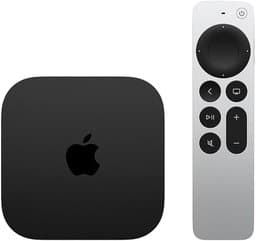
This prediction market topic concerns whether Apple will release a new version of its Apple TV streaming media player by March 31, 2026. The Apple TV is a hardware device that connects to televisions, allowing users to stream content from services like Apple TV+, Netflix, and Disney+, play games from Apple Arcade, and access other apps. The market resolves to 'Yes' if Apple announces and releases a new product named 'Apple TV' that is a clear successor to the current models, similar to the generational progression between iPhone models. A product released without a numerical designation would still qualify if it maintains the core functions of the Apple TV and expands upon them. The current Apple TV 4K, powered by the A15 Bionic chip, was released in October 2022. Speculation about a new model centers on potential hardware upgrades, such as a faster processor, enhanced gaming capabilities, or new features that better integrate with Apple's broader ecosystem of services and smart home initiatives. Interest in this prediction stems from Apple's product release patterns, competitive pressures in the streaming device market from Roku, Amazon, and Google, and the strategic importance of the living room to Apple's services revenue. Analysts and consumers watch for signs of a refresh to gauge Apple's commitment to this hardware category.
Apple first entered the living room with the original Apple TV in 2007. Marketed initially as a hobby project by Steve Jobs, it was a small device for renting movies and TV shows from iTunes. The second-generation model, released in 2010, shifted to a streaming-focused design and introduced the iOS-based tvOS platform, allowing for third-party apps. A major redesign came with the Apple TV 4 in 2015, which added the Siri Remote, an App Store, and support for games. This established the device as a broader entertainment and light gaming platform. The Apple TV 4K debuted in 2017, bringing support for 4K HDR video, and has since seen iterative updates. The first Apple TV 4K (2021) featured the A12 Bionic chip and a redesigned Siri Remote. The second Apple TV 4K (2022) upgraded to the A15 Bionic chip and added support for HDR10+ and Thread networking for smart home connectivity. This historical pattern shows Apple updates the Apple TV hardware approximately every 2-3 years, though the timeline has been irregular compared to annual iPhone updates. The longest gap between releases was nearly four years between the 2017 and 2021 4K models.
The release of a new Apple TV matters for Apple's ecosystem strategy. The device is a physical hub in the home that drives revenue for Apple's high-margin services segment, including Apple TV+ subscriptions, movie rentals, Apple Arcade, and Fitness+. A more powerful or feature-rich model could strengthen Apple's position against dominant streaming device makers like Roku and Amazon Fire TV, which compete aggressively on price. For consumers, a new Apple TV could mean better performance for gaming, improved integration with other Apple devices via Continuity features, or enhanced smart home control through Matter and Thread. For developers, a hardware refresh with a new chipset could enable more sophisticated apps and games on the tvOS platform, potentially expanding its appeal beyond media consumption. The decision to update or not update the Apple TV also signals how Apple prioritizes its non-core hardware categories amid its focus on iPhones, wearables, and services.
As of early 2024, the latest Apple TV hardware is the second-generation Apple TV 4K released in October 2022. In December 2023, Bloomberg's Mark Gurman reported that Apple was developing a new Apple TV model for potential release in the first half of 2024. However, Apple made no announcement at its September 2024 'Wonderlust' event, which focused on the iPhone 15 and Apple Watch. The company continues to update the tvOS software regularly, with tvOS 17 releasing in September 2023. Industry analysts are watching for signs of a new model in Apple's supply chain or regulatory filings, but no concrete evidence has emerged publicly as of late 2024. The prediction market's resolution date of March 31, 2026, provides a long timeline that encompasses several potential Apple event cycles.
The latest model is the Apple TV 4K (2022), available in two storage configurations: 64GB and 128GB. It is powered by the A15 Bionic chip and supports 4K HDR video with Dolby Vision, HDR10+, and Dolby Atmos audio.
Apple does not have a fixed annual release schedule for the Apple TV. Historically, updates have occurred every 2 to 4 years. The previous updates were in 2022, 2021, 2017, and 2015.
Potential features for a new Apple TV include a more powerful processor (like an M1 or A17 chip), a redesigned Siri Remote, enhanced gaming capabilities to rival consoles, a camera for FaceTime, or more advanced smart home hub functionality.
Yes, the Apple TV hardware device functions independently. You can use it to access many other streaming apps like Netflix, Hulu, and YouTube. An Apple TV+ subscription is only required to watch Apple's original content on the service.
Apple TV is a physical hardware box you connect to your television. Apple TV+ is a subscription streaming service that offers original movies and shows. The Apple TV device can be used to access the Apple TV+ service, as well as many others.
Educational content is AI-generated and sourced from Wikipedia. It should not be considered financial advice.

No related news found
Add this market to your website
<iframe src="https://predictpedia.com/embed/w47VUJ" width="400" height="160" frameborder="0" style="border-radius: 8px; max-width: 100%;" title="Will Apple release a new version of the Apple TV by March 31?"></iframe>