$849.05
1
1

1 market tracked

No data available
| Market | Platform | Price |
|---|---|---|
![]() | Poly | 10% |
Trader mode: Actionable analysis for identifying opportunities and edge
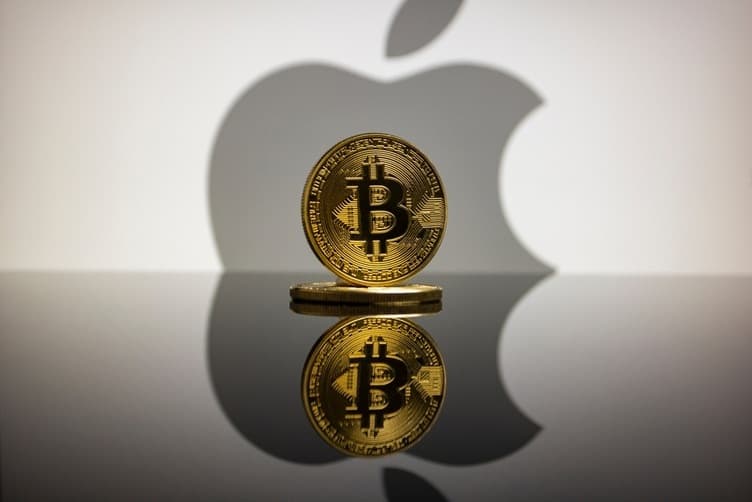
This market will resolve to "Yes" if, at any point between November 11, 2025 and December 31, 2026 at 11:59 PM ET, the market capitalization of Bitcoin (BTC) exceeds the market capitalization of the largest publicly traded company in the world. Otherwise, the market will resolve to "No." Market cap values for both BTC and companies will be taken directly from Google Finance. If Google Finance is unavailable, a consensus of credible financial data providers will be used.
Prediction markets currently assign a low probability to Bitcoin surpassing the market capitalization of the world's largest company before 2027. On Polymarket, the "Yes" share trades at approximately 10 cents, implying just a 10% chance. This pricing suggests the consensus view is that such an event is a speculative long shot within this timeframe, though not impossible.
The low probability is anchored by the immense market cap of current corporate leaders. As of early 2025, companies like Microsoft and Apple maintain valuations exceeding $3 trillion. Bitcoin's market cap, while substantial at over $1 trillion, would require a roughly 3x appreciation to challenge this threshold, a monumental move in under two years. Historically, Bitcoin has experienced such surges, but typically from a lower base and during periods of intense retail and institutional mania that are difficult to predict.
Furthermore, the target is a moving one. The valuation of the leading company is not static. It could grow significantly through earnings and innovation, especially in the tech sector, raising the bar Bitcoin must clear. The market is effectively pricing in the combined challenge of Bitcoin's extreme volatility and the robust, growth-oriented fundamentals of mega-cap equities.
A dramatic shift in odds would require a powerful, sustained catalyst for Bitcoin alongside stagnation or decline in top equities. The primary bullish catalyst would be the accelerated adoption of Bitcoin as a institutional reserve asset or a global safe-haven, driven by macroeconomic instability, currency devaluation, or transformative regulatory clarity, particularly around U.S. spot ETFs and their inflows. A severe bear market or structural decline in the dominant tech companies could also lower the hurdle.
Key dates to watch include Federal Reserve policy announcements, which influence capital flows, and quarterly earnings reports from companies like Apple and Microsoft. A convergence of Bitcoin's next halving cycle-driven momentum in 2025 and a simultaneous downturn in equity markets could see the "Yes" probability rise sharply, but the market currently views this scenario as unlikely.
AI-generated analysis based on market data. Not financial advice.
$849.05
1
1
This prediction market addresses whether Bitcoin's market capitalization will surpass that of the world's largest publicly traded company at any point between November 11, 2025, and December 31, 2026. Market capitalization, or market cap, represents the total value of all outstanding shares of a company or, for Bitcoin, the total value of all coins in circulation, calculated as price multiplied by circulating supply. The resolution depends on data from Google Finance, which tracks real-time valuations of major assets. The question sits at the intersection of cryptocurrency adoption and traditional corporate valuation, testing the thesis that a decentralized digital asset could rival the market value of established global enterprises like Apple, Microsoft, or Saudi Aramco. Interest in this topic has surged as Bitcoin's market cap has grown from virtually zero in 2009 to over $1 trillion at various peaks, challenging the dominance of legacy financial institutions. Recent developments include increased institutional investment through spot Bitcoin ETFs approved in the United States in January 2024, and growing recognition of Bitcoin as a potential digital gold and inflation hedge. The timeframe of late 2025 to 2026 is significant as it follows the next Bitcoin halving event in April 2024, which historically has preceded major bull markets. People are interested because the outcome would signal a profound shift in global asset hierarchy, potentially validating cryptocurrency as a mainstream store of value comparable to the world's most valuable businesses.
Bitcoin was created in 2009 by the pseudonymous Satoshi Nakamoto with virtually no market value. Its first notable price milestone was reaching parity with the U.S. dollar in 2011. The concept of comparing Bitcoin's market cap to major companies began gaining traction during the 2017 bull run, when its total valuation briefly surpassed that of legacy financial firms like Goldman Sachs, hitting approximately $320 billion. The 2020-2021 cryptocurrency bull market marked a more serious inflection point. In early 2021, Bitcoin's market capitalization soared past $1 trillion for the first time, exceeding the market caps of corporate giants like Tesla and Visa. By November 2021, at its all-time high near $69,000, Bitcoin's market cap approached $1.3 trillion, rivaling the combined value of Meta (Facebook) and JPMorgan Chase at the time. However, it remained far below the then-leader Apple, which had a market cap exceeding $2.5 trillion. The subsequent crypto winter of 2022 saw Bitcoin's value drop by over 75%, dramatically widening the gap. Historically, Bitcoin has experienced cyclical bull markets approximately every four years, closely tied to its halving events, which reduce the rate of new coin supply. The 2024 halving sets the stage for the 2025-2026 period covered by this prediction, following the historical pattern of post-halving appreciation.
The outcome of this prediction carries significant implications for the global financial landscape. A 'Yes' resolution would represent a seismic shift, demonstrating that a decentralized, non-sovereign, digital asset created just over 15 years prior could command greater market confidence than the world's most profitable and entrenched multinational corporations. This would challenge traditional notions of corporate value, which is based on revenue, profits, and physical assets, versus Bitcoin's value, which is derived from scarcity, network security, and its perceived role as a hedge against monetary inflation. It would likely accelerate the institutionalization of cryptocurrency, forcing pension funds, endowments, and sovereign wealth funds to reconsider asset allocation models. Conversely, a 'No' outcome would reinforce the dominance of traditional equity markets and the innovative power of large technology and energy companies. It would suggest that, for the time being, trust in productive enterprises with clear cash flows outweighs trust in a purely monetary asset. The result affects investors, corporations considering treasury allocation, policymakers crafting digital asset regulations, and the broader public's perception of the future of money and value storage.
As of mid-2024, Bitcoin's market capitalization fluctuates between $1.1 and $1.4 trillion following the approval of U.S. spot ETFs and the April 2024 halving. The largest company, Apple, maintains a market cap around $3.2 trillion. The gap between the two is approximately $2 trillion. The new ETF vehicles have created consistent buying pressure from traditional finance, but macroeconomic factors like interest rates and inflation continue to create volatility. The market is in a consolidation phase, observing the early effects of the reduced block subsidy from the halving. All eyes are on whether the historical pattern of a post-halving bull market will materialize over the next 18-24 months, driving the price increases necessary to close the multi-trillion dollar valuation gap.
Bitcoin's market cap is calculated by multiplying the current price of one Bitcoin by the total number of coins in circulation. The circulating supply is publicly verifiable on the blockchain and is approximately 19.7 million as of 2024, with a maximum cap of 21 million.
As of mid-2024, Apple Inc. (AAPL) is often the world's largest publicly traded company by market capitalization, with a value around $3.2 trillion. Other frequent contenders include Microsoft (MSFT) and Saudi Arabian Oil Company (Saudi Aramco). The leader can change based on stock performance.
Yes. During bull markets, Bitcoin's market cap has exceeded that of many Fortune 500 companies. For example, in 2021, it surpassed the market cap of Meta (Facebook) and came close to surpassing the combined value of JPMorgan Chase and Bank of America. It has not yet surpassed the absolute largest companies like Apple or Microsoft.
A Bitcoin halving is a pre-programmed event that occurs approximately every four years, where the reward miners receive for validating new blocks is cut in half. This reduces the rate of new Bitcoin supply. The most recent halving was in April 2024, reducing the block reward from 6.25 to 3.125 BTC.
Educational content is AI-generated and sourced from Wikipedia. It should not be considered financial advice.
Share your predictions and analysis with other traders. Coming soon!

No related news found
Add this market to your website
<iframe src="https://predictpedia.com/embed/wM1SGf" width="400" height="160" frameborder="0" style="border-radius: 8px; max-width: 100%;" title="Bitcoin more valuable than any company before 2027?"></iframe>