$115.84K
1
1

1 market tracked

No data available
| Market | Platform | Price |
|---|---|---|
![]() | Poly | 14% |
$115.84K
1
1
Trader mode: Actionable analysis for identifying opportunities and edge
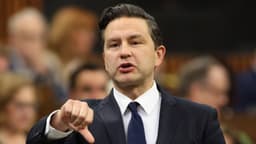
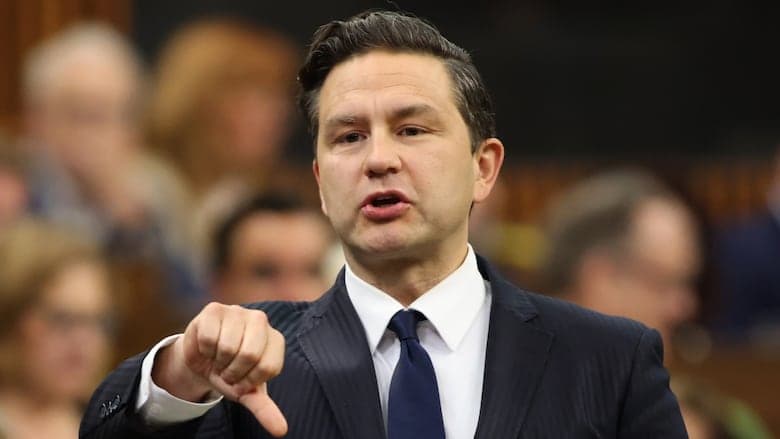
This market will resolve to “Yes” if Pierre Poilievre ceases to be Leader of the Conservative Party of Canada for any period of time between market creation and the specified date (ET). Otherwise, this market will resolve to “No”. An announcement of Pierre Poilievre's resignation/removal before this market's end date will immediately resolve this market to "Yes", regardless of when the announced resignation/removal goes into effect. The resolution source for this market will be official inform
AI-generated analysis based on market data. Not financial advice.
This prediction market addresses whether Pierre Poilievre will remain Leader of the Conservative Party of Canada through December 31, 2026. The market resolves to 'Yes' if he ceases to hold the leadership position for any period before that date, including through resignation, removal, or any other departure. An official announcement of his resignation or removal would trigger an immediate 'Yes' resolution, even if the effective date is later. The outcome depends on internal party dynamics, electoral performance, and Poilievre's political standing over the next few years. Pierre Poilievre became Conservative leader in September 2022, winning the leadership race on the first ballot with 68% of the vote. He has since positioned himself as the main opposition to Prime Minister Justin Trudeau's Liberal government. Speculation about his tenure typically centers on potential election results, particularly the next federal election expected by October 2025. If the Conservatives fail to win that election or perform below expectations, internal pressure for a leadership review could emerge. Historical precedent shows Canadian party leaders often face challenges after electoral defeats. The 2023 Conservative policy convention in Quebec City demonstrated strong support for Poilievre, but future conventions could become flashpoints for dissent. The party constitution requires a leadership review after each election, creating a formal mechanism for potential change. Interest in this market comes from political observers, party members, and those tracking Canadian governance, as the Conservative leadership directly influences national policy direction and the potential for a change in government.
Conservative Party leadership transitions follow established patterns influenced by electoral outcomes and internal party rules. The party's 2003 merger between the Progressive Conservatives and Canadian Alliance created a structure where leaders face formal reviews. After the 2004 election loss, Stephen Harper survived a leadership review with 84% support, then won the 2006 election. After the 2015 election defeat, Harper resigned immediately, triggering a leadership race won by Andrew Scheer in 2017. Scheer himself resigned in 2020 after failing to defeat Justin Trudeau's Liberals in the 2019 election, despite winning the popular vote. That resignation followed months of internal criticism about his campaign performance and personal controversies. Erin O'Toole succeeded Scheer in 2020, then was removed by caucus in February 2022 after losing the 2021 election and facing rebellion from the party's social conservative wing. This removal marked the first time a Conservative leader was ousted by caucus under the Reform Act rules, which allow 20% of caucus to trigger a leadership review. Poilievre's 2022 leadership victory came with a mandate to unify the party's factions. The historical pattern shows Conservative leaders typically depart after losing elections, either immediately or after a subsequent review process. The exception was Harper after 2004, suggesting leaders can survive one loss if they maintain strong internal support and demonstrate future potential.
The Conservative leadership directly affects Canada's political direction and governance. As the official opposition and likely alternative government, the party's stability influences national policy debates on the economy, healthcare, and foreign relations. A leadership change before 2026 could signal internal division, potentially weakening opposition effectiveness during a period of minority government. For Conservative Party members and donors, leadership stability affects fundraising, candidate recruitment, and campaign readiness for the next election. The business community monitors Conservative leadership for signals about potential future economic policies, particularly regarding taxation, regulation, and energy development. A change would trigger a leadership race costing millions of dollars and consuming party resources for months, distracting from electoral preparation. For provincial conservative governments across Canada, a federal leadership change could alter intergovernmental dynamics and coordination on shared priorities. The outcome also matters for Canada's international relationships, as foreign governments assess potential future partners in Ottawa.
As of early 2024, Pierre Poilievre remains Conservative leader with no active challenge to his position. The party leads in national polling averages, with Nanos Research showing Conservatives at 38% support compared to 26% for Liberals in December 2023. Poilievre has been focusing his parliamentary strategy on cost-of-living issues, particularly inflation and housing affordability. The Conservative caucus appears publicly united behind his leadership, with no MPs openly questioning his direction. The next Conservative policy convention is scheduled for 2025, which will provide the next formal opportunity for membership sentiment to be expressed. The party is preparing for a possible 2024 or 2025 federal election, with Poilievre regularly campaigning in target ridings across the country.
If Conservatives lose the next federal election, party rules require a leadership review at the first national convention following the election. Delegates would vote on whether to hold a new leadership race. Historically, Conservative leaders who lose elections often resign either immediately or after receiving insufficient support in such a review.
Yes, under the Reform Act rules adopted by the Conservative caucus, MPs can initiate a leadership review if 20% of caucus members sign a petition. If a majority of MPs then vote to remove the leader, the position becomes vacant. This process was used to remove Erin O'Toole in 2022.
The next mandatory leadership review will occur at the first national party convention after the next federal election. The Conservative constitution requires such a review after each general election. The party could also hold an earlier review if triggered by caucus under the Reform Act provisions.
Conservative leaders serve indefinitely, subject to periodic reviews. There is no fixed term limit. Poilievre's tenure continues unless he resigns, is removed by caucus, or loses a leadership review vote at a party convention.
Educational content is AI-generated and sourced from Wikipedia. It should not be considered financial advice.
No related news found
Add this market to your website
<iframe src="https://predictpedia.com/embed/xnIvjt" width="400" height="160" frameborder="0" style="border-radius: 8px; max-width: 100%;" title="Poilievre out as leader of Conservatives by December 31, 2026?"></iframe>