$1.97K
1
4

$1.97K
1
4
Trader mode: Actionable analysis for identifying opportunities and edge
This market will resolve according to the winner of the Democratic Primary for Governor of Rhode Island, scheduled to take place on September 8, 2026. Resolution will be based on the overall winner of the primary, including any potential second round or run-off. If no 2026 Rhode Island Gubernatorial Democratic Primary takes place, this market will resolve to “Other.” The resolution source for this market will be the first official announcement of the results from the Rhode Island Democratic Pa
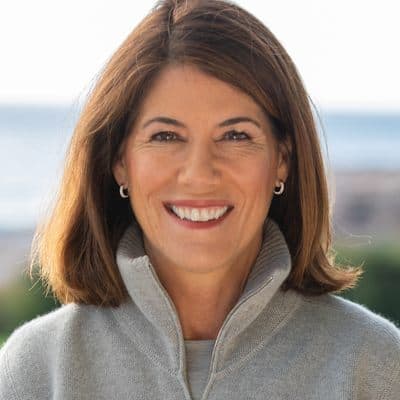
Prediction markets currently give Helena Foulkes roughly a 4 in 5 chance of winning the 2026 Rhode Island Democratic gubernatorial primary. With an 82% probability, traders collectively see her as the clear favorite. This level of confidence suggests they view her nomination as the most probable outcome, though not a complete certainty. The other candidates are given a combined chance of about 1 in 5.
Two main factors explain these odds. First, Helena Foulkes is a well-known figure in Rhode Island politics. She is the former President of CVS Health's pharmacy business and came in a strong second in the 2022 Democratic primary for governor, losing to the now-incumbent Dan McKee by only a few thousand votes. That established her as a serious statewide contender with high name recognition.
Second, the political environment may favor her. Incumbent Governor Dan McKee, who narrowly beat Foulkes last time, is term-limited and cannot run again in 2026. With no sitting governor in the race, Foulkes is seen as the candidate with the most momentum and established support from the last cycle. No other Democrat has yet emerged with a similar profile or fundraising base, making her the default frontrunner in traders' eyes.
The primary itself on September 8, 2026, is the final event. More immediately, the timeline for candidate declarations will be important. Watch for official filings in early 2026. If a prominent Rhode Island figure, such as General Treasurer James Diossa or a member of the state's congressional delegation, enters the race, it could shift the odds. Major fundraising reports in July 2026 will also signal which candidates have the resources to compete seriously.
Prediction markets have a mixed but generally decent record on primary elections, especially when one candidate has a clear advantage in name recognition and funding like Foulkes does. However, this is a niche market with only a few thousand dollars wagered so far. That low trading volume means the current odds could be more volatile and less informed than prices in heavily traded markets. The prediction is still very early, nearly two years before the vote, so it should be seen as a snapshot of current sentiment rather than a firm forecast.
Prediction markets currently price Helena Foulkes as the overwhelming favorite to win the 2026 Rhode Island Democratic gubernatorial primary. On Polymarket, the contract "Will Helena Foulkes win..." trades at 82 cents, implying an 82% probability. This price indicates the market views her nomination as very likely, though not a foregone conclusion. The other 18% is split between potential challengers and an "Other" outcome. Total trading volume is thin at approximately $2,000, which is typical for a state-level political event nearly two years away.
Foulkes' dominant market position stems from her strong 2022 primary performance and the state's political dynamics. In the last open gubernatorial primary, Foulkes, a former CVS executive, finished a close second to now-Governor Dan McKee, capturing 33% of the vote in a crowded field. McKee is term-limited in 2026, creating an open race where Foulkes is the immediate front-runner with established name recognition, a proven fundraising network, and a base of support. The market sees no other Democrat with a comparable profile. Potential rivals like Secretary of State Gregg Amore or General Treasurer James Diossa have not shown clear intent to run, leaving Foulkes without a declared major opponent.
The primary is not until September 8, 2026, leaving significant time for the odds to shift. A major factor would be a credible, well-funded Democrat entering the race. A high-profile candidate like Congressman Seth Magaziner, though currently focused on his U.S. House role, could immediately reset the market if he declared. Conversely, the 82% price for Foulkes could solidify if she secures early endorsements from key labor unions or builds a substantial fundraising lead by mid-2025. The thin liquidity means new information or a candidate announcement will likely cause sharp price movements. The market currently discounts the risk of an "Other" resolution, betting the primary will occur as scheduled.
AI-generated analysis based on market data. Not financial advice.
This prediction market focuses on the outcome of the Democratic primary for Governor of Rhode Island, scheduled for September 8, 2026. The market will resolve based on the officially declared winner of that primary election. If no primary occurs, the market resolves to 'Other.' This contest will determine which Democratic candidate advances to the November 2026 general election to compete for the state's highest office. Rhode Island has a history of competitive Democratic primaries for governor, especially in open-seat races when incumbents are not seeking re-election. The 2026 primary is attracting attention because it could mark a significant transition in state leadership. Current Governor Dan McKee, a Democrat first elected in 2022, will be eligible to seek a second full term. His potential candidacy, or the prospect of an open race if he retires, is shaping early political calculations. Interest in this market stems from its function as a collective forecasting tool for a consequential state election. Rhode Island is a solidly Democratic state in presidential politics, making the Democratic primary the decisive contest for governor in most election cycles. The winner will heavily influence state policy on issues like education funding, infrastructure, and economic development for the following four years.
Rhode Island's gubernatorial elections have been dominated by Democrats since 1992, with only one Republican, Donald Carcieri, winning in that period (2002 and 2006). This makes the Democratic primary the critical contest for determining the state's leadership. The 2022 Democratic primary set a modern precedent for competitiveness. Incumbent Governor Dan McKee, who ascended from Lieutenant Governor after Gina Raimondo's resignation to become U.S. Secretary of Commerce, faced strong challenges from Secretary of State Nellie Gorbea and former CVS Health executive Helena Foulkes. McKee won with a plurality of 32.8%, Gorbea received 30.2%, and Foulkes took 27.5%. This was the closest three-way Democratic primary for governor in decades. Prior to that, the 2014 Democratic primary featured a crowded field won by then-State Treasurer Gina Raimondo with 42.1% of the vote, defeating Providence Mayor Angel Taveras (29.2%) and Clay Pell (27.7%). The 2018 primary was less competitive, with Raimondo winning 57% against a single challenger. Historically, open-seat primaries without an incumbent, like those in 2010 and 2014, tend to be more contested and unpredictable than primaries where a sitting governor seeks renomination.
The winner of the Democratic primary will almost certainly become Rhode Island's next governor, given the state's strong Democratic lean in federal and state elections. This person will control a state budget exceeding $14 billion and set policy priorities for 1.1 million residents. The election's outcome directly affects state-level decisions on taxation, education funding formulas, infrastructure projects like the Washington Bridge reconstruction, and Rhode Island's approach to climate change and coastal resilience. Beyond policy, the primary serves as a battleground for the state's political factions. It often pits the more progressive wing of the party, centered in Providence and other urban areas, against more moderate Democrats from suburban and rural communities. The campaign also tests the influence of organized labor, particularly teachers' unions and public sector employees, which are powerful forces in Rhode Island politics. A competitive primary can drain financial resources and create intra-party divisions that affect Democratic performance in down-ballot races for the General Assembly and congressional seats.
As of early 2025, no major Democratic candidate has formally declared a campaign for the 2026 gubernatorial primary. Governor Dan McKee has not announced whether he will seek a second full term, though he has continued fundraising through his campaign committee. Potential candidates like Lieutenant Governor Sabina Matos, Providence Mayor Brett Smiley, and Congressman Seth Magaziner are widely speculated to be considering runs, particularly if McKee opts against re-election. The political environment remains in a preliminary 'wait-and-see' phase, with behind-the-scenes fundraising and coalition-building likely underway. The Rhode Island Board of Elections has set the primary date for September 8, 2026, following the state's legal schedule.
The primary is scheduled for September 8, 2026. This date is set by state law, which schedules primaries on the second Tuesday in September of election years.
Yes, Governor McKee is eligible to run for a second full term. He was elected to his first full term in 2022 after serving the remainder of Gina Raimondo's term. Rhode Island's term limits restrict governors to two consecutive terms.
The winner is the candidate who receives the most votes, a plurality. Rhode Island does not use a runoff system, so a candidate can win with less than 50% of the vote, as happened in 2022.
If only one candidate qualifies for the ballot, no primary would be held. In that scenario, this prediction market would resolve to 'Other' according to its specified conditions.
The last Republican governor was Donald Carcieri, who served from 2003 to 2011. Since his tenure, all governors have been Democrats: Lincoln Chafee (initially elected as an independent), Gina Raimondo, and Dan McKee.
Educational content is AI-generated and sourced from Wikipedia. It should not be considered financial advice.
4 markets tracked

No data available
| Market | Platform | Price |
|---|---|---|
![]() | Poly | 82% |
![]() | Poly | 13% |
![]() | Poly | 4% |
![]() | Poly | 2% |


No related news found
Add this market to your website
<iframe src="https://predictpedia.com/embed/xxD0O7" width="400" height="160" frameborder="0" style="border-radius: 8px; max-width: 100%;" title="Rhode Island Governor Democratic Primary Winner"></iframe>