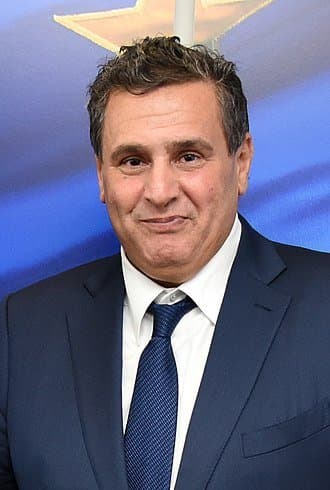
Aziz Akhannouch out as Morocco Prime Minister by December 31, 2026?
$173.25K
1
1
Aziz Akhannouch out as Morocco Prime Minister by December 31, 2026?
$173.25K
1
1
AI Analysis
Trader mode: Actionable analysis for identifying opportunities and edge
About This Event
This market will resolve to “Yes” if Aziz Akhannouch ceases to be Prime Minister of Morocco for any period of time between market creation and the specified date (ET). Otherwise, this market will resolve to “No”. An announcement of Aziz Akhannouch's resignation/removal before this market's end date will immediately resolve this market to "Yes", regardless of when the announced resignation/removal goes into effect. If the specified individual is detained, effectively removed from the specified
This saved analysis is awaiting a background update. Its prices and claims may be outdated; compare them with the dated market data above.
Current Market Outlook
Polymarket is pricing Aziz Akhannouch's departure as Morocco's Prime Minister by December 31, 2026 at 83%. That is a high confidence bet. The market sees his removal as more likely than not, but the 17% "No" side still represents a real chance he holds on. With $166K in volume and 157 days until resolution, this is a moderately liquid market with room to move.
Key Factors Driving the Odds
Akhannouch has been Prime Minister since 2021, leading a coalition government dominated by his National Rally of Independents party. His approval ratings have tanked. Morocco faces a severe drought, water shortages, and inflation that hit 8.3% in 2023. The government's response has been criticized as slow and inadequate.
The 83% probability reflects two specific dynamics. First, King Mohammed VI holds ultimate authority in Morocco. The monarch can dismiss the Prime Minister at will. Second, the 2026 parliamentary elections are scheduled for September 2026. Even if Akhannouch survives until then, his party is expected to lose seats. A new government would almost certainly replace him.
The market also prices in the possibility of an early exit. In 2023, Akhannouch's government survived a no-confidence motion by only 10 votes. Another such vote before the election could force him out.
What Could Change These Odds
The main risk to the 83% probability is Akhannouch clinging to power until the election and then forming a new coalition. His RNI party still has deep pockets and patronage networks. If the water crisis eases with good rainfall, his position could stabilize.
Two specific catalysts: the 2026 budget vote in October 2025, and the run-up to the September 2026 elections. If Akhannouch survives both, the market should drop toward 60-70%. If a corruption scandal or royal decree forces him out earlier, it resolves immediately.
AI-generated analysis based on market data. Not financial advice.
Saved Jul 27, 2026 UTCThis saved content is awaiting a background update. It may contain outdated claims; use the dated market data and provider rules for the latest available information.
Overview
This prediction market concerns the political future of Aziz Akhannouch, who has served as Prime Minister of Morocco since October 2021. The market asks whether he will leave office, for any reason, before the end of 2026. Akhannouch leads a coalition government dominated by his National Rally of Independents (RNI) party, which won the most seats in the 2021 parliamentary elections. His tenure has been marked by economic challenges, including high inflation, drought, and social unrest, which have tested his government's popularity and stability. The question of his survival is tied to Morocco's constitutional framework, where the king retains significant powers, including the ability to dismiss the prime minister. King Mohammed VI has not hesitated to replace prime ministers in the past when political or economic conditions warranted. Akhannouch, a billionaire businessman with holdings in petroleum, agriculture, and telecommunications, faced criticism for his handling of soaring food and energy prices after Russia's invasion of Ukraine. Protests in 2022 and 2023, particularly in the northern Rif region and among teachers and healthcare workers, highlighted public discontent. The prime minister's response included subsidies and price caps, but inflation remained above 6% in 2023. Political analysts note that Morocco's next parliamentary elections are scheduled for 2026, but early elections or a cabinet reshuffle could remove Akhannouch sooner. The king's annual Throne Day speech in July 2024 did not explicitly endorse the government, fueling speculation about Akhannouch's standing. The market attracts interest from those following Moroccan politics, North African stability, and the dynamics of monarchical systems with elected governments.
Historical Context
Morocco has a history of prime ministers being replaced before the end of their terms. In 2017, King Mohammed VI dismissed Prime Minister Abdelilah Benkirane of the Justice and Development Party (PJD) after five years, citing slow government formation and policy disagreements. Benkirane had won the 2016 elections but faced royal displeasure over coalition negotiations. More recently, in 2021, the PJD lost heavily in parliamentary elections, allowing the RNI to form a government. The 2011 constitution, adopted after Arab Spring protests, gave the prime minister more powers but the king retained control over security, religion, and strategic policy. Akhannouch's predecessor, Saadeddine Othmani, served from 2017 to 2021 and was also replaced after the king expressed dissatisfaction with economic performance. Morocco's political system combines elected institutions with a powerful monarchy. No prime minister has ever completed a full five-year term since the 2011 constitution, though the first post-2011 prime minister, Abdelilah Benkirane, served from 2011 to 2017. The king's ability to dissolve parliament and call early elections is a key factor. The next scheduled elections are in 2026, but early elections could be triggered if the government loses a confidence vote or if the king decides to dissolve parliament. Economic crises have historically been a trigger for government changes. The 2020-2021 COVID-19 pandemic and the 2022 drought led to public discontent. Akhannouch's government implemented emergency measures, but inflation and unemployment remained high. Protests in 2023 over water shortages and high prices echoed the 2016-2017 Hirak Rif protests, which had political consequences.
Why It Matters
Akhannouch's departure would signal a major shift in Moroccan politics. It could lead to early elections, altering the balance of power among RNI, PJD, and other parties. The RNI's coalition partners, including the Authenticity and Modernity Party (PAM) and the Istiqlal Party, might push for a new leader or demand concessions. The king's choice of a replacement would indicate his priorities, whether continuity or reform. Economically, Akhannouch is seen as pro-business, and his removal could unsettle investors. Morocco's sovereign credit rating from Moody's and Fitch could be affected if political uncertainty rises. The country is a major recipient of foreign investment, especially in renewable energy and manufacturing, and a change in government could delay projects. Socially, Akhannouch's departure might be welcomed by protesters who blame him for rising living costs. However, it could also embolden opposition groups, potentially leading to instability. Regionally, Morocco's stability is important for North Africa and Europe. The country is a key partner in counterterrorism, migration control, and trade. A political crisis could affect these relationships. The market outcome matters to anyone monitoring monarchical systems, democratic transitions, or the Middle East and North Africa region. It also affects the value of Moroccan stocks, bonds, and currency.
Frequently Asked Questions
Can the king of Morocco fire the prime minister?
Yes, under Article 47 of the 2011 constitution, the king appoints and dismisses the prime minister. The king has used this power before, dismissing Abdelilah Benkirane in 2017 and Saadeddine Othmani in 2021.
What would cause Aziz Akhannouch to leave office early?
Possible triggers include royal dismissal, a loss of parliamentary confidence, early elections called by the king, or a personal resignation due to scandal or health. Economic crisis or major protests could prompt any of these.
When are the next Moroccan parliamentary elections?
The next elections are scheduled for 2026. However, the king can dissolve parliament early, triggering snap elections. This happened in 2021 when the king dissolved parliament in April, leading to elections in September.
Is Aziz Akhannouch popular in Morocco?
Polls show low approval ratings, partly due to inflation and unemployment. His wealth and business ties have made him a target of criticism. However, the RNI party remains strong due to its patronage networks and coalition structure.
AI-written background. References identify the evidence used; Wikipedia links under Learn More are additional reading. Prices and provider rules are dated snapshots. This is not financial advice.
Market Insights
Price gaps of 2 pp+
0
Saved price pairs
0
No exact saved pairs with both binary Yes prices are available.
Price differences do not establish arbitrage. Check each pair's review, current order prices, fees and settlement rules.