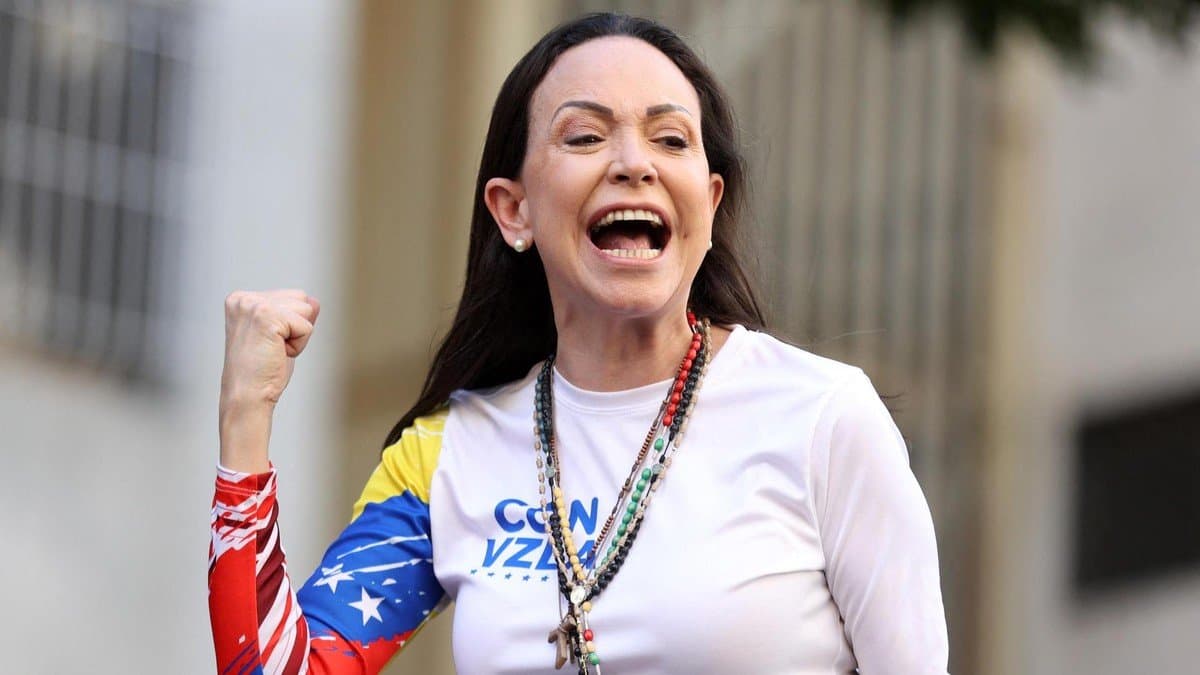
Will Trump endorse María Corina Machado for Venezuela president in 2026?
$115.80K
1
1
Will Trump endorse María Corina Machado for Venezuela president in 2026?
$115.80K
1
1
AI Analysis
Trader mode: Actionable analysis for identifying opportunities and edge
About This Event
This market will resolve to "Yes" if Donald Trump publicly endorses or suggests María Corina Machado as Venezuelan state leader or president by December 31, 2026, 11:59 PM ET. Otherwise, this market will resolve to "No". If Donald Trump announces that he would prefer or endorses another individual, this market will immediately resolve to "No". The resolution source for this market will be official information from Donald Trump or one of his representatives, or a consensus of credible reporting
This saved analysis is awaiting a background update. Its prices and claims may be outdated; compare them with the dated market data above.
Current Market Outlook
Polymarket traders give this only an 18% chance, meaning the market sees a Trump endorsement of Machado as possible but unlikely. With just $86K in volume across one market, liquidity is thin enough that a single large bet could move the price. The market resolves December 31, 2026, giving roughly five months for the scenario to play out.
Key Factors Driving the Odds
Trump and Machado have a complicated relationship. Trump was president when Machado was first barred from running in Venezuela in 2018, and his administration imposed heavy sanctions on the Maduro regime. But Trump has also praised Nicolás Maduro directly, calling him "a strong leader" in 2024 and suggesting he might reduce sanctions. Machado represents the opposition that Trump's own State Department backed, yet Trump has shown willingness to break with establishment foreign policy.
The 18% price reflects real uncertainty. Trump has not endorsed any Venezuelan candidate since leaving office. His focus has been on domestic issues and Ukraine. Venezuela is not a priority for him. The market is pricing a low probability because there is no evidence Trump is planning any Venezuela-focused endorsement, and his previous comments about Maduro suggest he might prefer dealmaking with the regime over backing opposition figures.
What Could Change These Odds
The biggest catalyst would be Trump personally mentioning Machado. A single Truth Social post could send this market to 70% or higher. The July 2026 Venezuelan presidential election is the natural timing for any endorsement. If Trump remains silent through mid-2026, the odds should fall toward zero.
The risk to the current low price is that Trump's foreign policy instincts are unpredictable. He backed Juan Guaidó in 2019, then abandoned him. He could just as easily embrace Machado if it serves his narrative of opposing socialist governments. But the market is betting he won't bother.
Cross-Platform Analysis
Trading only on Polymarket with no Kalshi equivalent. The 18% price with $86K volume is a low-conviction signal. Anyone seriously researching this should treat it as a speculative market, not a reliable forecast.
AI-generated analysis based on market data. Not financial advice.
Saved Jul 29, 2026 UTCThis saved content is awaiting a background update. It may contain outdated claims; use the dated market data and provider rules for the latest available information.
Overview
This prediction market asks whether former U.S. President Donald Trump will publicly endorse or suggest María Corina Machado as Venezuela's president by December 31, 2026. María Corina Machado is a Venezuelan opposition leader who won the opposition primary in October 2023 with over 92% of the vote, positioning herself as the main challenger to Nicolás Maduro's government. The market resolves to 'Yes' if Trump explicitly endorses her or suggests her as the state leader, and resolves to 'No' if he endorses another individual or makes no such statement. The resolution relies on official statements from Trump or his representatives, or a consensus of credible reporting. Interest in this topic stems from Trump's history of engaging with Venezuelan affairs, including his administration's sanctions on Maduro's government and his recognition of opposition figure Juan Guaidó as interim president in 2019. Machado, however, has been barred from holding public office by the Maduro-controlled Supreme Court, a decision widely criticized internationally. The 2024 U.S. presidential election could influence this dynamic, as Trump, if elected, might reshape U.S. policy toward Venezuela. The market also reflects broader questions about U.S. influence in Latin America and the role of foreign endorsements in contested elections. Recent developments include Machado's continued activism despite the ban, her support for opposition candidate Edmundo González in the July 2024 presidential election, and ongoing U.S. sanctions relief negotiations. Trump has not made any public statement about Machado as of late 2024, but his past rhetoric against Maduro and his 'America First' foreign policy approach suggest potential for an endorsement if it aligns with his political interests. The market captures speculation about whether Trump, as a private citizen or potential future president, would back a candidate who represents a clear alternative to Maduro. People are watching this market because it ties together U.S. electoral politics, Venezuelan opposition strategy, and geopolitical maneuvering. A Trump endorsement could boost Machado's international legitimacy and pressure Maduro, but it might also complicate her domestic standing if it associates her with Trump's polarizing brand. The market also tests assumptions about how former U.S. presidents engage with foreign leaders after leaving office.
Historical Context
The U.S. has a long history of intervening in Venezuelan politics, dating back to the Cold War. The modern context begins with Hugo Chávez's election in 1998 and his anti-U.S. policies. Under President Barack Obama, the U.S. imposed sanctions on Venezuelan officials after the 2014 protests. Trump escalated these measures after taking office in 2017, targeting the oil industry and Maduro's inner circle. In 2019, Trump recognized Juan Guaidó as interim president after Maduro's reelection was widely condemned as fraudulent. This led to a failed uprising and a stalemate that lasted until Guaidó's interim government was dissolved in 2022. María Corina Machado emerged as a leading opposition figure in the 2010s, winning a National Assembly seat in 2010. She was barred from running for office in 2014 after a government investigation linked her to a plot against Maduro, which she denied. She continued her activism and won the opposition primary in October 2023, but the Supreme Court upheld her ban in January 2024. The U.S. responded by reimposing some sanctions on Venezuela's oil sector in April 2024, after a temporary relief deal expired. The Biden administration has pursued a mix of sanctions and negotiations, but has not endorsed any specific candidate. Trump's relationship with Venezuela is defined by his administration's 'maximum pressure' campaign. This included oil sanctions, asset freezes, and criminal indictments against Maduro. Trump also threatened military intervention in 2019, though this never materialized. His endorsement of Guaidó was a clear signal of U.S. support for opposition leadership. In contrast, Trump has not engaged with Machado, possibly because she emerged as a candidate after his presidency. The 2024 election could change this, as Trump might seek to reassert his influence on Venezuela policy if he returns to office.
Why It Matters
The outcome of this market has implications for U.S.-Venezuela relations and the broader geopolitics of Latin America. If Trump endorses Machado, it could signal a renewed 'maximum pressure' strategy against Maduro, potentially including tighter sanctions or diplomatic isolation. This might increase pressure on Maduro to negotiate or could embolden the opposition. Conversely, if Trump endorses a different candidate or remains silent, it could weaken Machado's international standing and reduce the chances of a unified opposition front. The endorsement could also affect Trump's political brand, appealing to anti-socialist voters in the U.S. and among Venezuelan-American communities in Florida, a key swing state. The market also matters for Venezuelans. A Trump endorsement might provide Machado with legitimacy and resources, but it could also be used by Maduro to paint her as a U.S. puppet. The Venezuelan diaspora, numbering over 7.7 million people, watches these signals closely. For investors, a change in U.S. policy could affect oil markets, as Venezuela holds the world's largest proven oil reserves. Sanctions relief or tightening could shift global supply dynamics. The market thus captures a nexus of electoral, economic, and humanitarian factors that extend beyond the immediate question of endorsement.
AI-written background. References identify the evidence used; Wikipedia links under Learn More are additional reading. Prices and provider rules are dated snapshots. This is not financial advice.
Market Insights
Price gaps of 2 pp+
0
Saved price pairs
0
No exact saved pairs with both binary Yes prices are available.
Price differences do not establish arbitrage. Check each pair's review, current order prices, fees and settlement rules.