$10.35M
2
4

$10.35M
2
4
Trader mode: Actionable analysis for identifying opportunities and edge
During Trump's term If the United States acquires any part of Greenland before X 1, Y then the market resolves to Yes. An announcement by the United States and the entity that controls any part of Greenland that it will happen is also encompassed by the Payout Criterion. any part of Greenland must come under formal governance or jurisdiction of the United States, either as a state, territory, or other classification within the US system, where it was not previously. Merely leasing a given part
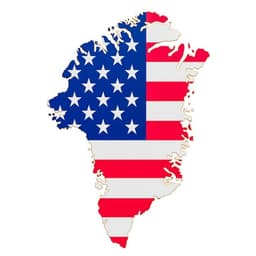
Prediction markets currently give about a 42% chance that the United States will acquire some part of Greenland before 2029. In simpler terms, traders see this as nearly a coin flip, with a slightly higher chance it won't happen. This reflects a genuine, sustained uncertainty about a major geopolitical possibility. Over $10 million has been wagered on related questions, showing significant public and financial interest in the outcome.
The odds are split for a few clear reasons. First, the idea is not new. The U.S. attempted to buy Greenland in 1946 and President Trump publicly confirmed his interest in purchasing the island in 2019, which Denmark, which handles Greenland's foreign policy, firmly rejected. This historical precedent makes the idea plausible, not fantastical.
Second, Greenland has strategic value due to its location and resources. It sits between North America and Europe, and its minerals and rare earth elements are increasingly important. The U.S. already operates a critical air base there. American interest in securing a permanent foothold is based on real military and economic concerns, especially considering growing activity in the Arctic from Russia and China.
Finally, the current "no" leaning comes from political reality. Greenland is moving toward greater independence from Denmark, not seeking a new sovereign. Any transfer would require consent from the Greenlandic people, who have shown no appetite for becoming American. The strong Danish rejection in 2019 also demonstrated the diplomatic difficulty.
The main deadline is the end of 2028, when this specific market resolves. More immediately, watch for shifts in U.S. foreign policy after the 2024 presidential election. A new administration, or a second Trump term, could revive or shelve the idea. Also monitor Greenland's own political developments, especially any moves toward a formal independence referendum from Denmark, which would fundamentally change the negotiating landscape. Statements from the Danish government rejecting or engaging with U.S. overtures will be direct signals.
Markets are generally decent at aggregating geopolitical odds when there is this much public information and interest. They correctly assigned a very low probability to a successful purchase during Trump's first term after the Danish rejection. However, their accuracy can be limited by "black swan" events or secret diplomatic breakthroughs. The main limitation here is that the outcome depends on a small number of key political actors making a monumental decision, which is always harder to forecast than, for example, an election with polls and voting data. The high trading volume suggests the current odds are a serious snapshot of informed opinion, not just speculation.
Prediction markets assign a 42% probability that the United States will acquire any part of Greenland before the end of 2026. This price, derived from high-liquidity markets on Polymarket and Kalshi with over $10 million in total volume, indicates the outcome is seen as plausible but not likely. A 42% chance means traders view the event as a significant risk, not a remote possibility, but still one where the odds are against it happening.
The market price is anchored by a specific historical precedent. In 2019, the Trump administration publicly and seriously explored the idea of purchasing Greenland, with the President confirming he had discussed the concept. This established a tangible political pathway for a future administration to revisit the proposal. The current 42% probability largely reflects the chance of a second Trump term beginning in 2025, coupled with his previously demonstrated interest in territorial expansion. Market logic suggests a reelected President Trump would be more likely to pursue unconventional geopolitical deals without the constraint of reelection.
A secondary factor is Greenland’s strategic value in Arctic competition. As ice recedes, new shipping routes and resource extraction zones are opening, increasing the island's importance to US national security planning. This enduring strategic interest provides a bipartisan undercurrent for some form of escalated engagement, even if an outright acquisition remains a long shot.
The single largest catalyst will be the November 2024 US presidential election. A Trump victory would likely cause the probability to spike, potentially toward 60% or higher, as traders price in a more aggressive second-term agenda. A Biden reelection would probably suppress the odds significantly, perhaps below 20%, as the initiative lacks a clear champion in his administration. The market resolves on December 31, 2026, so any serious diplomatic overtures or negotiations in 2025 or 2026 would cause major price movements. A key risk to the current "no" consensus is an unexpected geopolitical crisis in the Arctic that reframes Greenland’s sovereignty as an immediate security issue for Washington.
A small but persistent 1.7% price spread exists between platforms, with Kalshi consistently pricing the "yes" outcome slightly higher than Polymarket. This spread, while narrow, is likely attributable to differing user bases. Kalshi is a US-regulated exchange accessible only to US residents, potentially concentrating traders more attuned to US domestic political rhetoric about Greenland. Polymarket’s global user base may apply a more skeptical, international lens to the feasibility of a sovereign land purchase in the 21st century. The spread presents a minimal arbitrage opportunity, but it primarily signals a marginally higher belief in the event's possibility within a specifically US-centric trading pool.
AI-generated analysis based on market data. Not financial advice.
This prediction market topic concerns the possibility of the United States acquiring sovereignty over any portion of Greenland during Donald Trump's presidency. The market resolves to 'Yes' if, before the specified expiration date, any part of Greenland formally comes under U.S. governance or jurisdiction as a state, territory, or other classification where it was not previously. A formal announcement by the U.S. and the entity controlling Greenland of such an intention also qualifies. The question excludes scenarios involving leases or temporary military access, focusing solely on a permanent transfer of sovereignty. The topic gained prominence in August 2019 when President Trump publicly confirmed his interest in purchasing Greenland, an autonomous territory within the Kingdom of Denmark. This interest was immediately and firmly rejected by the Danish government and Greenland's own leadership. The episode highlighted long-standing U.S. strategic interests in the Arctic region, particularly as climate change opens new shipping routes and access to natural resources. People are interested in this market because it tests the boundaries of U.S. foreign policy ambitions under Trump, examines the geopolitical competition in the Arctic involving Russia and China, and explores the complex relationship between Greenland, Denmark, and external powers. While the initial proposal was rebuffed, the underlying strategic calculus for the U.S. remains, making the topic a measure of how far unconventional diplomatic approaches might go.
The United States' interest in Greenland is not a new phenomenon. In 1867, Secretary of State William H. Seward, who had orchestrated the purchase of Alaska that same year, reportedly inquired about acquiring Greenland and Iceland from Denmark. The proposal did not advance. A more significant precedent was established in 1917 when the U.S. purchased the Danish West Indies, which became the U.S. Virgin Islands, for $25 million in gold. This transaction demonstrated a history of territorial acquisition from Denmark. During World War II, after Germany occupied Denmark in April 1940, the U.S. established a protective presence in Greenland to prevent Axis forces from using it as a base. This led to a 1941 agreement where the U.S. assumed responsibility for Greenland's defense, effectively establishing temporary administrative control. Following the war, the U.S. strategic interest became permanent. In 1951, a revised defense agreement was signed, leading to the construction of Thule Air Base in northwest Greenland, which remains the U.S. Air Force's northernmost base. The base was critical during the Cold War for ballistic missile early warning and space surveillance. These historical episodes created a pattern of sustained U.S. military and strategic involvement on the island, setting a foundation for later discussions about sovereignty.
The question of U.S. control over Greenland matters because it sits at the intersection of climate change, geopolitics, and resource economics. Greenland's ice sheet, which is melting at an accelerating rate, holds about 8% of the world's freshwater. Its retreat is opening new sea lanes like the Northwest Passage and exposing vast mineral deposits, including rare earth elements critical for modern technology. For the U.S., establishing sovereignty would secure a dominant position in an increasingly accessible and contested Arctic, countering the military buildup by Russia and the economic inroads made by China, which has sought mining investments in Greenland. For Greenland's 56,000 inhabitants, mostly Indigenous Inuit, a transfer of sovereignty would fundamentally alter their political future, economy, and culture. It would disrupt their current path toward greater autonomy and potential independence from Denmark. For Denmark, losing Greenland would diminish its status as an Arctic nation and reduce its territory by over 98%. The episode also tested the norms of alliance diplomacy within NATO, showing how unilateral territorial ambitions can strain relationships between long-standing partners.
As of the end of the Trump administration in January 2021, the United States did not acquire any part of Greenland. The proposal was effectively dead after the firm rejections from the Danish and Greenlandic governments in August 2019. No formal purchase offer was ever drafted or presented through diplomatic channels. The Biden administration has not expressed any interest in reviving the idea of purchasing Greenland. Current U.S. policy focuses on strengthening partnerships and increasing investment in Greenland through existing frameworks, such as a $12.1 million economic aid package announced in 2020 for sustainable development. The U.S. also reopened a consulate in Nuuk, Greenland's capital, in 2020 to deepen engagement. The topic remains relevant in strategic discussions about the Arctic but is not an active diplomatic initiative.
Trump was reportedly motivated by Greenland's strategic location in the Arctic, its potential mineral and rare earth element resources, and a desire to expand U.S. territory. Advisors framed it as a way to counter growing Chinese and Russian influence in the region, which is becoming more accessible due to climate change.
Legally, Denmark holds sovereignty over Greenland's foreign and defense policy. However, Greenland has had self-rule since 2009 and controls its natural resources. Any decision to transfer sovereignty would require a complex process involving the Danish parliament and, crucially, the consent of the Greenlandic people, likely through a referendum.
No, the United States has never owned any part of Greenland. The U.S. has operated Thule Air Base since 1951 under a bilateral defense agreement with Denmark, but this grants the U.S. operational control, not sovereignty. The land remains under Danish sovereignty.
Danish Prime Minister Mette Frederiksen called the idea 'absurd' and stated Greenland was not for sale. The Danish government reiterated that Greenland is part of the Kingdom of Denmark and its future is for Greenlanders to decide. The rejection was immediate and unequivocal.
The reaction in Greenland was largely negative. Premier Kim Kielsen stated Greenland was 'not for sale.' Many Greenlanders viewed the proposal as a colonial affront to their right to self-determination. Some politicians, however, saw it as an opportunity to debate their relationship with Denmark and their path to independence.
Educational content is AI-generated and sourced from Wikipedia. It should not be considered financial advice.
3 markets tracked

No data available
| Market | Polymarket | Kalshi | Diff |
|---|---|---|---|
![]() | 21% | 20% | 1% |
Different
Similar

During Trump's term If the United States acquires any part of Greenland before X 1, Y then the market resolves to Yes. An announcement by the United States and the entity that controls any part of Greenland that it will happen is also encompassed by the Payout Criterion. any part of Greenland must come under formal governance or jurisdiction of the United States, either as a state, territory, or other classification within the US system, where it was not previously. Merely leasing a given part

This market will resolve to “Yes” if the United States acquires control of any land territory that is part of Greenland by December 31, 2026, 11:59 PM ET. Otherwise, this market will resolve to “No”. Only the transfer of sovereignty, or the acquisition of primary or exclusive jurisdiction or control qualifies. 1. Transfer of Sovereignty: This will qualify if a binding agreement or legal instrument results in a defined area of Greenland coming under the formal sovereignty of the U.S. (e.g., inc


This market will resolve to “Yes” if the United States acquires control of any land territory that is part of Greenland by December 31, 2026, 11:59 PM ET. Otherwise, this market will resolve to “No”. Only the transfer of sovereignty, or the acquisition of primary or exclusive jurisdiction or contro

If the United States acquires any part of Greenland before Jan 1, 2027, then the market resolves to Yes. Secondary rules: An announcement by the United States and the entity that controls any part of Greenland that it will happen is also encompassed by the Payout Criterion. any part of Greenland mu
No related news found
Polymarket
$7.50M
Kalshi
$2.85M
Add this market to your website
<iframe src="https://predictpedia.com/embed/zi95SS" width="400" height="160" frameborder="0" style="border-radius: 8px; max-width: 100%;" title="Will the US take control of any part of Greenland?"></iframe>