Will Hawaii reach Coral Bleaching Alert Level 1 by December 31, 2026?
PM $5.2K
1
1
Will Hawaii reach Coral Bleaching Alert Level 1 by December 31, 2026?
PM $5.2K
1
1
Current odds
Snapshot from
As of Oct 30, 2026, 9:00 AM UTC, Yes is priced at 6.5% on Polymarket.
Polymarket
- Yes6.5%
Yes prices. They are not order quotes; check each platform's rules, fees and live prices before trading.
AI Analysis
Trader mode: Market mechanics, assumptions and risks
PM $5.2K
Reported volume · provider units
1
Saved contracts
0
Same-question pairs
Source snapshot: Oct 30, 2026, 9:00 AM UTC
About This Event
This market will resolve to "Yes" if NOAA Coral Reef Watch's Bleaching Alert Area for the Main Hawaiian Islands virtual station reaches "Bleaching Alert Level 1" (or a higher alert level) on the Current Coral Bleaching Alert Level on any day within this market's timeframe (from market creation through December 31, 2026, 11:59 PM ET). Otherwise, this market will resolve to "No". The Bleaching Alert Area for the Main Hawaiian Islands virtual station reaching Bleaching Alert Level 1 (or a higher alert level) on any single day within this timeframe is sufficient for a "Yes" resolution. For the purposes of this market, Bleaching Alert Level 1 corresponds to a Degree Heating Week (DHW) value of 4 or greater °C-weeks at the Main Hawaiian Islands virtual station, as calculated by NOAA Coral Reef Watch from the 90th-percentile daily HotSpot values within that station's boundary. The primary resolution source for this market will be the "Bleaching Alert Area" reading on NOAA Coral Reef Watch's Main Hawaiian Islands virtual station gauge page (https://coralreefwatch.noaa.gov/product/vs/gauges/hawaii.php). If that page is unavailable or has not been updated, resolution will use NOAA Coral Reef Watch's own data for the Main Hawaiian Islands virtual station in any other format it publishes (for example, its regional virtual station time-series data files, available at https://coralreefwatch.noaa.gov/product/vs/data.php), which apply the same station-level methodology. Readings for individual 5km satellite pixels that are not aggregated to the Main Hawaiian Islands virtual station will not be used. Only NOAA Coral Reef Watch readings dated within this market's timeframe (from market creation through December 31, 2026) can trigger a "Yes" resolution. If NOAA Coral Reef Watch data covering this timeframe has not been published by January 4, 2027, this market will remain open until January 11, 2027, or until such data is published, whichever comes first. If no NOAA Coral Reef Watch data covering any day within this market's timeframe is ever published, this market will resolve to "No". In the case that the Resolution Source publishes data, sufficient to settle a Market, that is clearly erroneous and the result of technical or operational error, or of unauthorized interference with the Resolution Source or its data, the Market may remain open for a period of up to seven (7) calendar days (ET) from the time of the original release, in anticipation of a correction by the Resolution Source. If the Resolution Source publishes a corrected value within that period, that value will be eligible for resolution. If no corrected value is published within that period, Polymarket will issue a Clarification to determine whether the originally published value may be eligible for resolution, or whether other action is required to preserve the orderly functioning of the Market. Revisions remain subject to the cutoff above. The only exception is a correction of a clearly erroneous print under the preceding paragraph, which will be used even if published after the cutoff.
This analysis is awaiting a background update, so its prices may be older than the odds above.
Snapshot observed 2026-10-27T03:00:06.103Z. This analysis describes that snapshot and is not a live news update.
What the contract measures
The contract asks whether Hawaii will reach Coral Bleaching Alert Level 1 by December 31, 2026. It resolves "Yes" if NOAA Coral Reef Watch's Bleaching Alert Area for the Main Hawaiian Islands virtual station reaches "Bleaching Alert Level 1" (or a higher alert level) on any day within the market's timeframe [1]. The rules define Level 1 as a Degree Heating Week value of 4 or greater °C-weeks at that station [1]. Only readings dated from market creation through December 31, 2026, count toward a "Yes" resolution, and individual 5km satellite pixels are excluded [1].
The timing rules differ from the headline date. The timeframe closes at "December 31, 2026, 11:59 PM ET," but the rules say that if NOAA data covering this timeframe has not been published by January 4, 2027, the market stays open until January 11, 2027, or until such data is published, whichever comes first [1]. The listed end time is 2027-01-12T04:59:00.000Z [1]. Readers comparing this contract with a different platform's question should check both the measured station and the listed close time, since wording and close times can differ.
Reading the snapshot
The provider observed this market at 2026-10-27T03:00:06.103Z, and the source was retrieved at 2026-10-27T05:40:42.294Z [1]. Treat these as observation and retrieval times for this snapshot only. The saved Yes price is 0.065 and the No price is 0.935 [1]. These are snapshot prices, not executable quotes or verified probabilities, and they do not indicate why the price is where it is.
The sample contains one market from one event, and it is not a partial sample [1]. Because there is no other outcome for this event in the sample, no comparison across outcomes or platforms is possible here. Volume is not included in the evidence for this comparison, and it would not measure liquidity or the number of traders in any case.
What remains uncertain
The evidence does not show the current Bleaching Alert Area reading, any NOAA publication after the saved observation, or whether the market will close on the listed end time. The sample also does not establish that Polymarket lists every possible outcome for this question. Readers should check the resolution source directly, since the rules name the NOAA gauge page and, if that is unavailable, other NOAA station data formats [1].
References
- Polymarket: Will Hawaii reach Coral Bleaching Alert Level 1 by December 31, 2026?. Provider data observed 2026-10-27T03:00:06.103Z.
AI-generated analysis based on market data. Not financial advice.
Saved Oct 27, 2026 UTCThis saved content is awaiting a background update. It may contain outdated claims; use the dated market data and provider rules for the latest available information.
Overview
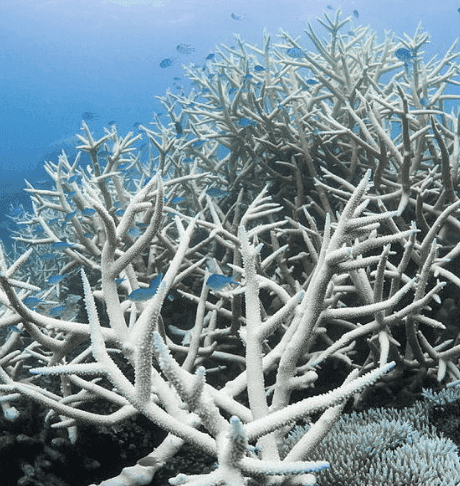
This PredictPedia contract asks whether Hawaii will reach Coral Bleaching Alert Level 1 by December 31, 2026. The market is listed on Polymarket and is tied to a specific NOAA Coral Reef Watch measurement. The contract resolves to "Yes" if NOAA Coral Reef Watch's Bleaching Alert Area for the Main Hawaiian Islands virtual station reaches Bleaching Alert Level 1, or a higher level, on any day within the market's timeframe [1]. The timeframe runs from market creation through December 31, 2026, 11:59 PM ET [1]. The alert level is defined by a threshold rather than by a general description of reef conditions. For this market, Bleaching Alert Level 1 corresponds to a Degree Heating Week value of 4 or greater °C-weeks at the Main Hawaiian Islands virtual station, as calculated by NOAA Coral Reef Watch from the 90th-percentile daily HotSpot values within that station's boundary [1]. A single day at or above that threshold within the timeframe is enough for a "Yes" resolution [1]. Coral bleaching itself is described in general terms by Wikipedia. Bleaching is the process in which corals become white after losing symbiotic algae and photosynthetic pigments, and a range of stressors can cause it, including changes in water temperature, light, salinity, or nutrients [2]. The article identifies rising ocean temperatures due to climate change as the leading cause [2]. A coral reef is an underwater ecosystem built from reef-building corals held together by calcium carbonate [3]. These articles give background on the phenomenon but do not describe Hawaii's bleaching history or any particular event.
Why It Matters
The contract measures whether a NOAA-calculated heat stress threshold is reached at one station that represents the Main Hawaiian Islands. The threshold is a Degree Heating Week value of 4 or greater °C-weeks, which the rules link to Bleaching Alert Level 1 [1]. Because the wording counts any single qualifying day in the window, the question is about whether that threshold appears at any point before the window closes, not about a sustained condition or an average [1]. The timing rules matter for interpretation. Only NOAA Coral Reef Watch readings dated within the market's timeframe can trigger a "Yes" resolution [1]. The rules also say that if NOAA data covering the timeframe has not been published by January 4, 2027, the market stays open until January 11, 2027, or until the data is published, whichever comes first [1]. The listed end time in the provider data is 2027-01-12T04:59:00Z [1]. That date appears within the contract rules and does not mean any event is scheduled for that date. If the resolution source publishes clearly erroneous data, the market may remain open for up to seven calendar days from the original release while a correction is awaited [1].
Snapshot context
The latest published provider snapshot for this topic was observed on 2026-10-27 at 03:00 UTC. It contains listings from Polymarket. Market descriptions and listed closing times define the contracts; they do not establish that the real-world outcome has occurred. This article does not include a separately verified news update. [1]
Frequently Asked Questions
What reading triggers a Yes resolution?
A Yes resolution requires the Bleaching Alert Area for the Main Hawaiian Islands virtual station to reach Bleaching Alert Level 1 or higher on any day within the market's timeframe [1]. For this market, Level 1 corresponds to a Degree Heating Week value of 4 or greater °C-weeks at that station [1].
Do individual satellite pixels count?
No. The rules say readings for individual 5km satellite pixels that are not aggregated to the Main Hawaiian Islands virtual station will not be used [1].
What happens if NOAA data is not published in time?
The rules state that if NOAA Coral Reef Watch data covering the timeframe has not been published by January 4, 2027, the market remains open until January 11, 2027, or until such data is published, whichever comes first [1]. If no such data is ever published, the market resolves to "No" [1].
What is the timeframe for qualifying readings?
Qualifying readings must be dated from market creation through December 31, 2026, 11:59 PM ET [1].
AI-written background. References identify the evidence used; Wikipedia links under Learn More are additional reading. Prices and provider rules are dated snapshots. This is not financial advice.
Related prediction markets
Prices are catalog snapshots and may have changed. Check each market's rules and observation time.

Lowest temperature in Munich on November 1?
PM $87.97
Highest temperature in Warsaw on November 1?
PM $49.7
Lowest temperature in Helsinki on November 1?
PM $38.51
Lowest temperature in Beijing on November 1?
PM $25
Lowest temperature in Milan on November 1?
PM $20
Lowest temperature in Paris on November 1?
PM $0Market Insights
Price gaps of 2 pp+
0
Same-question pairs
0
No outcomes on this page have been reviewed as the same question on both platforms yet.
Price differences do not establish arbitrage. Check each pair's review, current order prices, fees and settlement rules.