
US imports Russian diesel by...?
PM $1.84M · K 42.3K contracts
2
6
- Reported volume
- PM $1.84M · K 42.3K contracts
- Events
- 2
- Markets
- 6
Current odds
Snapshot from
As of Nov 22, 2026, 3:00 PM UTC, the highest-priced outcome on Polymarket is March 31 at 21%, and on Kalshi it is Before Jan 1, 2027 at 6.5%.
Polymarket
- March 3121%
- January 3111.5%
- December 317.5%
- November 301.9%
Kalshi
- Before Jan 1, 20276.5%
- Before Dec 1, 20263.5%
Yes prices. They are not order quotes; check each platform's rules, fees and live prices before trading.
AI Analysis
Trader mode: Market mechanics, assumptions and risks
PM $1.84M · K 42.3K contracts
Reported volume · provider units
6
Saved contracts
0
Same-question pairs
Source snapshot: Nov 22, 2026, 3:00 PM UTC
This analysis was written from an earlier market snapshot, so its prices may be older than the odds above.
Snapshot observed Nov 19, 2026, 6:00 PM UTC. This analysis describes that snapshot and is not a live news update.
What the contract measures
These markets ask whether Russian-origin diesel fuel will be imported into the United States by a set deadline. Each provider's wording sets the rules. Kalshi says the market resolves Yes if reporting from designated Source Agencies confirms an import, and it states that "An announcement, agreement or license permitting imports, before diesel fuel is actually delivered" does not count [1]. Polymarket instead relies on "a consensus of credible reporting" and says an import qualifies if it is described as made under the October 9, 2026 agreement or authorized under General License 135 [2]. The two platforms therefore define resolution differently, even though the topic is the same.
Reading the snapshot
The provider observation time is Nov 19, 2026, 6:00 PM UTC, and the saved evidence was retrieved at 18:22:34Z on the same day. These figures describe that moment only. They are not live quotes and cannot be executed as they stand.
Kalshi shows two deadline contracts in the sample. The contract with a before January 1, 2027 cutoff is priced at 0.12 for Yes, and the before December 1, 2026 contract is priced at 0.03 for Yes [1]. Polymarket shows four date-based contracts, priced at 0.051 for November 30, 0.105 for December 31, 0.16 for January 31, and 0.215 for March 31 [2]. Within each provider, later deadlines carry higher Yes prices in this snapshot. Prices from the two platforms should not be averaged or ranked together, because their wording, cutoffs, and listed close times differ. Kalshi's market end dates are listed as January 1, 2027 and December 1, 2026, while Polymarket's listed event end time is April 1, 2027. Those cutoffs are not interchangeable.
Reported volume figures are in different units and should not be compared. Polymarket reports $1,777,562, and Kalshi reports 40,349 contracts. Volume also does not indicate liquidity or the number of traders.
What remains uncertain
The saved evidence includes every market for these two events, but it does not show that the providers list every possible outcome. The snapshot also does not explain why prices are where they are. Whether any import has occurred or will occur is not established by these sources, and this summary does not assess that question. Readers should treat the prices as market opinions at one moment on one platform, not as verified probabilities.
References
- Kalshi: When will Russian diesel be imported into the U.S.?. Provider data observed Nov 19, 2026, 6:00 PM UTC.
- Polymarket: US imports Russian diesel by...?. Provider data observed Nov 19, 2026, 6:00 PM UTC.
Snapshot observed Nov 19, 2026, 6:00 PM UTC. This analysis describes that snapshot and is not a live news update.
What the contract measures
Both platforms ask whether Russian-origin diesel will be imported into the United States within a set window, but the resolution wording differs. Kalshi's rules say the market resolves Yes only if "reporting from any of the Source Agencies" confirms an import, and reports "that merely reference prior publications, from before Issuance, do not qualify" [1]. Polymarket's primary source is "a consensus of credible reporting," and an import counts if it is described as made under the October 9, 2026 agreement or authorized under General License 135 [2]. The excerpts do not define the Kalshi "Source Agencies," so that list cannot be checked from this evidence.
Both sets of rules exclude diesel carried as a vessel's own fuel, held in bond for re-export, or in transit through the United States, and both require physical delivery [1][2].
Reading the snapshot
The observation time is Nov 19, 2026, 6:00 PM UTC, and the evidence was retrieved at 18:22:34Z on the same day. These prices describe that moment only and are not live quotes.
Within each platform, the Polymarket cumulative windows rise as the deadline lengthens. Yes prices are 0.051 for November 30, 0.105 for December 31, 0.16 for January 31, and 0.215 for March 31 [2]. Kalshi lists 0.03 for a window ending before December 1, 2026, and 0.12 for a window ending before January 1, 2027 [1].
These two platforms use different windows and different wording, so their prices should not be averaged or treated as one estimate. The Kalshi and Polymarket "December" contracts also do not match exactly. A difference between them is not an arbitrage opportunity, because the rules, close times, and execution conditions are not identical.
The Polymarket listed end time is Apr 1, 2027, 3:59 AM UTC for the overall event [2]. Kalshi's event-level end time is not supplied, though its individual market end dates are listed [1].
Reported volume is $1,777,562 on Polymarket and 40,349 contracts on Kalshi [1][2]. These units differ and are not comparable. Volume is not liquidity or a count of traders.
What remains uncertain
All saved markets for both events are included, with no partial sample flagged. However, the evidence does not establish that these are every possible outcome in the real-world field. The prices are snapshots, not verified probabilities, and the evidence does not explain why they are where they are. Readers should also check the full contract text on each platform, since the excerpts may be truncated or summarized.
References
- Kalshi: When will Russian diesel be imported into the U.S.?. Provider data observed Nov 19, 2026, 6:00 PM UTC.
- Polymarket: US imports Russian diesel by...?. Provider data observed Nov 19, 2026, 6:00 PM UTC.
AI-generated analysis based on market data. Not financial advice.
Saved Nov 19, 2026 UTCOverview
This article explains two prediction market contracts on whether Russian-origin diesel fuel will be imported into the United States. One is listed on Kalshi under the event "When will Russian diesel be imported into the U.S.?" [1]. The other is listed on Polymarket under "US imports Russian diesel by...?" [2]. Both ask whether an import occurs within a set period, but they use different wording, deadlines, and resolution sources, so they should be read separately. The Polymarket rules give the background for the contract. They state that on October 9, 2026, Donald Trump announced an agreement with Vladimir Putin to import Russian diesel fuel, and that the United States Treasury issued General License 135 authorizing importation of Russian-origin diesel fuel into the United States through April 7, 2027 [2]. The Polymarket rules also reference the official Treasury action page and a Truth Social post, but this article relies on the rule text itself. The Kalshi rules focus on what must be reported. A market resolves to Yes if Russian-origin diesel fuel is imported into the United States after the issuance date and before the listed deadline, and only reporting from designated Source Agencies qualifies [1]. Reports that merely repeat earlier publications do not count [1]. The contracts define "Russian-origin" narrowly. Diesel produced in Russia qualifies, but diesel refined in another country from Russian crude oil does not [1][2]. The contracts also define an import as physical delivery of fuel to a United States port or into United States territory for commercial or government use within the country [1][2]. Fuel carried as a vessel's own fuel, fuel held in bond for re-export, and fuel passing through the United States in transit to another country do not qualify [1][2]. A purchase, contract, loading, or voyage that has not ended in delivery does not qualify, and neither does an announcement, agreement, or license by itself [1]. The platforms differ on authorization. Kalshi states that an import counts regardless of whether it is made under the October 9, 2026 agreement, General License 135, or any other authorization [1]. Polymarket requires that the import be described by a consensus of credible reporting as made under the agreement, or be authorized under General License 135 or a successor authorization [2]. The rules also set different deadlines. Kalshi lists multiple dated markets, including ones with listed end dates of December 1, 2026 and January 1, 2027, and states that the market will close early if the event occurs [1]. Polymarket's rules resolve Yes if an import occurs between market creation and 11:59 PM ET on the specified date, and list an end time of April 1, 2027 at 03:59 UTC for the event [2]. These dates are contract rules, not announced events.
Historical Context
The supplied sources give limited background. A Wikipedia article on the 2026 Iran war fuel crisis describes the closure of the Strait of Hormuz, through which over 20% of the world's oil trade passes, and attacks on energy infrastructure in Iran and several Gulf Cooperation Council countries, which led to large disruption in global oil supplies and caused fuel shortages in countries that imported most of their fuel from the Persian Gulf region [3]. The same article's excerpt does not mention Russia or the diesel contracts, so it provides context for the wider fuel market rather than a direct cause of these markets. A separate Wikipedia article on Russia and United States relations notes that the two countries have had a mixture of cooperation, competition, and hostility, and that since the beginning of the second Trump administration the US has pursued normalization and better relations, largely centered on the resolution of the Russian invasion of Ukraine [4]. The excerpt does not describe the diesel agreement itself. The Wikipedia excerpts are background sources and do not verify any current event.
Why It Matters
These contracts measure whether a specific, narrowly defined event occurs: physical delivery of Russian-origin diesel fuel into the United States for use there, reported or confirmed through the rules of each platform [1][2]. The contracts do not measure whether an agreement is announced or whether a license is issued, since both rules say those steps alone do not satisfy the criteria [1][2]. The main practical distinction is between the policy steps described in the Polymarket rules and the physical delivery that the contracts require [2]. Because the two platforms use different reporting standards and authorization tests, a single real-world shipment could be treated differently depending on the contract and its wording [1][2]. Any price shown with these contracts reflects a snapshot and is not an executable quote or a verified probability.
Snapshot context
The latest published provider snapshot for this topic was observed on 2026-11-20 at 00:00 UTC. It contains listings from Kalshi and Polymarket. Market descriptions and listed closing times define the contracts; they do not establish that the real-world outcome has occurred. This article does not include a separately verified news update. [1]
Frequently Asked Questions
Does an announced agreement or a license count as an import?
No. Both platforms say an announcement, agreement, or license permitting imports does not count until diesel fuel is actually delivered [1][2]. Kalshi lists this explicitly [1]. Polymarket describes an import as physical delivery to a United States port or into United States territory [2].
Does diesel refined in another country from Russian crude oil count?
No. The Kalshi rules state that diesel refined in another country from Russian crude oil is not Russian-origin diesel fuel [1]. The Polymarket rules define Russian diesel fuel as diesel of Russian production origin [2].
What happens to fuel that passes through the United States or is used as a ship's fuel?
It does not qualify. Both sets of rules exclude fuel carried as a vessel's own fuel, fuel held in bond for re-export, and fuel passing through the United States in transit to another country [1][2].
Do the Kalshi and Polymarket contracts use the same authorization rule?
No. Kalshi states that an import counts whether or not it is made under the October 9, 2026 agreement, General License 135, or another authorization [1]. Polymarket requires that the import be described by a consensus of credible reporting as made under the agreement or be authorized under General License 135 or a successor authorization [2].
What is the end date for these contracts?
The rules list different dates by contract. Kalshi lists several markets with end dates such as December 1, 2026 and January 1, 2027 [1]. Polymarket lists an event end time of April 1, 2027 at 03:59 UTC [2]. These are contract deadlines, not announced events, and Kalshi notes that its market will close early if the event occurs [1].
AI-written background. References identify the evidence used; Wikipedia links under Learn More are additional reading. Prices and provider rules are dated snapshots. This is not financial advice.
Related prediction markets
Prices are catalog snapshots and may have changed. Check each market's rules and observation time.

EU lifts ban on Russian diesel imports by...?
PM $5.4K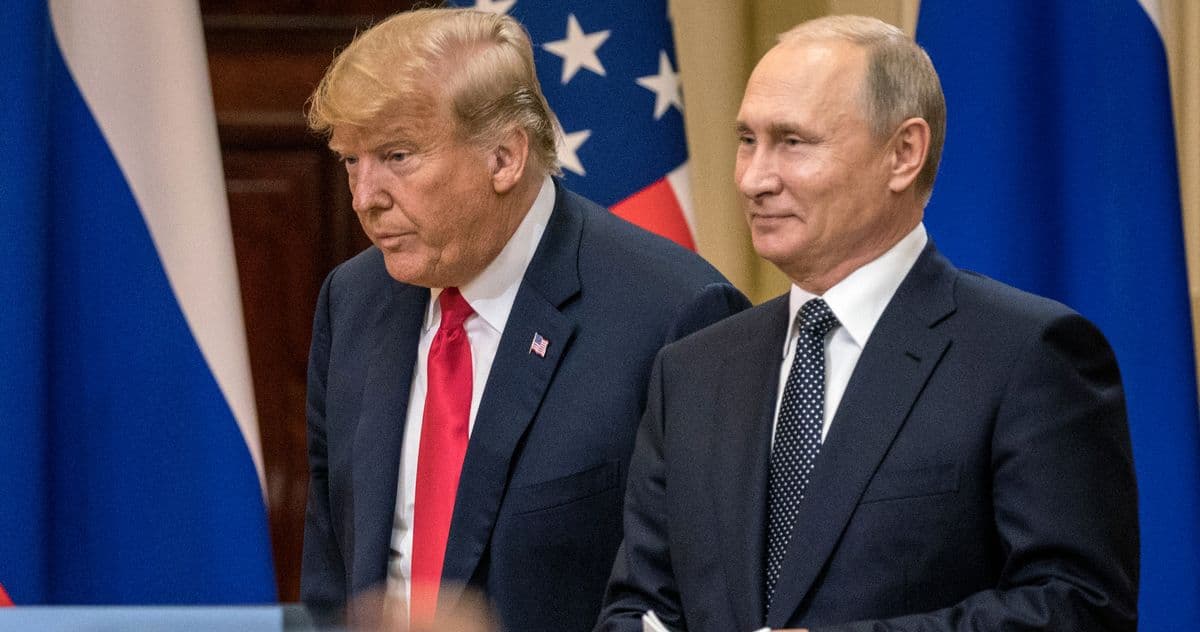
US recognizes Russian sovereignty over Ukraine by...?
PM $196.4K
US Announces Diesel Export ban by...?
PM $529.5K
US imports of goods from China in 2026
K 5.7K contracts
#1 Searched Person on Google in the US 2026?
PM $1.86M · K 3.42M contractsWill Erling Braut Haaland rank in Google’s Top 5 Most Searched Athletes of 2026?
Kalshi: Will Erling Haaland be in the 1 rank on Google’s Year in Search 2026 Global – People?
Related contracts
Will Lindsay Clancy be the #1 searched person on Google this year?
Kalshi: Will Lindsay Clancy be in the Top 5 rank on Google’s Year in Search 2026 Global – People?
Related contracts
Will Erling Braut Haaland rank in Google’s Top 5 Most Searched Athletes of 2026?
Kalshi: Will Erling Haaland be the #1 rank on Google’s Year in Search 2026 Global - Athletes list?
Related contracts
Related or unreviewed contracts may settle differently. Their gap is not an equivalent-contract comparison.
Saved prices; check contract rules.

Presidential Election Winner 2028
PM $746.00M · K 109.10M contractsWill Marco Rubio win the 2028 US Presidential Election?
Kalshi: Will Donald Trump endorse Marco Rubio in the 2028 presidential election before Mar 1, 2028?
Related contracts
Will Alexandria Ocasio-Cortez win the 2028 US Presidential Election?
Kalshi: Will the Democratic Socialists of America (DSA) national organization endorse Alexandria Ocasio-Cortez in the 2028 presidential election, including the Democratic primaries before Mar 1, 2028?
Related contracts
Will Jon Ossoff win the 2028 US Presidential Election?
Kalshi: Who will win the next presidential election? (Jon Ossoff)
Related contracts
Related or unreviewed contracts may settle differently. Their gap is not an equivalent-contract comparison.
Saved prices; check contract rules.
Market Insights
Price gaps of 2 pp+
0
Same-question pairs
0
No outcomes on this page have been reviewed as the same question on both platforms yet.
Price differences do not establish arbitrage. Check each pair's review, current order prices, fees and settlement rules.

